

The Signal / Profession / October 17, 2026
The coal question for appraisersWill more efficient valuation technology shrink the appraisal profession, or grow it?
In 1865 William Stanley Jevons argued that burning coal more efficiently would lead Britain to burn more of it, because lower-cost power would find new uses. Appraisal faces the same question now that AI is lowering the cost of analysis. Appraisers already do complex property work, but only for clients whose stakes justify today's fee. If the profession broadly adopts tools that cut the hours, the fee can drop to where clients priced out today start ordering, while the appraiser earns more for each hour worked. That new demand is where Jevons would expect the growth.
At the end of 2007 the national appraiser registry held 121,407 credentials. At the end of 2025 it held 89,618, 26% fewer.2829
A credential is a state license, and many appraisers hold more than one, so the Appraisal Subcommittee also counts individuals: about 65,857 in December 2025, give or take 5%, down from 67,550 a year earlier.28 The mix changed more than the total did. Since 2007, certified general credentials, which cover commercial and complex work, rose 10%. Certified residential credentials fell 21%. The licensed tier, the entry level, fell 80%, from 30,286 to 6,123, so far fewer people are entering the profession.2829 PAREA, a program that trains new appraisers through simulated assignments instead of a supervisor, had produced 53 completions and 31 Licensed Residential credentials at the Appraisal Institute as of October 8, 2025.3031
Over the same years Fannie Mae and Freddie Mac, the two government-sponsored companies that buy mortgages from lenders (the GSEs), stopped requiring an appraisal on a large share of loans. These are called waivers: the lender skips the appraisal and relies on Fannie’s or Freddie’s own data. The combined waiver share was about 50% in March 2021 and fell to 16% in June 2025.35 It climbed back to 28% in March 2026 (31.7% at Freddie Mac, 25% at Fannie Mae), then fell to 19% in June as higher rates cut no-cash-out refinancing, where waivers are most common.159
The forecast I see most often in appraiser Facebook groups follows from those numbers: lower-cost data and models keep replacing appraisals until the profession is small. I think that forecast is too simple. Economists sort demand into two kinds. When demand is elastic, a lower price leads people to buy a lot more. When demand is inelastic, a lower price barely changes how much gets bought. Appraisers sell both kinds of work, and the two respond to lower costs very differently.
Appraisers who invest in better technology and in training for harder problems can sell into the elastic side: estate, divorce and litigation assignments, zoning and land use questions, backyard-unit (ADU) and short-term rental income, new kinds of housing such as fourplexes and small condos, highest and best use, hazard and rebuild cost. As AI makes those answers more cost-efficient to produce, more people can afford to ask for them, and the profession can grow with the work. The rest of this article calls this complex property work.
Many appraisers I talk to see complex work as a fixed pool: so many estates, divorces and hard properties a year, shared among the few people who take them. I think the pool is far larger than the orders that reach us. When an executor, investor or homeowner is quoted $2,000 to $5,000 for a complex assignment, in my experience many of them look for something else: an agent’s price opinion, an online estimate, the county’s assessed value, a contractor’s number or their own guess. Those substitutes cost less and often miss the layers that make the property hard to value. Each one stands for a buyer who wanted the answer and did not pay today’s price for it, and that is the demand a lower price could bring back.
The other kind is the mortgage appraisal report, which this article calls loan work. Demand for it is inelastic. It moves almost in step with the number of mortgages, and a lower-priced appraisal does not create more mortgages. Waivers, automated models and lower-cost data collectors already handle part of that work. Loan work is unlikely to grow much when its price falls, but I do not expect it to disappear, and chapter 12 explains how the new report format could help it. Most appraisers do both kinds of work, and the question this article asks is which part of a practice will grow.
The chapters below run both kinds of work through three tests from chapter 02, compare appraisal with four other professions, and name the barriers appraisers cannot remove on their own.
● Loan work
- Sells
- The mortgage appraisal report
- Demand
- Inelastic, set by loan volume and agency rules
- What lower-cost technology does
- Handles part of it: waivers covered 28% of GSE loans in March 2026 and 19% in June159
- Likely result
- Work that rises and falls with loan volume, with waivers taking a share
■ Complex property work
- Sells
- Answers about use, rules, income, land and risk
- Demand
- Possibly elastic: at $2,000 to $5,000, many buyers settle for a substitute
- What lower-cost technology does
- Lowers the cost of each answer, so more buyers can ask
- Possible result
- A profession that grows with the work; not yet measured (chapter 08)
More efficient coal engines raised Britain’s coal use
In The Coal Question, published in 1865, the economist William Stanley Jevons argued that using coal more efficiently would increase Britain’s total coal consumption. As coal became more cost-efficient to use, people found new things to use it for, and those new uses burned more coal than the efficiency saved.1 One of his examples was Scottish iron making: the coal needed to make a ton of iron fell to less than a third of what it had been, while the industry’s total coal use rose tenfold.12
“It is wholly a confusion of ideas to suppose that the economical use of fuel is equivalent to a diminished consumption. The very contrary is the truth.”
Economists call the extra use the rebound effect. When the extra use is larger than the saving, they call it backfire, which is the case Jevons described. Backfire only happens when demand is elastic: as the price falls, the amount people buy has to rise faster than the price drops. If the price of a service drops 20% and people buy 50% more of it, total spending goes up. When demand is inelastic, a lower price sells only a little more, and total spending falls.2
Move the slider to lower the price and see what happens to total spending on each curve.
100 is today’s price. Moving left lowers the price of the analysis.
- ● Elastic: complex property work
- 100 units bought
Total spend 100 - ■ Inelastic: loan work
- 100 units bought
Total spend 100
Energy research limits how far the idea goes. Kenneth Gillingham, Matthew Rapson and Gernot Wagner reviewed the evidence for Resources for the Future in 2014. They found that typically 5% to 40% of an efficiency saving comes back as extra use of the same service, and that the full effect across the economy usually stays under 60%. Backfire, where more than 100% comes back, is rare in energy.3 So the question for appraisal is which kinds of appraisal work have elastic demand. One profession can sell into both curves, and the rest of this article follows that split.
Direct reboundSame service, typical range
Total reboundAcross the economy
BackfireThe Jevons case, rare in energy
Source: Gillingham, Rapson and Wagner, RFF DP 14-39.3
The idea returned to business news in January 2025. After DeepSeek released a low-cost AI model, Microsoft chief executive Satya Nadella posted “Jevons paradox strikes again!” about AI use and computing.4 On NPR’s Planet Money on February 4, Stanford economist Erik Brynjolfsson set three tests for Jevons to raise employment in an occupation. Farming fails the third. He named radiologists, translators and coders as candidates.5
- Test 1AI makes the worker more productive
- Test 2The price of the work falls
- Test 3Buyers order enough more that total spending rises
The rest of this article puts appraisal through those tests. Loan work fails the third (chapter 04). Complex property work could pass it (chapters 05 to 08), but only if appraisers pass the first by adopting better tools and the market lets the second happen (chapter 10).
The second test can read like a call for appraisers to cut their fees and earn less. That is not my argument. Better tools should lower what each complex assignment costs to produce, so the price can fall while the margin rises. Take an assignment that takes ten hours and sells for $3,000, which earns $300 an hour. If tools cut it to five hours and the fee drops to $2,000, it earns $400 an hour, and the client pays a third less. Jevons saw the same thing in coal: efficiency made each use of coal more profitable, so coal found more uses.1 The lower price reaches the clients from chapter 01 who settle for substitutes today, and the higher margin pays for the tools and training the work takes.
Radiologists grew, tellers rose and fell, bookkeepers split from accountants, translators shrank
We can now check how Brynjolfsson’s candidates did, along with older cases that have run their full course. The results differ, and the differences line up with two things: whether a licensed person still signs the work, and whether people bought more of it as its price fell.

Grew
Radiologists
Geoffrey Hinton said in 2016 that hospitals should stop training radiologists. In 2026, residency programs offered 1,241 diagnostic radiology positions and filled 97.6% of them.67118
- Caseloads, 2018 to early 2025
- +25%
- Applicants, 2023 to 2026
- 2,014 to 1,741
- Share of time on image reading (2012 study)
- 36%
Applicants have fallen since 2023, and researchers dispute how much of the volume growth comes from an aging population.

Grew, then fell
Bank tellers
ATMs cut tellers per urban branch from 20 to 13 between 1988 and 2004, while banks opened 43% more urban branches. Mobile banking later replaced the branch itself.121315814
- Tellers, 2006
- about 608,000
- Tellers, 2025
- 339,200
- BLS projection, 2025 to 2035
- -13%
The first technology changed a task inside the branch. The second replaced the channel.

Split
Bookkeepers and accountants
Accountants and auditors grew from 39,000 in 1910 to 1,795,000 in 2000 as tax rules and regulation expanded. Bookkeeping clerks declined after 1970 as software took over the entries.151617
- Bookkeeping clerks, 2025 to 2035
- -6%
- Accountants and auditors
- +5%
- Financial analysts
- +7%
Inside the same field, data-entry jobs shrank and judgment jobs grew.

Shrank
Translators
Erik Brynjolfsson named translators as a Jevons candidate in February 2025. Research on 2010 to 2023 associates Google Translate adoption with about 28,000 fewer translator positions than expected.215
- Translator employment growth, 2010 to 2023
- about 3%
- All jobs, same period
- about 13%
- Positions below counterfactual
- about 28,000
Machines took over the output itself, and no license was needed to sign it.
AI-generated illustrations. Figures come from the cited sources.
Radiology is the case most often cited for Jevons. Average radiologist pay reached $571,000 in 2025, according to Medscape figures reported by Fortune, and caseloads rose 25% from 2018 to early 2025.6 Two caveats apply: applicants fell from 2,014 in 2023 to 1,741 in 2026,11 and researchers attribute 73% to 88% of projected imaging growth to an aging, growing population, a projection others have publicly disputed.8910 The narrower lesson is that imaging got less expensive, volume rose, and radiologists kept the licensed read.
Tellers show the second outcome. ATMs reduced tellers per urban branch from 20 to 13 between 1988 and 2004. Banks opened 43% more urban branches, so teller jobs still grew, about 2.0% a year after 2000.1213 Mobile banking then replaced the branch. The Bureau of Labor Statistics counted about 608,000 tellers in 2006 and 339,200 in 2025, and projects a further 13% decline by 2035.15814 James Bessen found the same arc in textiles, steel and autos: demand was elastic early in each industry’s life and inelastic later, so employment rose and then fell.24
Accountants and bookkeepers split inside one field. Accountants and auditors grew from 39,000 in 1910 to 1,795,000 in 2000 as tax rules, regulation and managers’ demand for data expanded. Bookkeeping clerks declined after 1970 as software took over the entries.15 BLS projects bookkeeping clerks down 6% from 2025 to 2035, accountants up 5% and financial analysts up 7%.1617157
Law split the same way. Software took over most document review, yet lawyers and judges grew from 272,000 in 1970 to 927,000 in 2000, and BLS projects lawyers up 5% to 2035.181520
Translators were on Brynjolfsson’s list, and they show what happens when the output itself is automated. Carl Benedikt Frey and Pedro Llanos-Paredes link the spread of Google Translate to about 28,000 fewer translator jobs than expected from 2010 to 2023. Translator employment grew about 3% while all jobs grew about 13%.21 BLS projections show the same decline for typists and travel agents, whose output software also took over.2223
Economists who study automation find the same rule. Jobs grow when tools take over tasks and people move to harder ones, and they shrink when the tool replaces the whole output.252627 Appraisal has both kinds of work in it. On a simple loan, ACE and waivers replaced the output itself, the value, much as machine translation replaced the translation. Measurement, data collection, research and drafting are tasks, and tools make them faster while the appraiser still signs the opinion. That is the radiology pattern, and it is the one complex property work could follow.
Swipe sideways to see the whole map.
Data table
| Point | Demand elasticity | Augmented the work | Outcome |
|---|---|---|---|
| Lawyers | 0.58 | 0.87 | Grew |
| Radiologists | 0.76 | 0.81 | Grew |
| Accountants | 0.66 | 0.75 | Grew |
| Tellers, 1988 to 2006 | 0.56 | 0.67 | Grew |
| Bookkeepers | 0.1 | 0.24 | Shrank |
| Tellers, after 2006 | 0.36 | 0.18 | Shrank |
| Travel agents | 0.15 | 0.16 | Shrank |
| Translators | 0.45 | 0.07 | Shrank |
| Typists | 0.06 | 0.05 | Shrank |
| Appraisal today | 0.5 | 0.5 | At the edge |
| Loan work only | 0.42 | 0.36 | Likely path for loan work alone |
| Add complex property work | 0.9 | 0.555 | Possible path, unmeasured |
| Outcome | Professions | What they had in common |
|---|---|---|
| Grew | Radiology, accountants, lawyers | A licensed sign-off was required; tools took over a task while judgment tasks remained; demand rose with complexity. |
| Grew, then shrank | Tellers | A period of augmentation inside the branch, then replacement of the branch as a channel. |
| Shrank | Translators, typists, travel agents, bookkeepers | The output itself, or the channel, was automated, with little licensed judgment attached. |
Lower-cost analysis already handles many simple loans
For many simple loans, the lower-cost option already works: lenders skip the appraisal, and the loans perform fine. Freddie Mac launched automated collateral evaluation (ACE), a system that accepts a home’s value from data with no appraisal, in June 2017. It covered nearly 40% of originations at its peak in the third quarter of 2020, and 87% of ACE loans were refinances. After adjusting for differences between the loans, ACE loans had about 8.9% lower 90-day default rates than comparable appraised loans.34 That is the strongest evidence against the idea that every loan needs an appraisal.

- The single lineOne kind of valuation, ordered for a loan
- The switchLower-cost technology sent the simple loans down a different track
- Two tracksWhich track appraisers ride depends on the work they choose to sell
● Track 1: Loan work
What is the collateral worth today for this loan?
■ Track 2: Complex property work
What could the property be worth under a use, a rule, a plan or a risk?
Nearly half of plain refinances, where the owner takes no cash out, skipped the appraisal in February 2026 (47.5%). In early 2025 Fannie Mae extended that option to home buyers who put as little as 10% down.3337 Fannie says 5.34 million loans from January 2018 to June 2026 used appraisal alternatives, and puts the avoided fees near $3 billion at about $550 a loan. The Appraisal Institute says the figure is better read as an estimate of avoided fees than as evidence that housing got materially more affordable.36
Where an appraisal is still ordered, the inspection is being split off and handed to someone else. In a property data report, a non-appraiser visits and records the home, and an appraiser works from that record. Freddie Mac puts a property data report at about $200 against about $600 for an appraisal, and says ACE with a property data report closes purchases about 12 days faster. In hybrid testing, appraisers working from those reports were about twice as likely to identify condition and quality eligibility correctly.40
Appraisers have mostly refused this split, sometimes called bifurcation. In a 2020 survey of more than 4,000 appraisers, run by an errors and omissions insurance broker with a trade publication, 75.0% said they would refuse analyst-only work. Asked separately why, most cited liability for a collector’s data and inadequate fees, and institutions set both.54 The Appraisal Institute asked FHFA Director Pulte in March 2025 to reconsider expanded waiver and hybrid eligibility.56
This resembles the teller pattern: the waiver skips the appraisal, and the data collector takes the inspection. In Brynjolfsson’s terms, loan work passes the first two tests and fails the third. Technology made it more productive and cut its price, to nothing on a waived loan, but a lower-priced appraisal does not create more mortgages. GSE appraisal volume follows interest rates because it follows loan volume: about 544,000 GSE appraisals in November 2020, about 97,000 in February 2023.3339 Nobody has measured whether a lower fee or a better report wins loans back from waivers, or whether valuation work as a whole grew.
Complex property work, the other track, answers what a property could be worth under a use, a rule, a plan or a risk. Builders, owners, investors, insurers, private lenders, executors and attorneys buy it when it is affordable and skip it when it is not, so its demand can be elastic. Nobody has measured how elastic, and chapter 08 explains where I expect it to grow first.
| Feature | ● Track 1: Loan work | ■ Track 2: Complex property work |
|---|---|---|
| Question | What is the collateral worth today for this loan? | What could the property be worth under a use, rule, plan or risk? |
| Who requires it | GSEs, FHA, VA, bank regulators | Builders, owners, investors, insurers, private and DSCR lenders, attorneys, executors |
| Demand elasticity | Low; set by transaction volume and rules | Possibly higher: buyers priced out today settle for substitutes; not yet measured |
| What lower-cost technology did | Stood in for the appraisal on a share of loans: waivers, ACE, property data reports | Mostly untested at scale |
| Closest analog | Tellers after mobile banking; bookkeepers after software | Radiology; accountants and financial analysts |
| Who captures gains by default | GSEs, data vendors, AMCs, lower-cost data collectors | Whoever delivers consistent, defensible complex analysis at scale |
Eight questions an AVM finds difficult to answer
ACE and waivers work where a model has enough sales of similar homes. The examples below show what a model, or a rushed appraisal, has to answer when it does not. Each layer is a separate question with its own data source, and the answers change one another. The hillside parcel in the illustration is invented, but every card beside it describes a real place and a real rule. This is the complex property work from chapter 01, and it is where Brynjolfsson’s third test could pass: someone has a reason to pay for each answer, and better tools make each one more cost-efficient to produce.
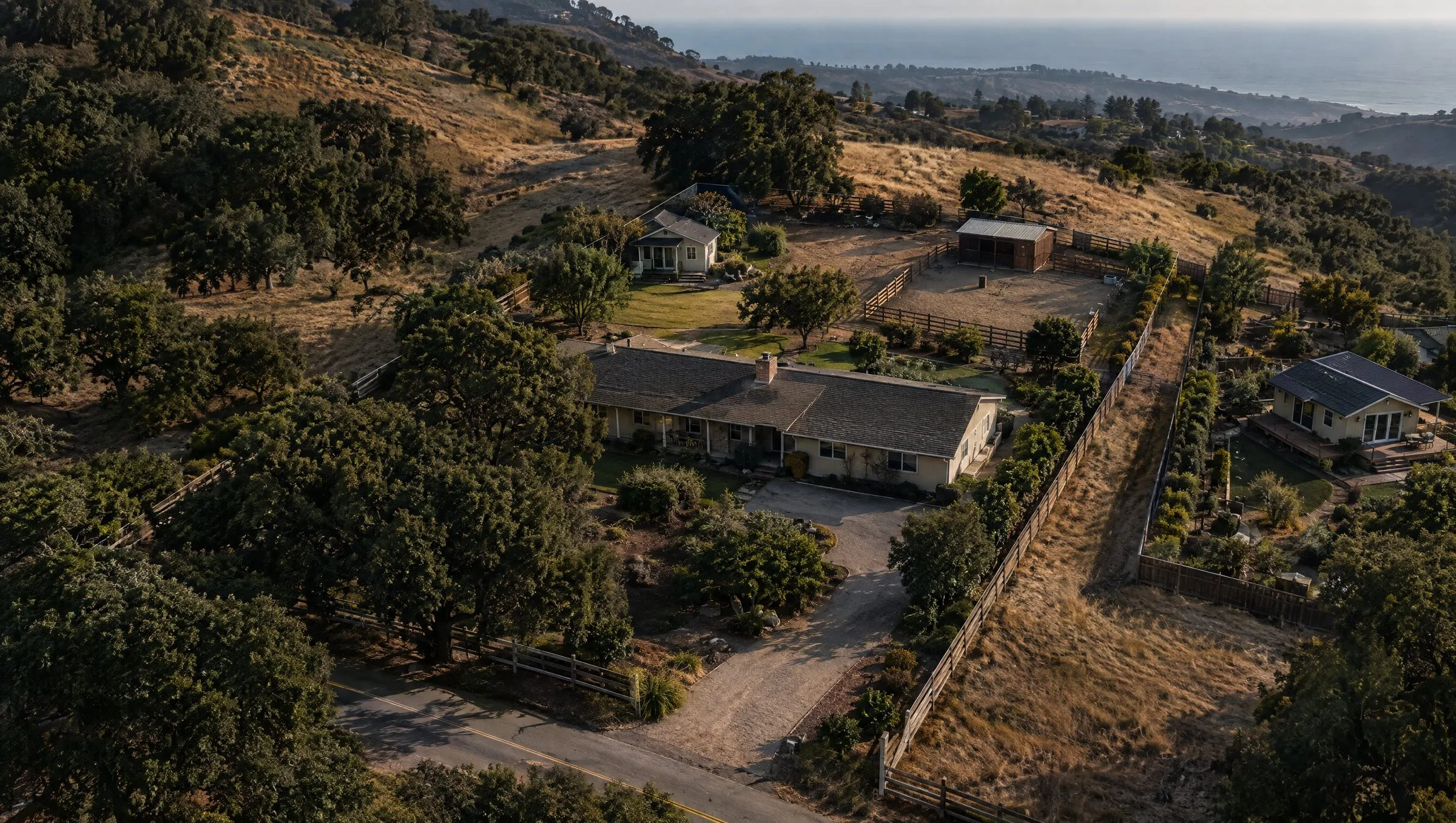
01Legal rightsWhat does the owner hold?
Beach keys that follow 1940s tract lines

$1M to $2Mbroker estimate of a beach key
At Point Dume in Malibu, deeded beach-gate rights depend on the original tract, so two similar homes on one street can differ, and only a title check shows it. A local broker estimates a key adds $1 million to $2 million. In 2016 the California Coastal Commission fined Warren and Henny Lent $4.2 million for blocking a public access easement at Las Flores Beach while renting the home as having a private beach.6062
02Zoning and useWhat may be kept or built here?
Horse rights measured in square feet
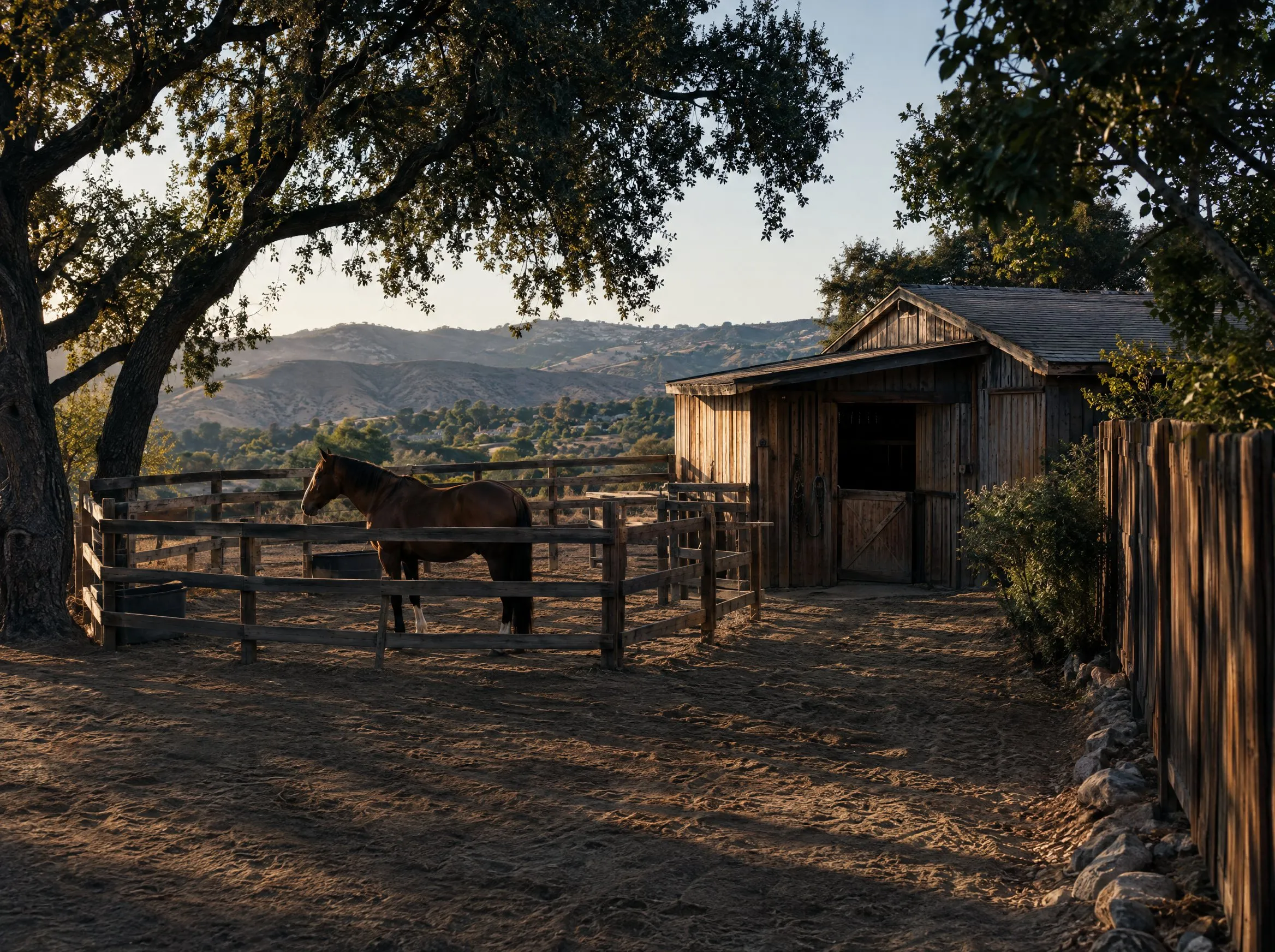
4,000 sq ftof lot per horse in an LA K district
Los Angeles K districts require at least 4,000 square feet of lot per horse and keep enclosures 35 feet from habitable rooms on the same lot. A nonconforming horse use ends if no licensed horse is kept for three consecutive years. Neighboring cities such as Claremont set their own ratios.6569
03Neighbor effectsWhat can a neighbor’s permit change?
A neighbor’s ADU can make your horse use nonconforming
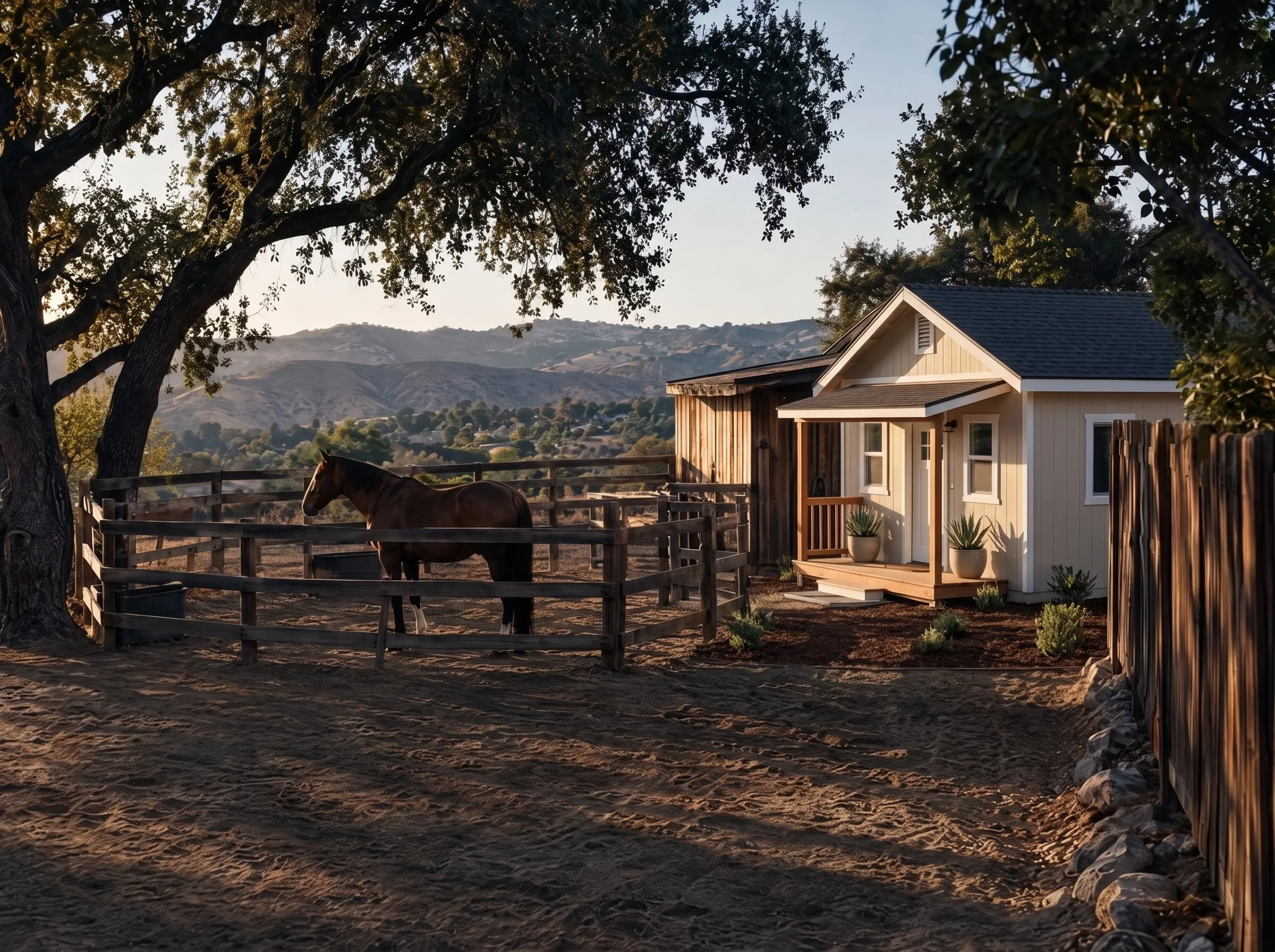
75 ft to 35 ftproposed neighbor distance
A June 24, 2026 Los Angeles City Planning report addresses state-law ADUs and SB 9 units built inside the distance rules that protect horse keeping next door. It proposes cutting the neighbor distance from 75 feet to 35 feet and creating a legal nonconforming status.66
04Added unitsWhat is the second unit worth?
The same ADU house, $500,000 apart
Appraiser A: $1.4MAppraiser B: $1.9M $1.4M vs $1.9Mtwo appraisals of one house
The Los Angeles Times reported a Burbank home bought for $1.3 million that added a $200,000 ADU. One appraiser valued it at $1.4 million and another at $1.9 million. Of 642 comparable Los Angeles sales in three months, 106 had ADUs, and one 1,200 square foot ADU was valued at $0. Freddie Mac’s September 2026 ADU guide calls ignoring an ADU for lack of comparables an unacceptable practice.7576
05Income rulesWhich income is legal?
A short-stay rule that removed most listings

-83%NYC short-stay listings in a year
New York City began enforcing Local Law 18 on September 5, 2023. Airbnb listings for stays under 30 nights fell 83%, from 21,900 in July 2023 to 3,700 in July 2024, according to AirDNA. In Dallas, the city’s 2023 short-term rental zoning is before the Texas Supreme Court in case No. 25-0748.8082
06Land valueWhat is the dirt worth under a new rule?
Land is a rising share of home value
7.7%54.3%7.7% to 54.3%county land share range
FHFA researchers estimate the national land share of home value rose from 38.2% in 2012 to 40.9% in 2019. County land shares range from 7.7% to 54.3% between the 1st and 99th percentiles. When zoning changes what a lot can hold, the land value moves first.79
07View and orientationWhat does the window look at?
View premiums from 8% to 60%
8%60%8% to 60%ocean view premiums, Bellingham
In Bellingham, Washington, the best ocean views carried premiums of about 60% and the weakest about 8%, falling with distance from the water. In New Zealand, water views averaged 9.7% in Auckland and 10.9% in Christchurch, higher where views are scarcer.8485
08Carrying costsWhat will it cost to hold?
Florida condo inspections and reserve rules
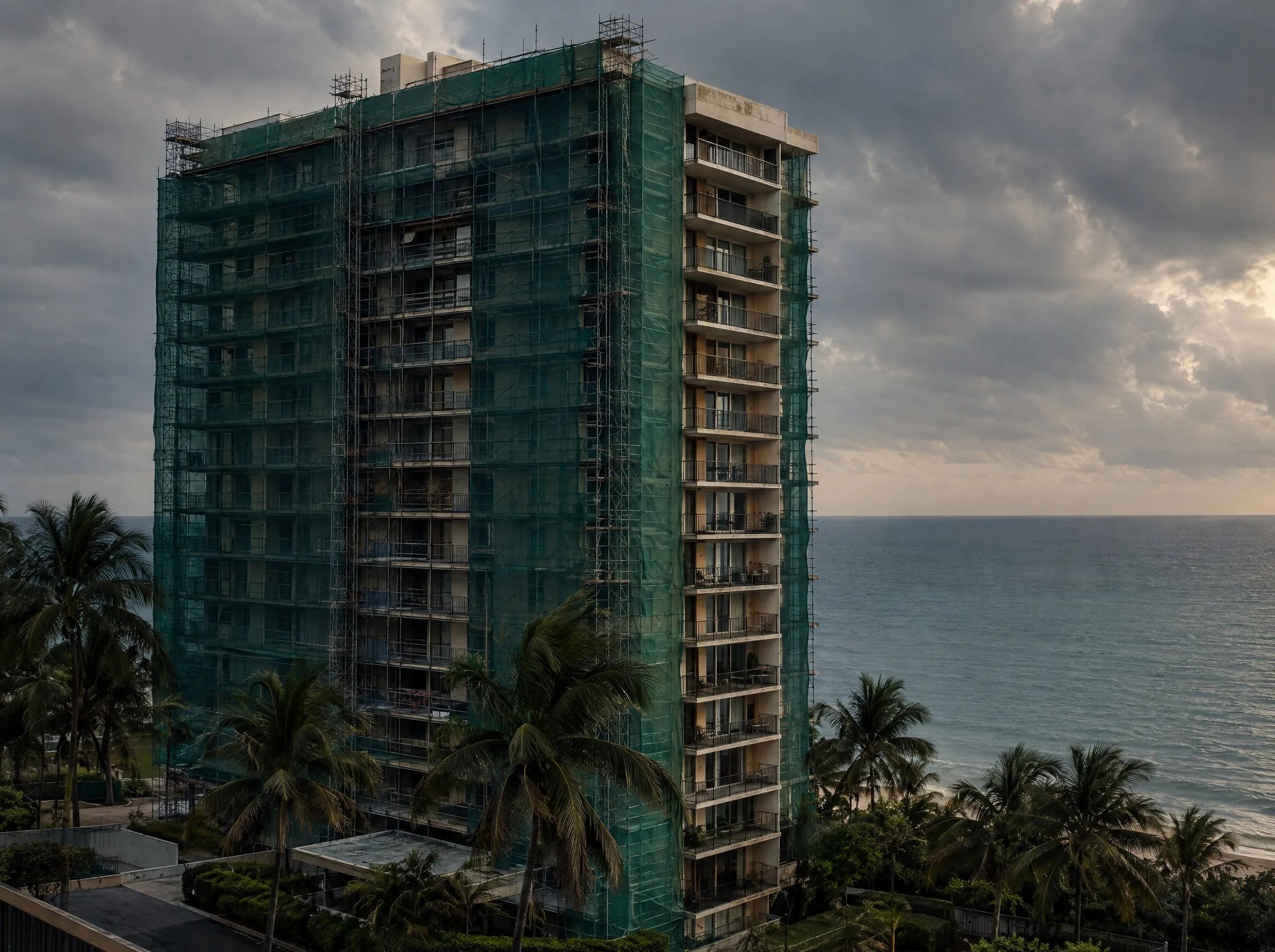
1,438Fannie-ineligible Florida condo buildings
Florida’s 2022 condo law requires milestone inspections of buildings three stories and taller once they turn 30, and a 2025 law gave associations until December 31, 2025 to finish their first structural reserve studies. Florida condo prices fell 4.5% year over year against 2% for single-family homes, and 1,438 Florida buildings were ineligible for Fannie Mae loans in April 2025.1601619697
Each layer comes from a different record: title and tract history, the municipal code for the parcel, a neighbor’s permits, rent comparables, ordinances and pending lawsuits, feasibility studies, a site visit, assessments and insurance quotes. A brokerage in Yorba Linda reports that the standard appraisal form has no fields for stalls, arena footing or trail access, and describes a barn costing about $150,000 that appraised at $40,000 to $70,000; that is one brokerage’s account, without sales data behind it.70
Every property carries its own thumbprint
The layers also act on each other. Card 03 shows one case, where a neighbor’s ADU can make a horse use nonconforming. A short-stay rule changes what an added unit can earn, and so what the land under it is worth. Each home ends up with its own combination of rights, rules, units, views and costs, a thumbprint that the subject and every comparable sale carry separately. Two homes can match on bedrooms, square footage and lot size and still differ on several layers, so each comparison means working out how one combination moves value against another. A paired-sales adjustment for one layer assumes the others hold still, and on these properties they often do not. I see that as the next technical frontier in residential valuation, and the work where better tools would help most.
Models show their limits on the same properties
When few sales share a home’s thumbprint, a model has little to learn from. Automated valuation models (AVMs), the computer estimates behind tools like the Zestimate, struggle with the same properties. Zillow reports a median Zestimate error of about 1.94% for homes on the market and 7.06% for homes off it, meaning half of off-market estimates miss by more than 7%. The Close notes that once a home is listed, the list price becomes an important input, which helps explain the gap.86 Condition shows the same limit. A 2024 Cityscape study of Atlanta and Memphis found mean AVM error 4.35 points higher for homes in poor condition than for homes in good condition.89
Source: The Close, June 2026, reporting Zillow’s figures.86 Bars scaled to 10%.
Cities are allowing more kinds of housing. Lending still favors the kind appraisers know.
A growing number of states and cities are rewriting their zoning to allow more kinds of housing. Much of American zoning, written over the 20th century, produced the conforming suburb: similar detached homes on separate lots, usually a drive away from shops and transit. A 2019 New York Times analysis found that in many American cities, building anything other than a detached house was illegal on about 75% of residential land.163 The reforms below allow a wider range of homes on the same land: small condo buildings, townhomes, duplexes and fourplexes, backyard and basement ADUs, upper-floor lofts and detached homes on smaller lots, often within walking distance of shops and public transit.
People need that range. Harvard’s Joint Center for Housing Studies puts the income needed to buy a median-priced home above $120,000.123 Smaller homes on shared land cost less, and they suit people a detached house does not: young buyers, older owners who want less space, families who want a rental unit out back.
- 2020California
SB 13, AB 68, AB 881: one ADU plus one junior ADU per single-family lot
ADU permits rose from 1,336 (2016) to 30,354 (2024)7172 - 2022California
SB 9 lot splits and duplexes
Los Angeles: 28 lot-split applications, none approved, by November 202278 - 2019 to 2024Oregon
HB 2001 middle housing
Middle housing rose from 8% to 11% of permits in 45 cities117 - 2017 to 2022Minneapolis
Triplexes legal citywide
1% of about 21,000 permitted units were in 2 to 4 unit buildings119 - 2023Washington
HB 1110: 2 to 6 units per lot by city size and transit
No outcome data yet120 - Sept. 2025Texas
SB 15 small lots; SB 840 housing by right on commercial land
No outcome data yet114115
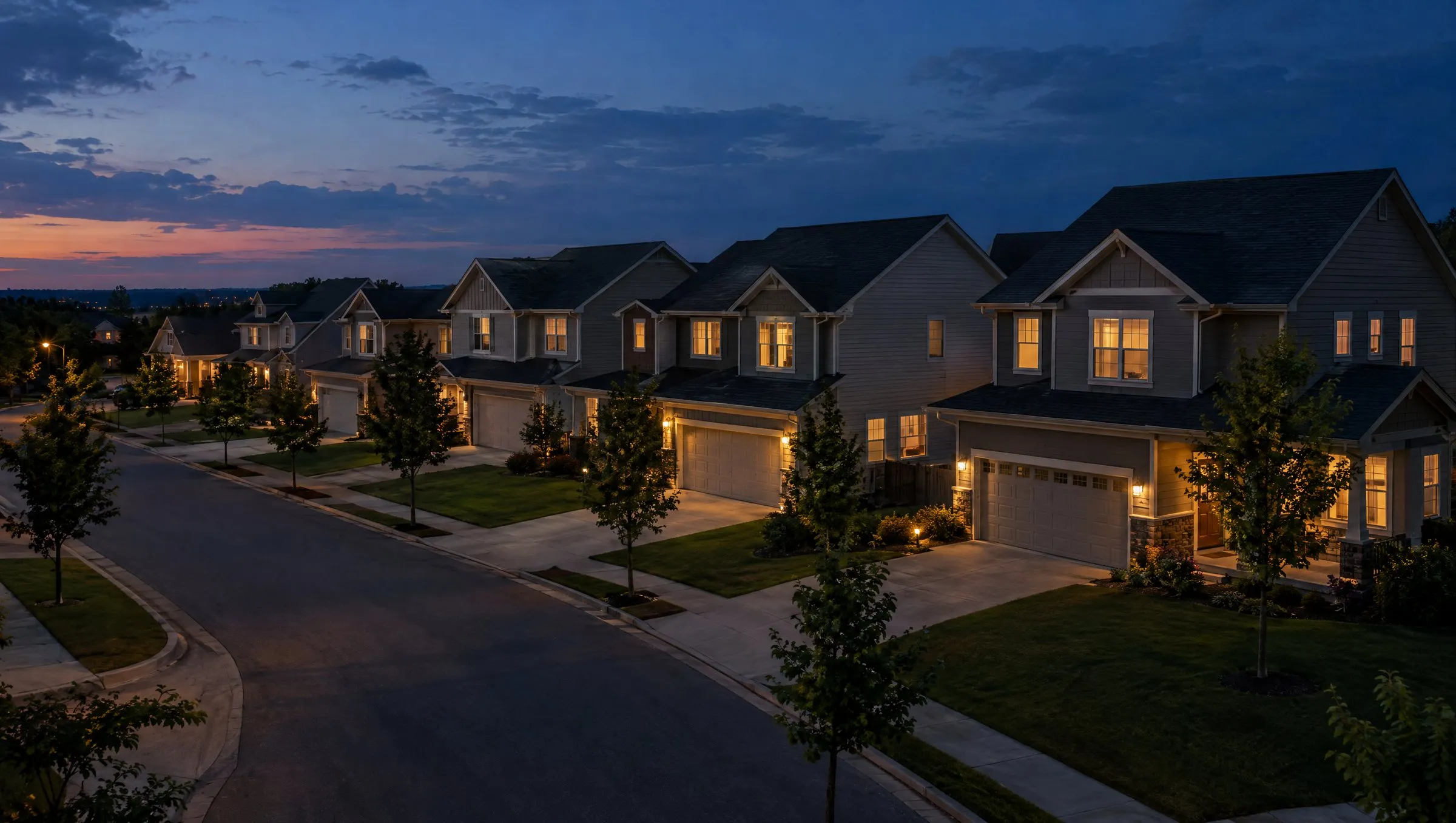
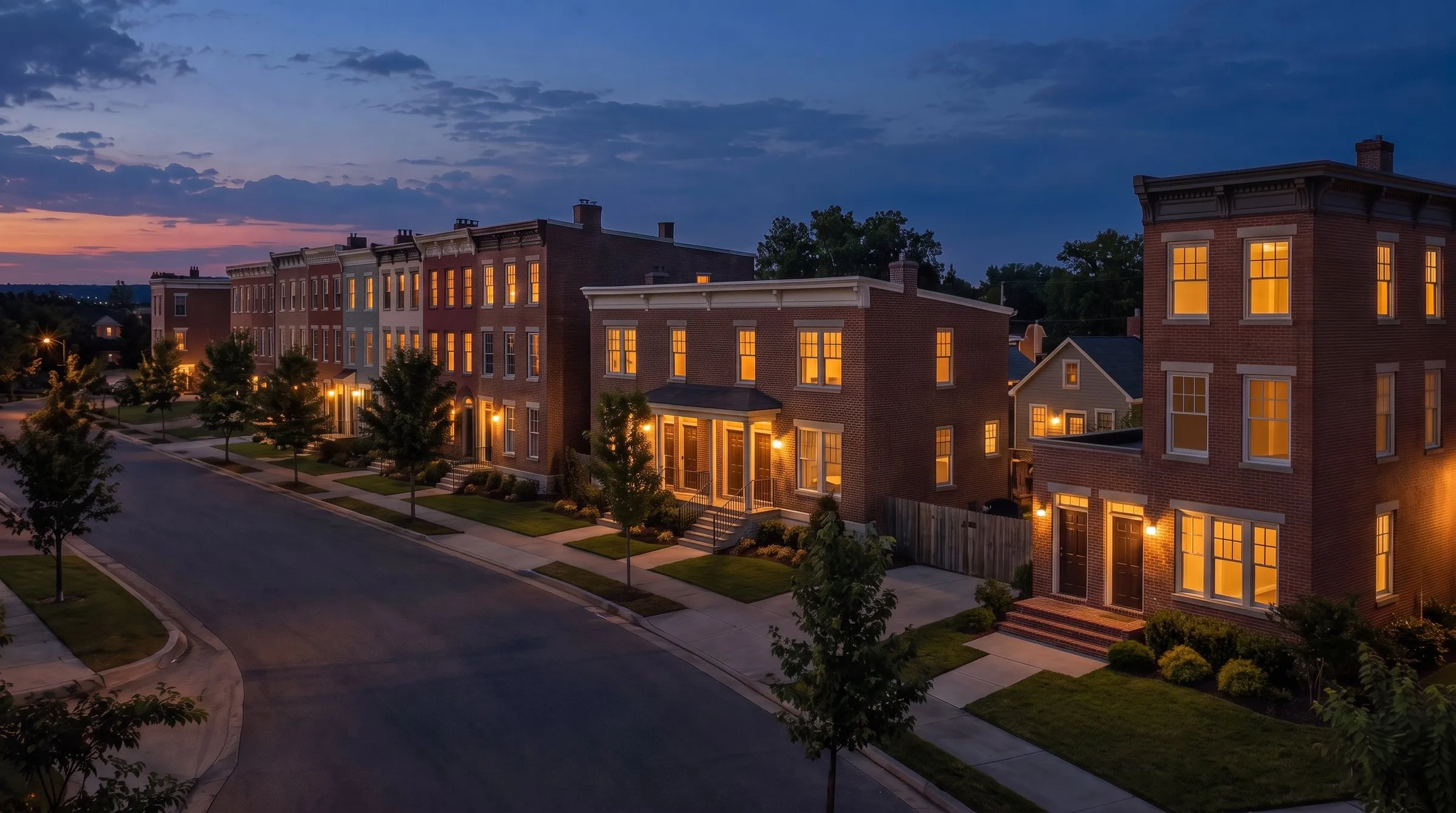
- The safe betDetached homes on separate lots, the street appraisers value every day
- What reforms now allowTownhomes, fourplexes, small condos and backyard units, a short walk from shops and transit
AI-generated illustration of a fictional street
Variety makes valuation harder. A street of similar detached houses gives an appraiser plenty of recent sales to compare. A fourplex, a townhome in a small condo complex or a house with a basement unit and a backyard cottage may have few comparable sales nearby, and the agency rules treat the extra units with caution. To a lender, a value that is harder to support reads as collateral risk.
The rules show where that caution sits. Fannie Mae allows one ADU per parcel and none with a 2 to 4 unit dwelling, while FHA now counts 75% of rent from an existing ADU.99103 A condo adds rules for the whole project on top of the unit. Fannie Mae waives its full project review for condo buildings of up to ten units outside a larger development, but the project’s insurance and the priority of its association dues still apply.164
So the safer play today is the conforming subdivision. Builders put up detached homes that the current appraisal workforce values every day, and lenders finance them on standard terms. Townhouses sold with the land under each unit fit the same pattern and reached a record 18.7% of single-family starts in Q3 2025.109 Small multi-unit buildings went the other way.
Source: FRED series COMPU24USA and total completions, shares computed by ValuSignal;112 townhouse share from Census data via NAHB.
Data table
| Year | Share |
|---|---|
| 1972 | 5.9% |
| 1985 | 5.7% |
| 2000 | 1.7% |
| 2010 | 1.4% |
| 2025 | 1.1% |
Builders and lenders have worked around this for years. In 2022 the Terner Center reported that appraisers may not understand small multi-unit buildings and the value they create, so developers often pay for early projects themselves.105 The National Association of Home Builders says these loans fall in a gap between residential mortgages and conventional apartment-building loans.106
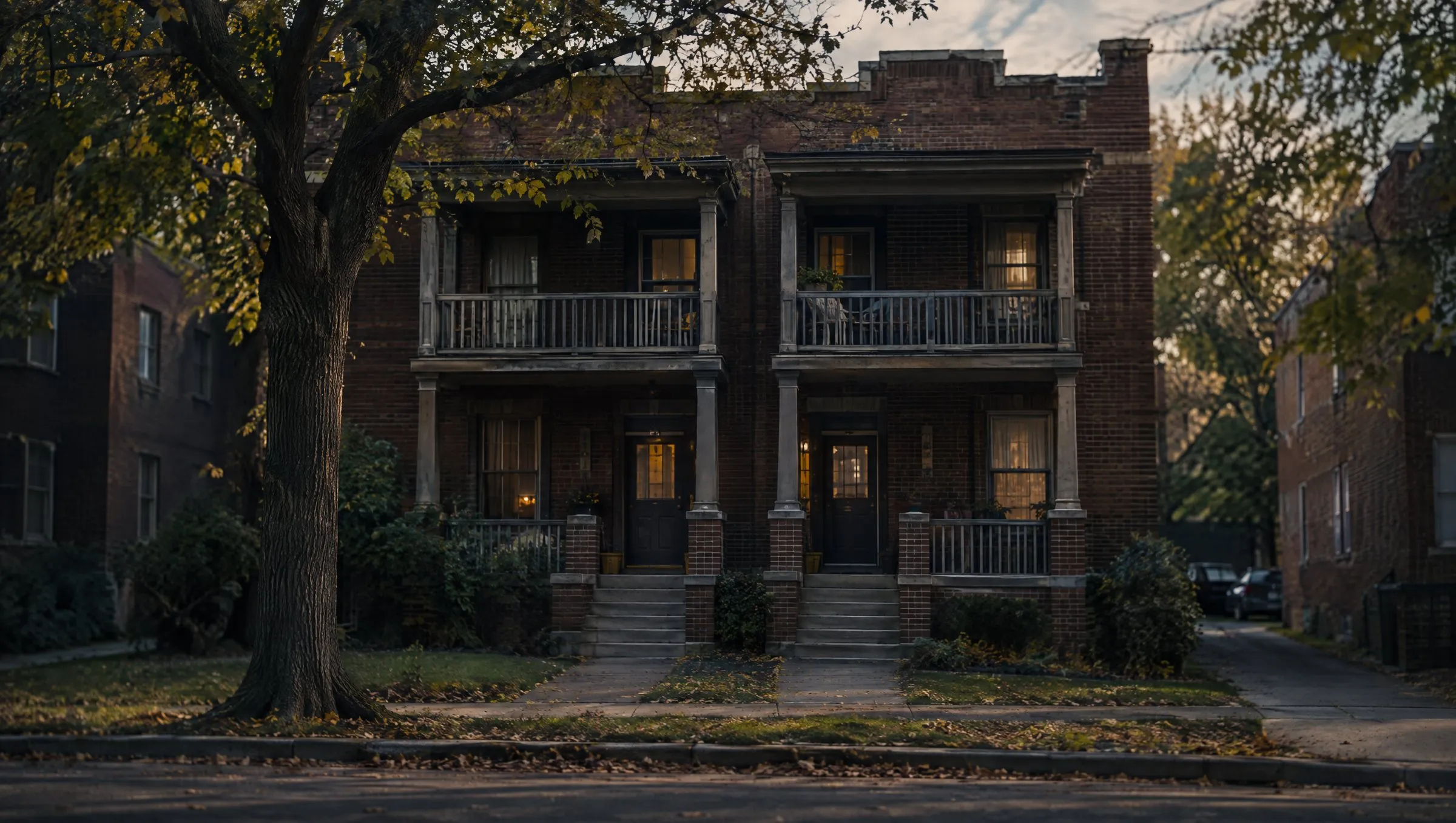
A builder finishes a new fourplex three blocks from a rail station and finds a buyer at $1.8 million. The only fourplex sale nearby in three years is a 1920s building with its original kitchens. The other comparables are detached houses on bigger lots. The appraisal comes in at $1.55 million, and the buyer’s lender lends against the lower number. Now the buyer has to find $250,000 more in cash, the builder has to cut the price, or the sale falls apart.
Appraisal is one obstacle among several. In California, planners named cost, subdivision law and construction defect liability ahead of valuation when few lots were split under the state’s lot-split law.78
Once these neighborhoods exist, buyers pay for them. Homes in Kentlands, Maryland, sold for about 12% more than comparable conventional homes, and a later study of four such communities found an average premium of 11%.124153 They also open a lower price point: in Portland, a new unit in a triplex or fourplex cost about half as much as a new house.117118
Zoning reform makes middle housing legal. Lending decides whether it gets built, and lenders lend where they trust the collateral. A national appraisal workforce that values complex property predictably, with the same methods and well-supported comparables in every state, would lower that perceived risk and open lending to more than the conforming subdivision. Chapter 09 looks at what that workforce would take.
The tools that cut the cost of hard problems are already allowed
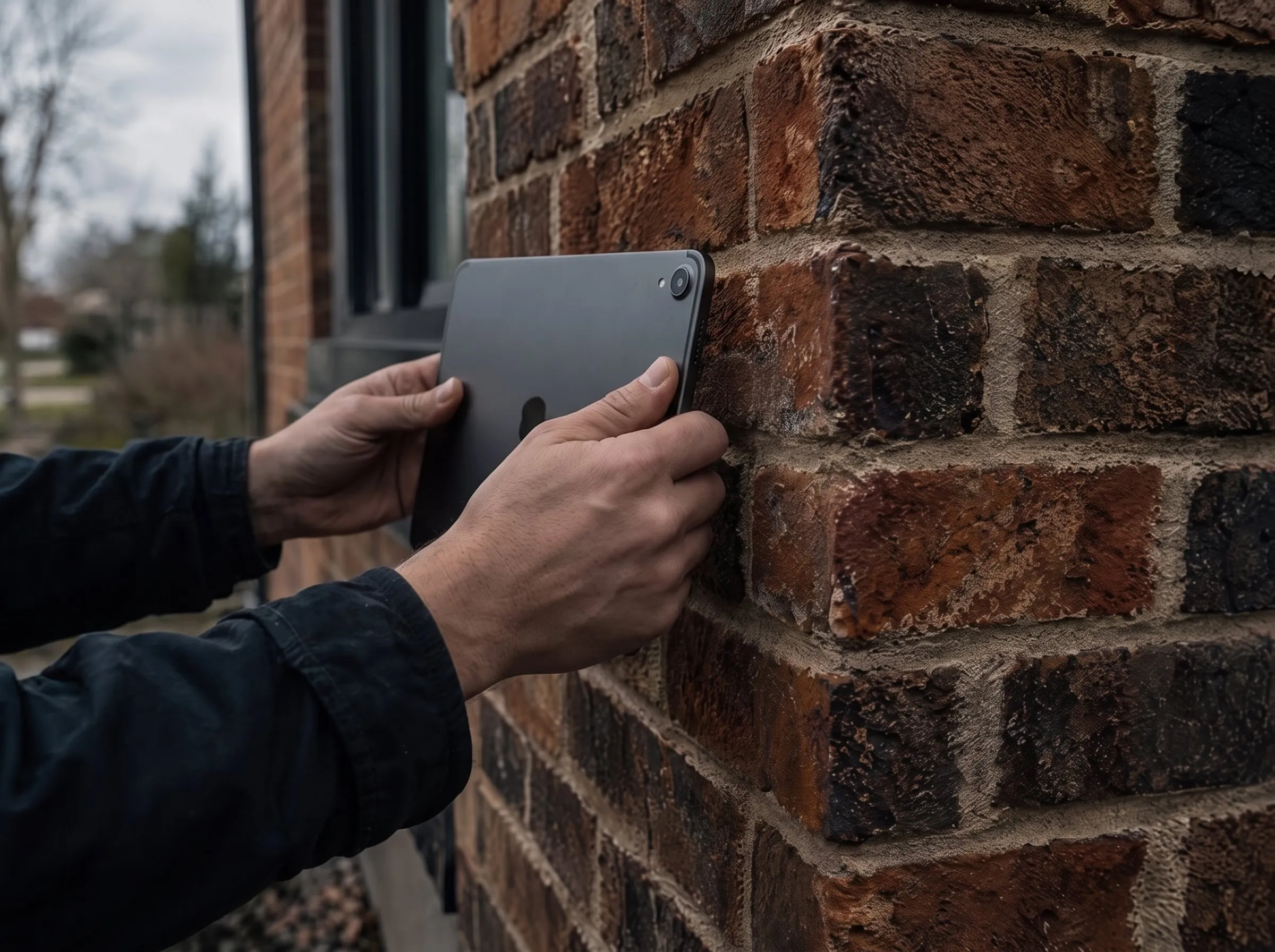
UAD 3.6 is the new standard appraisal report format that Fannie Mae and Freddie Mac require for new submissions starting November 2, 2026; chapter 12 has the full timeline.4142 The redesigned report asks for more detail on every property, and the measurement and AI rules now allow the tools that keep that extra work affordable.
| Part of the work | Legacy forms | Now |
|---|---|---|
| Report | Separate forms by property type, such as the 1004, 1073 and 2055 | One dynamic report for all 1 to 4 unit properties43 |
| Condition and quality | One rating for the dwelling | Separate interior and exterior ratings, component-level condition43 |
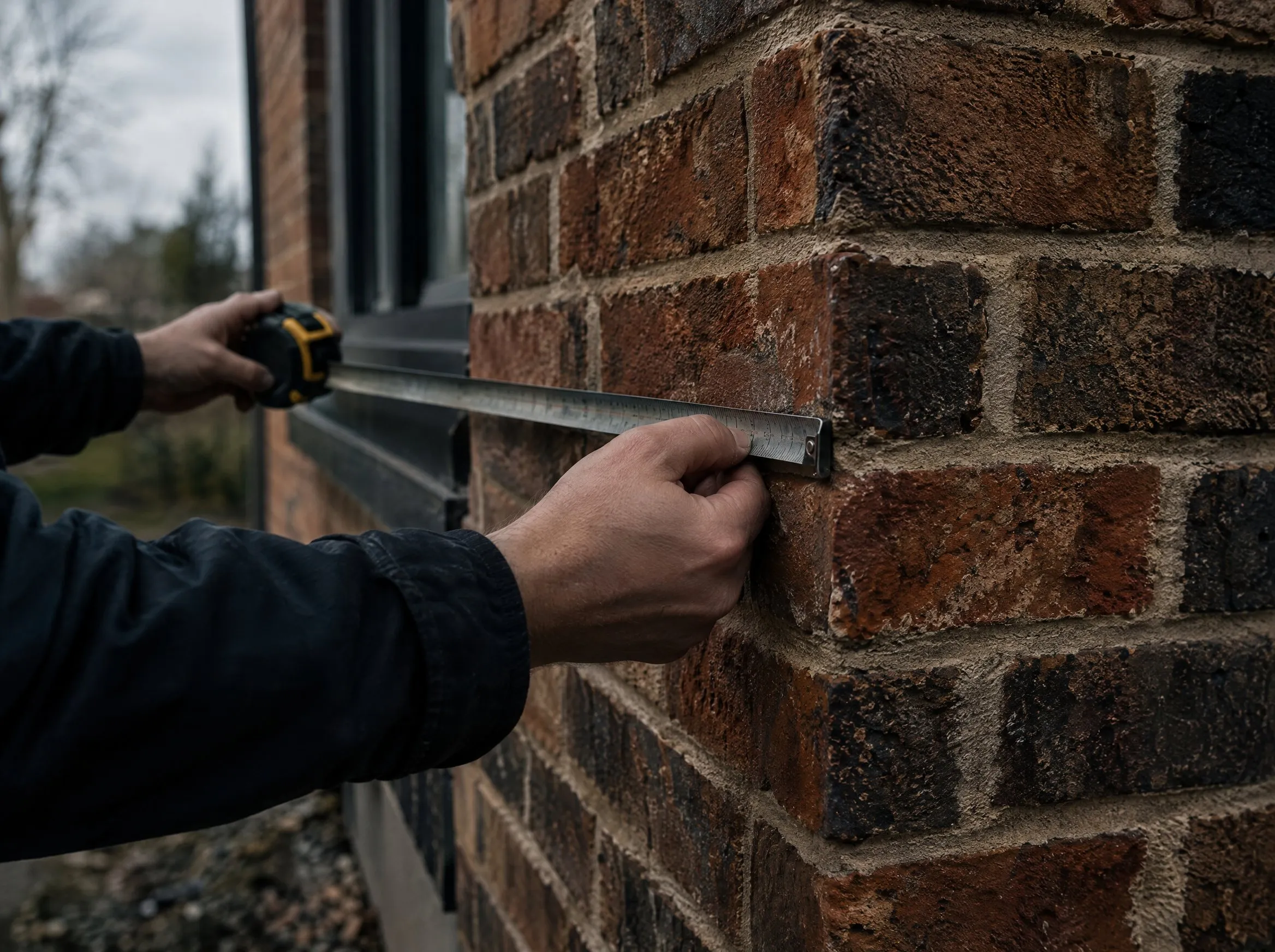
| Measurement | Tape and hand sketch | ANSI Z765-2021 required since April 1, 2022; phone apps accepted; vendors report LiDAR floor plans in 10 to 15 minutes4546 |
| Research and drafting | Manual | AI tools that rank comparables; USPAP AO-41 (April 2026) sets the framework for using AI5147 |
| Review | Human reviewers | Fannie Mae ran computer vision on 1 million appraisals in 2023 to flag condition and quality ratings49 |
The LiDAR timing is Opteon’s claim about its own staff; Clear Capital reports, from 2,100 early UAD 3.6 reports, fees about $65 higher in comparable markets and appraisers about 28% faster after the first weeks. Both are vendor data.4644
More on the new report in our UAD 3.6 series.
Eleven places where complex property work could find buyers
Brynjolfsson’s third test asks whether buyers would order enough more of the work as its price falls. Nobody has measured that for complex property work, so this chapter looks for the next best signs: a rule that creates a new analysis requirement, a buyer who already pays for a report, and a buyer who settles for a cheaper substitute. The fire insurance case below shows the third, where an insurer’s rebuild estimate stands in for a replacement cost analysis. The research found ten such cases. I add an eleventh from my own experience, and I think it is the strongest.
Among the documented cases, ADU feasibility and rent is the clearest. Fannie Mae now lets borrowers count rent from a backyard unit toward the income they qualify with, up to 30% of it, on a one-unit home they live in, and its loan-approval software began accepting it on March 21, 2026. Neither announcement says how appraisers should report the unit or find rent comparables for it.77155 Freddie Mac’s guide requires at least one ADU comparable for a zoning-compliant unit and two for a non-compliant one, allows older and out-of-area sales, and says these assignments take additional work.76 California permitted 30,354 ADUs in 2024, more than 26.6% of all homes permitted statewide, and in Los Angeles an ADU raises sale price 7% to 9%.7274
DSCR and short-term rental income is next. A DSCR loan is approved on the property’s rent rather than the borrower’s income, and it belongs to non-QM lending, the loans made outside the standard mortgage rules. Investor and DSCR loans rose from 22% of non-QM production in August 2022 to 35% in August 2026. Moody’s found that 30% of the DSCR programs it surveyed let borrowers use the higher of appraised rent and actual rent, with no cap.127 AirDNA counted 1.73 million available short-term rental listings in November 2025.130 On average, rental rules move value only a little: in Los Angeles County, house prices and rents fell about 2% to 3% just inside the borders of cities that restricted short-term rentals.83154 For a single property, though, the rules decide whether the income exists at all, as New York’s short-stay rule in chapter 05 showed.
The largest documented gap
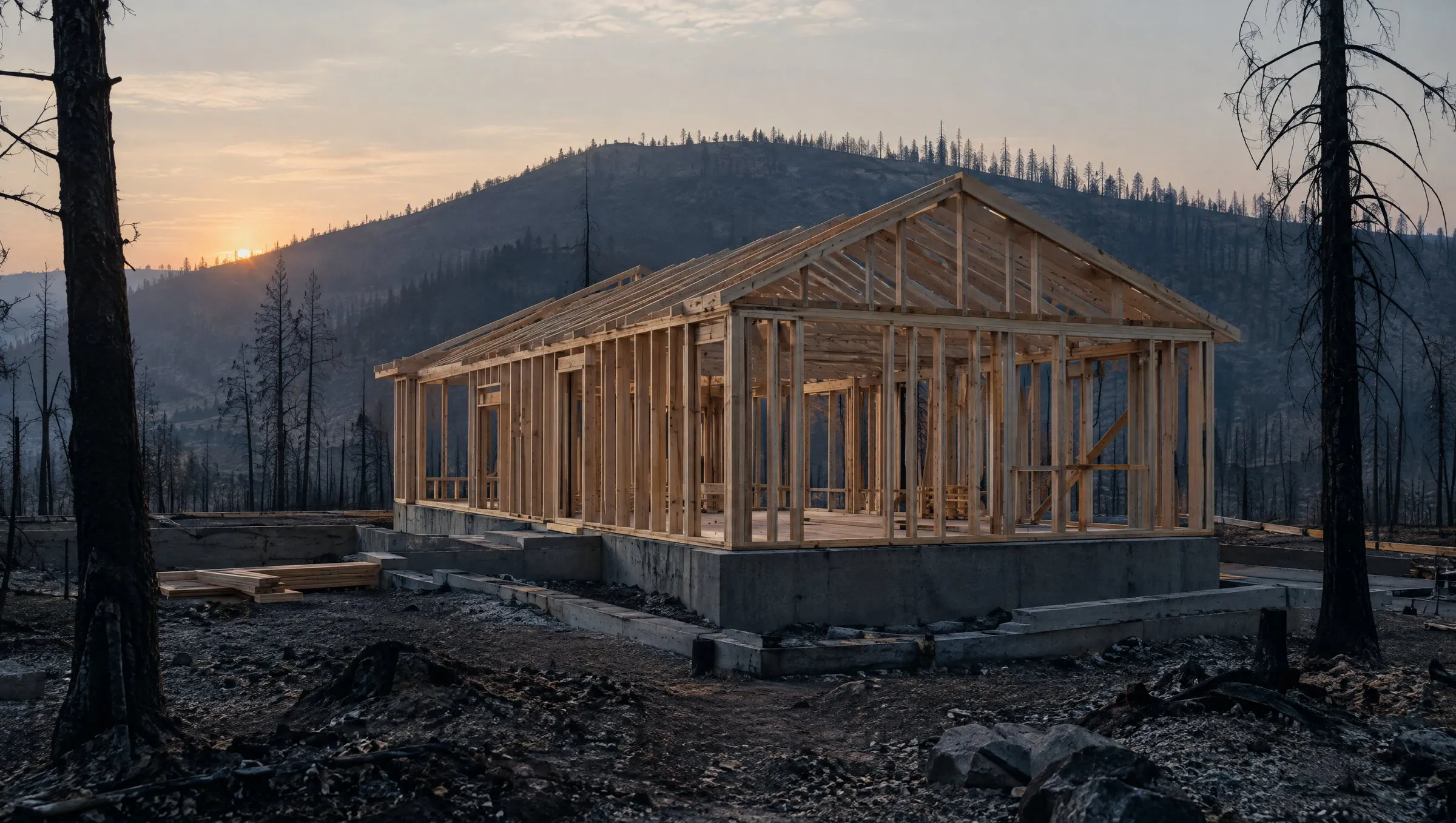
71%of 74,070 California homes destroyed by fire from 2018 to 2023 were underinsured, by about 19% on average. Insurers’ own rebuild estimates at the point of sale came in below the incurred loss 75% to 95% of the time.131
After the 2021 Marshall Fire in Colorado, 74% of policyholders were underinsured.149 AI-generated illustration.
Replacement cost has the largest gap and the least clear buyer. Of 675 households surveyed by United Policyholders after the 2025 Los Angeles fires, 69% of those with total losses said their coverage would not rebuild their homes, with average underinsurance of about $247 per square foot.132 Policies on the California FAIR Plan, the state’s insurer of last resort, reached 645,987 in September 2025, up 169% in four years.91 The San Francisco Fed found that distance from fires added only about 2% to the value of an average home from 2018 to 2021, so wildfire risk shows up more in insurance and carrying costs than in price.92
Layered development matters most for housing and is the hardest to open up, because institutions control four of the six barriers in its way. Private and non-QM lenders set their own scope of work outside agency forms, which makes them the likeliest early buyers of deeper analysis.
Renovation and after-repair value (ARV) analysis has a large base: 297,045 flips in 2025, about 112,000 of them financed (computed). Gross returns were 25.5%, the lowest since 2008, and thinner margins limit what investors will pay.126
| Buyers | Size proxy | Demand trigger | ||
|---|---|---|---|---|
| ADU feasibility and ADU rent analysis | Owners, lenders now counting ADU rent, investors | 30,354 California ADU permits in 2024 | Fannie Mae ADU income; Freddie Mac ADU guide | Strong |
| DSCR and short-term rental income with regulatory status | Rent-based (DSCR) and other nonstandard lenders, investors | DSCR 35% of non-QM loans; 1.73M short-term rental listings | STR ordinances and litigation | Medium to Strong |
| Estate, divorce and litigation valuation | Executors, estate and family law attorneys, litigants | No national count | Deaths, divorces and disputes, not loan volume | Medium |
| Insurance replacement cost and rebuild valuation | Homeowners, insurers, public adjusters, attorneys | $1.3T Western wildfire reconstruction value (vendor) | Wildfire losses; FAIR Plan growth | Medium |
| Layered development valuation | Builders, construction lenders, community development lenders, municipalities | 19,000 2 to 4 unit starts in 2025 | Zoning reform; UAD 3.6 data depth | Medium |
| Highest and best use and land value | Owners, small developers, investors, estate attorneys | Land 40.9% of value nationally | Zoning reform | Medium |
| Renovation and ARV scenario analysis | Private and short-term renovation lenders, flippers | About 112,000 financed flips in 2025 (computed) | Private credit growth | Medium |
| Hazard and carrying-cost adjusted value | Lenders, investors, condo buyers, insurers | 1,438 Fannie-ineligible Florida condo buildings | Florida SB 4-D; Risk Rating 2.0 | Medium |
| Model validation and AVM quality control support | Lenders, AVM vendors, GSEs | AVM rule in force since Oct. 1, 2025 | Regulation | Medium |
| Rights, easement and use-entitlement analysis | Buyers, sellers, attorneys, high-value lenders | Niche; no national count | Coastal enforcement; neighbor ADUs | Weak to Medium |
| Portfolio monitoring for single-family rental and build-to-rent operators | Operators, servicers, trustees | 68,000 build-to-rent starts in 2025 | Fund reporting, securitization | Weak |
Size proxies come from sources cited in chapters 05, 06 and 08; the build-to-rent count is from NAHB.128 The legal valuation row rests on my own judgment; no national data measures it.
Federal portability covers federally related loans and little else
Chapter 06 ended on a need: lenders want values that are equally predictable in every market. Appraisal licenses are issued state by state, so an insurer, a DSCR lender or a national builder that wants the same analysis in 30 states needs appraisers licensed in each of them. Federal law, 12 U.S.C. 3351(a), requires states to honor another state’s credential on a temporary basis, but only for federally related transactions, which are mainly loans by federally regulated lenders that require an appraiser.134 Insurance, tax appeal, estate and private lending work sit outside that guarantee. For that work the rules vary by state; California, for example, says no temporary permit is needed.136 Appraisers work around the patchwork by holding several credentials, about 1.36 per person in 2025 (computed).28
Sources: Nurse Licensure Compact; Interstate Medical Licensure Compact, which reports 240,184 licenses issued as of September 30, 2026; PSYPACT.138139140 Large holdouts include California and New York for nursing.
The federal fix has stalled. H.R. 5520, the Portal for Appraisal Licensing Act, would build a shared platform with the ASC for licensing, renewals and reciprocity. It has seen no action since it was introduced and sent to committee in September 2025, and a 2020 version also stalled.137 I found no proposal for an interstate appraiser licensure compact.
Consistency is the case for a national standard. In Fannie Mae’s random-sample quality reviews, the most common defect is collateral discrepancies, such as inaccurate condition and quality ratings and poor comparable selection.144145 The overall defect rate is low: in ACES’s second-quarter 2025 data, 1.51% of loans had a critical defect, and of those serious errors, 5.9% involved the appraisal.146
A national licensed workforce, in this article’s sense, is a delivery standard: shared tools, defined scopes of work, portable licensing and local appraisers on inspection. Independent appraisers can build it on shared infrastructure without consolidating into a few firms. The shared tools come first, and they are where appraisers have been slowest.
Appraisers have been slow to adopt technology. That is the barrier they control.
The research behind this article found eleven barriers between lower-cost analysis and new demand for complex property work. Lenders, appraisal management companies (AMCs, the middlemen that order appraisals for lenders), the GSEs, regulators and legislatures control most of them. The one appraisers control is their own use of technology, and residential appraisal has been slow to adopt it for a long time.
When I asked the companies that make appraisal report software, they told me that fewer than half of their residential users use the mobile inspection app, even though many of those apps come free or bundled with the software. The rest sketch the house and take notes on paper, then type it all in again at the office. By my estimate, fewer than half subscribe to market analysis software that helps derive adjustments and build a solid work file. Neither figure comes from a published survey. AI use is wider. In a McKissock poll with no stated sample size, 40% said they use AI for narrative and 23% had not used it.53 Menlo Ventures estimates that only about 3% of people who use AI pay for it,162 and I expect the share among appraisers is lower, which suggests most of that use is free chat tools that help with writing.
The standards no longer stand in the way. USPAP, the profession’s national standards, now includes Advisory Opinion 41, which adds no new requirements and sets out how to evaluate any tool, including AI. The National Association of Appraisers called generative AI another tool and noted that its members range from advanced users to non-users.4748
That gap is the opportunity, and it is Brynjolfsson’s first test, the one appraisers control. Appraisers who invest in technology and well-built systems can solve hard valuation problems in less time, which lowers what the work costs to produce. On the elastic side of the market, a lower cost brings in clients who could not justify the fee before, so those appraisers can grow their business by growing demand in their own markets.
Some of that growth needs no one else to move. Legal work, which I rate on my own judgment in chapter 08, faces no institutional barrier: executors and attorneys already order it, and a stronger report at a lower fee is worth ordering in more cases. Tool adoption blocks five of the eleven opportunities from chapter 08, more than any other barrier, and for legal work it is the only one. The other ten also need lenders, AMCs, the GSEs, regulators or legislatures to move. Brynjolfsson’s second test sits with them, because a lower cost becomes a lower price only if the saving reaches the client, and FHFA cites GAO that AMCs keep at least 30% of the fee.57 Chapter 11 sorts those changes by who can make them.
What adapting takes, and who else has to move
Adapting is the appraiser’s part: tools that make deep analysis affordable, and training in land use and zoning, income and rental regulation, construction cost, hazard and insurance. Two more changes are up to institutions. Licensing and delivery have to give national clients consistent coverage, and GSE and FHA rules have to recognize middle housing. The list below assigns each change to the people who can make it. Your checkmarks are saved in this browser.
0 of 12 checked · Saved in this browser only.
- UAD 3.6 mandate
- Last day for UAD 2.6 under the exception
- UAD 3.6 mandatory for all new submissions
UAD 3.6 becomes mandatory for all new submissions on May 20, 2027, and UAD 2.6 retires on June 28.4142 From that date every GSE appraisal carries structured condition, quality, measurement and comparable data that models can read and check.
Run the three tests from chapter 02 once more. Loan work fails the third, and it will keep following loan volume. UAD 3.6 may still help it: the new report records far more about a home than UAD 2.6 did, and that detail could show how many properties are too complex for a waiver. Complex property work can pass all three tests if appraisers adopt the tools that cut its cost and share the saving: part lowers the price for the client, and part stays with the appraiser as margin. If demand then rises as the price falls, lower-cost analysis can grow the profession the way more efficient coal use grew coal consumption.
The same date works as a deadline for deciding which part of your practice should grow. Three steps fit before it. Switch to the mobile inspection app that may already come with your report software. Subscribe to a market analysis tool that helps derive adjustments and build the work file. Then pick one complex niche in your market, such as estates, ADUs or small multi-unit buildings, and build the comparable and rules file for it.

Every claim traces to a finding, including the ones against it
This article was drafted from a research file of 157 findings and 152 sources; ten more sources were added during fact-checking and editing. These are the findings that carry the most weight on each side. Each one is cited in the chapter linked beside it.
Supports the argument
- Jevons, 1865Coal per ton of Scottish iron fell to under a third while the industry’s total coal use rose tenfold.Chapter 02
- Radiology grewResidency programs offered 1,241 positions in 2026 and filled 97.6%, ten years after a prediction that radiologists would be obsolete.Chapter 03
- Accountants up, bookkeepers downBLS projects bookkeeping clerks down 6% and accountants up 5% from 2025 to 2035.Chapter 03
- One ADU house, two valuesTwo appraisers valued the same Burbank home with an ADU at $1.4 million and $1.9 million.Chapter 05
- Models miss conditionMean AVM error was 4.35 points higher for homes in poor condition in a 2024 study of Atlanta and Memphis.Chapter 05
- Small multi-unit buildings fadedBuildings with 2 to 4 units fell from about 6% of new homes in 1972 to about 1% in 2025.Chapter 06
- Fire losses underinsured71% of California homes destroyed by fire from 2018 to 2023 were underinsured, by about 19% on average.Chapter 08
Cuts against it
- Backfire is rareIn energy, typically 5% to 40% of an efficiency saving comes back as extra use, and the total effect usually stays under 60%.Chapter 02
- Translators shrankMachine translation is linked to about 28,000 fewer translator jobs than expected from 2010 to 2023.Chapter 03
- Waivers already workACE loans had about 8.9% lower 90-day default rates than comparable appraised loans.Chapter 04
- Waivers take a shareWaivers covered 28% of GSE loans in March 2026 and 19% in June.Chapter 01
- Townhouses at a recordTownhouses reached 18.7% of single-family starts in Q3 2025, so builders do build some attached homes.Chapter 06
Appendix B: seventeen objections the argument was tested against
NarrowJevons backfire is rare; energy research mostly finds partial rebound.
Agreed. Backfire needs elastic demand, so this article applies it only to complex property work and names the data that would test it.
ConcedeWaivers proved technology replaces appraisals, and those loans performed better.
True for simple refinance and purchase loans, which are loan work. This article’s claim is about complex property work.
NarrowAppraisers are not the main barrier; lenders could not even order hybrids.
Agreed: institutions control several barriers. Tool adoption is the one appraisers control, and it blocks more opportunities than any other.
NarrowAppraisers reject bifurcation for rational reasons: liability and fees.
Both causes are set by institutions. Bifurcation (someone else collects the data) is a different thing from tool adoption (the appraiser collects better data faster).
NarrowBuilders already build attached product; townhouses are at a record.
Fee-simple townhouses finance like detached homes. The lag is in condo regimes and 2 to 4 unit buildings.
ConcedeThe typical new lot is far smaller than a quarter acre.
Correct: the 2025 median was 8,543 square feet, and the argument does not rely on lot size.
HoldsMarkets already pay for walkable mixed neighborhoods.
They do, and hedonic models captured the Kentlands premium. The friction sits at construction financing, early comparables and eligibility rules.
NarrowMinneapolis and SB 9 show low uptake for reasons other than appraisal.
Cost, subdivision law and defect liability matter. Appraisal is presented as one documented friction among several.
NarrowThe national housing shortage is disputed.
Estimates run from 3.7 to 5.5 million homes, so the article argues from affordability instead of a single shortage figure.
HoldsTranslators show AI can shrink a profession that looked like a Jevons candidate.
Professions shrank when the output itself was automated with no licensed judgment attached. Appraisal’s licensed opinion is protected only for federally related transactions.
ConcedeGains flow to adjacent roles: data collectors, analysts and vendors.
A real risk, which is why the article asks appraisers to own the analysis and the tools.
NarrowRadiology’s growth came from aging and population growth.
Accepted. The narrower lesson: imaging got less expensive and radiologists kept the licensed read while volume rose.
NarrowA national licensed workforce means consolidation and fewer independents.
Defined here as a delivery standard: shared tools, defined scopes, portable licensing, local appraisers on inspection. Independents can build it on shared infrastructure.
OpenThere is no proof complex property demand grows when price falls.
Agreed, and chapter 08 says so. The case rests on legal work such as estates, divorces and disputes, whose demand follows those events rather than loan volume.
OpenComplex work is a fixed market: only so many estates, divorces and disputes happen each year.
The events are fixed in the short run, and the share that gets an appraisal can change. At $2,000 to $5,000, many parties settle for an agent’s opinion, an online estimate or an assessed value, and a lower price could win some of them back.
NarrowAppraisal quality is fine; critical defect rates are low.
GSE reviews still cite condition, quality and comparable selection most often, so the argument is about consistency on complex property, without a crisis framing.
NarrowHazard effects on price are small on average.
Hazard is framed through carrying costs and insurance, where the evidence is larger; the small average price effect is cited as context.
Verdicts: Holds, the claim survives as written; Narrow, it survives with tighter wording; Concede, the objection is true and the argument builds on it; Open, the data does not exist yet.
Research checked October 17, 2026. Figures marked computed were calculated by ValuSignal from the cited data. Vendor figures are company claims and are labeled as such. The ironworks, streets, parcel and interiors are AI-generated illustrations made with Higgsfield and show no real property. The author is a residential appraiser. General information, not legal, lending or appraisal advice.
Sources
164 sources
- Jevons, The Coal Question, ch. VII (Econlib)Primary
- Jevons paradox (Wikipedia)Encyclopedia
- Gillingham, Rapson, Wagner, The Rebound Effect and Energy Efficiency Policy, RFF DP 14-39Academic
- GeekWire, Nadella on Jevons after DeepSeek, Jan 2025Trade
- NPR Planet Money, AI, DeepSeek and the Jevons paradox, Feb 4, 2025Trade
- Fortune, Radiologists a decade after Hinton's predictionTrade
- Works in Progress, Why AI isn't replacing radiologists, Sep 2025Trade
- AuntMinnie, HPI radiologist supply and imaging demand projectionsTrade (JACR summary)
- AuntMinnie, Evidence contradicts broad claims about AI and radiology workforceTrade (JACR summary)
- Radiology Business, Misleading claims about imaging, Oct 14, 2026Trade
- RT Medical, Match Day radiology 2026 (NRMP figures)Vendor (citing NRMP)
- Bessen, Toil and Technology, IMF Finance and Development, Mar 2015Academic
- Bessen, How Computer Automation Affects Occupations, BU Law WP 15-49Academic
- BLS Occupational Outlook Handbook, TellersPrimary
- Wyatt and Hecker, Occupational changes during the 20th century, Monthly Labor Review, Mar 2006Primary
- BLS OOH, Bookkeeping, Accounting, and Auditing ClerksPrimary
- BLS OOH, Accountants and AuditorsPrimary
- RAND, Where the Money Goes (e-discovery costs), MG-1208Academic
- BLS OOH, LawyersPrimary
- BLS OOH, Paralegals and Legal AssistantsPrimary
- Frey and Llanos-Paredes, Lost in Translation, Oxford Martin School, 2025Academic
- BLS, Fastest declining occupationsPrimary
- BLS OOH, Travel AgentsPrimary
- Bessen, AI and Jobs: the role of demand, NBER w24235Academic
- Autor, Why Are There Still So Many Jobs?, JEP 2015Academic
- Autor, Chin, Salomons, Seegmiller, New Frontiers, NBER w30389Academic
- Acemoglu and Restrepo, Automation and New Tasks, NBER w25684Academic
- ASC 2025 Annual ReportPrimary
- ASC 2009 Annual ReportPrimary
- Appraisal Institute 2023 Fact SheetTrade
- Valuation Review, PAREA progressTrade
- Bisnow, Appraisers face existential crisis as tech creeps in, Oct 2025Trade
- Appraisal Institute, Appraisal Now, May 5, 2026Trade (AEI data)
- Freddie Mac, ACE Research Note, May 2024Primary
- Appraisal Institute, Appraisal Now, Aug 22, 2025Trade (AEI data)
- Appraisal Institute, Putting Fannie Mae's $3 billion appraisal savings in context, Aug 2026Trade
- Fannie Mae, Changes to appraisal alternatives requirementsPrimary
- FHFA OIG, AUD-2024-001Primary
- Working RE, GSE appraisal volume and property data collectionTrade
- Freddie Mac, Property Data Collection: An Overview, Jan 2026Primary
- Fannie Mae, UAD 3.6 contingency announcement, Sep 30, 2026Primary
- HousingWire, GSEs' temporary UAD 3.6 exceptionTrade
- Fannie Mae, Appraiser Update, June 2025Primary
- National Mortgage Professional, UAD 3.6 fees climb $65Trade (vendor data)
- Fannie Mae ANSI Fact SheetPrimary
- Opteon, How LiDAR technology is changing property appraisalsVendor
- BVR, ASB adopts AO-41 on the use of technologyTrade
- NAA comments on ASB generative AI concept paperPrimary
- Inman, Fannie Mae's adoption of AI in appraisal review, Nov 2023Trade
- HousingWire, Aivre AI appraisal platformTrade
- Newswire, Reggora Forms launch, Jul 2026Vendor
- Restb.ai, AI in UAD 3.6 workflowsVendor
- McKissock, Getting started with AI for appraisers, May 2026Vendor
- Working RE, Bifurcation survey, Jun 2020Trade
- NAR 2025 Appraisal Issues SurveyTrade
- Appraisal Institute letter to FHFA Director PulteTrade
- FHFA Working Paper 18-01, AMCs and appraisal qualityPrimary
- Freddie Mac, Racial and ethnic valuation gaps, Sep 2021Primary
- HUD PAVE Fact SheetPrimary
- Shen Realty, Point Dume area specialBrokerage
- Shen Realty, Malibu ColonyBrokerage
- NBC Los Angeles, Malibu beach access fineTrade
- CNN, Billionaires' beach and public access, Jul 2015Trade
- CBS LA, Broad Beach restoration, Oct 2015Trade
- LADBS Equinekeeping Information BulletinPrimary
- LA City Planning report to Council, Jun 24, 2026Primary
- Norco Municipal Code Ch. 18.13 (GoCodebook)Primary (third-party host)
- Rolling Hills Estates Planning FAQPrimary
- Claremont Municipal Code Ch. 16.016Primary
- Bald Brothers Team, Yorba Linda horse property appraisal gapBrokerage
- California HCD, ADU technical assistance memo, Jan 2020Primary
- California HCD, ADU Handbook Update, Mar 2026Primary
- California YIMBY, ADU reform retrospectiveAdvocacy (HCD data)
- Brueckner and Thomaz, ADUs in Los Angeles, Real Estate Economics 2024Academic
- LA Times via Nourmand, What an ADU does to taxes and resale valueTrade (repost)
- Freddie Mac, A Practical Guide to Appraising ADUs, Sep 2026Primary
- Fannie Mae, SEL-2025-08Primary
- Terner Center, SB 9 Turns One, Jan 2023Academic
- FHFA Working Paper 19-01, land share of home valuePrimary
- AirDNA, NYC's short-term rental crackdownVendor
- D Magazine, Dallas short-term rental ban, Oct 2025Trade
- SCOTXblog docket, No. 25-0748Primary (docket tracker)
- Barron, Kung, Proserpio, Airbnb and housing, SSRN 3006832Academic
- Benson et al., Pricing residential amenities: the value of a view, JREFE 1998Academic
- Bourassa, Hoesli, Sun, The Price of Aesthetic Externalities (Auckland, Christchurch, Wellington)Academic
- The Close, How accurate is the Zestimate, Jun 2026Trade
- Zillow Group 8-K, Nov 2, 2021Primary
- GeekWire, KeyBanc on Zillow Offers inventory, Nov 2021Trade
- Zhu, Neal, Young, AVM accuracy, Cityscape 26(1), 2024Academic
- FHFA, Final rule on AVM quality controlPrimary
- California FAIR Plan key statisticsPrimary
- FRBSF Economic Letter 2024-22, Wildfires and real estate valuesPrimary
- FEMA, Risk Rating 2.0 national rate analysisPrimary
- RFF, Housing market overvalued due to unpriced climate risksAcademic
- Insurance Journal, Risk Rating 2.0 full-risk increases, Dec 2025Trade
- TD Economics, Florida condo market, May 2025Trade (bank research)
- Mortgage Professional America, Fannie-ineligible Florida condos, Apr 2025Trade
- HUD, FHA MPR modernization redline, Handbook 4000.1Primary (draft)
- Fannie Mae Selling Guide B2-3-04Primary
- Fannie Mae Selling Guide B4-1.4-07Primary
- Fannie Mae Selling Guide B4-2.1-03, Ineligible projectsPrimary
- CNU, FHA raises commercial space finance cap, Dec 2012Advocacy
- Conduit Street, FHA recognizes ADU income, Oct 2023Trade (summary of HUD letter)
- Gyourko and Rybczynski, Financing New Urbanism, Wharton WP 369Academic
- Terner Center, Unlocking the Potential of Missing Middle Housing, Dec 2022Academic
- NAHB, Financing Missing Middle HousingTrade
- Chapple et al., Implementing the Backyard Revolution, UC Berkeley 2021Academic
- Brown, Appraising properties with ADUs using the income approachTrade (summary of journal article)
- NAHB Eye on Housing, Townhouse construction share gains continue, Jan 2026Trade (Census data)
- NAHB Eye on Housing, Short-term townhouse construction weakness, Aug 2026Trade (Census data)
- NAHB Eye on Housing, Best year for missing middle since 2007, Mar 2026Trade (Census data)
- FRED, Completions in 2 to 4 unit buildings (COMPU24USA)Primary
- NAHB Eye on Housing, Shrinking lots trend levels off, Jul 2026Trade (Census data)
- City of Dallas, SB 15 information sheetPrimary
- City of Dallas, SB 840 information sheet, Aug 2025Primary
- Office of the Texas Governor, SB 15, SB 840, HB 24 signing, Aug 2025Primary
- Sightline, Oregon's zoning reforms are working, Jun 2025Advocacy
- City of Portland, Middle housing production, Feb 2025Primary
- Pew, Minneapolis land use reforms, Jan 2024Trade (research nonprofit)
- Washington HB 1110 final bill reportPrimary
- Congressional Research Service, Estimates of a housing shortage, Dec 2025Primary
- Cato, Questioning the shortage narrative, Sep 2025Advocacy (think tank)
- Harvard JCHS, State of the Nation's Housing 2026, price-to-income mapAcademic
- Tu and Eppli, Valuing New Urbanism: The Case of Kentlands, 1999Academic
- Washingtonian, Kentlands once seemed like a failure, Apr 2018Trade
- ATTOM, 2025 Year-End Home Flipping ReportVendor (data)
- HousingWire, DSCR loan volume growth and fraud risks, Sep 2026Trade
- NAHB Eye on Housing, Weaker conditions for built-for-rent, Mar 2026Trade (Census data)
- Econofact, Do private equity firms own 20% of single-family homes?Academic
- AirDNA, US review November 2025Vendor (data)
- Insurance Business, Insurers' rebuild estimates drive underinsurance, Sep 2026Trade (academic study)
- United Policyholders, 2025 LA Wildfires 12-month surveyAdvocacy
- Cotality, Wildfire Risk Report 2025Vendor
- 12 U.S.C. 3351Primary
- Federal Register, ASC Policy Statements, May 28, 2013Primary
- California BREA, Temporary Practice PermitsPrimary
- Appraisal Institute, PAL Act key points, 119th CongressTrade
- Nurse Licensure CompactPrimary
- Interstate Medical Licensure CompactPrimary
- PSYPACT mapPrimary
- Opteon, company milestones, Mar 2022Vendor
- HousingWire, Opteon acquires Equity Valuation Partners, Nov 2025Trade
- Class Valuation, Staff appraiser team, Jul 2025Vendor
- Fannie Mae Quality Insider, Jan 2025Primary
- Fannie Mae Quality Insider, Dec 2025Primary
- ACES, Q2 2025 Mortgage QC Industry TrendsVendor
- HousingWire, VA loan appraisal rules and fees, Jun 2026Trade
- Foley and Lardner, Texas SB 15, 17, and 840, Jul 2025Trade (law firm)
- Cookson, Gallagher, Mulder, Coverage Neglect in Homeowners InsuranceAcademic
- Appraisal Buzz, State of the industry update, 2016Trade
- Banking Day, Valex clears 1,000 valuations a day, 2007Trade
- MortgageOrb, Private lending in 2025Trade (secondary)
- CNU, Study confirms TND price premium (four communities)Advocacy (academic study)
- Koster, van Ommeren, Volkhausen, Short-Term Rentals and the Housing Market: Airbnb in Los Angeles, CEPR DP13094Academic
- Fannie Mae, DU Version 12.1 release notes, Mar 21, 2026Primary
- ASC, Idaho appraiser program final compliance review, Dec 6, 2024Primary
- BLS OOH, Financial AnalystsPrimary
- BLS OOH 2008-09, Tellers (archived)Primary
- Appraisal Institute, Appraisal Now, Sep 1, 2026Trade (AEI data)
- Withum, Key changes from Florida HB 913: inspections and reserves, 2025Trade (accounting firm)
- Withum, SIRS update: what HB 913 did and did not do, 2025Trade (accounting firm)
- Menlo Ventures, 2025: The State of Consumer AI, Jun 2025Investor survey
- Emily Badger and Quoctrung Bui, Cities start to question an American ideal: a house with a yard on every lot, The New York Times, Jun 18, 2019Press (data analysis)
- Fannie Mae Selling Guide B4-2.1-02, Waiver of project review (08/05/2026)Primary
The Signal / Monthly briefing
Get The Signal in your inbox.
One sourced briefing in the first week of each month on valuation policy, collateral risk and the appraisal profession.
Unsubscribe in one click. We don't sell your email or share it with sponsors. Privacy Policy