The Signal / Appraiser qualifications /
The AQB drops the college degree for certified appraisers: What appraisers will study from July 1, 2027
Nov. 19, 2026Adopted by the Appraiser Qualifications Board
July 1, 2027Effective date
Jan. 1, 2029State deadline proposed in the draft
College hours are estimated at 15 classroom hours per semester credit, the instruction time in the federal credit-hour definition, so a 120-credit bachelor's degree counts as about 1,800.6 Certified Residential applicants have five college options today, and the bar shows one of the smaller ones, 30 semester hours of courses. A licensee of five years with a clean record can qualify with no college.
Course hours stay close to today. A required analytics course replaces electives, and candidates can take the exam once coursework is done. Each state applies the rules on its own schedule.
Key points
- The Appraiser Qualifications Board adopted revised Real Property Appraiser Qualification Criteria on Nov. 19, 2026, effective July 1, 2027. Each state applies them once it adopts them; the draft proposed Jan. 1, 2029 as the deadline.
- Certified Residential and Certified General applicants will no longer need a college degree. A required Market Data Analytics course, 15 hours for Certified Residential and 30 for Certified General, replaces elective hours.
- The fair housing course drops from eight hours to five, and its repeating continuing education version becomes optional. A passed seven-hour course still counts.
- Candidates can take the national exam once their courses are done, a passing score no longer expires, and the minimum months of experience end while the required hours stay the same.
From July 1, 2027, a person can become a certified real estate appraiser with no college degree. The Appraiser Qualifications Board (AQB), part of The Appraisal Foundation, adopted that change on November 19. It rewrites the national rules for the appraiser credentials.1
The course hours around the degree barely change: 83 to 80 hours for a trainee, 158 to 155 for Licensed Residential, 200 to 200 for Certified Residential, and 300 to 305 for Certified General. Inside those totals, a new course in market data analytics takes the place of elective hours. The fair housing course drops from eight hours to five. Outside those totals, the board dropped the minimum months of experience and the rule that the national exam comes last.2
The AQB sets a floor. State appraiser boards issue credentials, and they may require more than the AQB's floor. So the new rules reach an applicant only once that applicant's state adopts them. In its draft, the AQB proposed Jan. 1, 2029 as the deadline for each state. The Foundation's adoption notice gives only the start date.
What the Board adopted
The Foundation's announcement is one sentence: "On November 19, 2026, the Appraiser Qualifications Board (AQB) adopted the Third Exposure Draft of Proposed Changes to the Criteria, effective July 1, 2027."1 A link beside it leads to the September draft and the 106 comment letters on it.8 As of November 20, the Foundation had not yet posted a final edition of the Criteria, a summary of the board's actions or a press release. This article works from the draft the notice names. We will update it when the final text appears.
The draft is the last of three. The AQB released the first in December 2025, the second in June 20265 and the third, 173 pages long, on September 24. Its chair, Jerry Yurek, wrote that the work drew on "five concept papers, two prior exposure drafts, more than 1,000 public comment letters, and the 2025 National Job Analysis," a survey in which about 3,600 appraisers described the work each credential involves. He framed each proposal around one question: "on the day a credential is issued, what is its holder minimally qualified to appraise?"2 Our October article on the three drafts follows how the proposals changed between rounds.
Several points remain open, and we flag them here so readers can weigh what follows:
- Final wording. The board could have edited the draft before adopting it. Every comparison in this article uses the September text, and we will correct it if the final edition differs.
- Response to the letters. Without a summary of the board's actions, we can only report what the 106 letters asked for. We do not yet know which requests, if any, the AQB accepted.
- State deadline. The draft proposed Jan. 1, 2029. The adoption notice gives only the July 1, 2027 effective date, so treat the deadline as proposed.
- Your state's timing. Each state board sets its own schedule for adopting the new rules. Ask your board before planning around the July 2027 date.
- One letter's author. A supporting letter is signed only “IAC.” We have not confirmed who sent it.
| Rule | 2026 Criteria | From July 1, 2027 |
|---|---|---|
| College degree | Associate's, bachelor's or listed alternatives for Certified Residential; bachelor's for Certified General | None. A related degree can still earn course credit |
| Electives | 12 hours (Cert. Res.), 22 hours (Cert. Gen.) | Replaced by a named analytics course |
| Market data analytics | No dedicated course | 15 hours (Cert. Res.), 30 hours (Cert. Gen.) |
| Fair housing course | 8 hours including exam | 5 hours including exam; a passed 7-hour course counts |
| Fair housing CE | 7 hours the first cycle (met by the qualifying course), then 4 hours every two years | Optional |
| Exam timing | After courses and experience | After courses |
| Exam result | Valid 24 months | Does not expire; results already expired stay expired |
| Trainee courses | Must be completed within five years before application | No time limit; the current curriculum still applies |
| Trainee CE | Required | None; states may require it |
| Experience months | 6, 12 and 18 months minimum | None; hours unchanged |
The package also changes how experience is earned (chapter 07) and rewrites the definition of Licensed Residential. It also includes the Demonstration Pathway. That is a route to Licensed Residential through three appraisal reports, reviewed in writing and defended out loud. The detailed policies for that pathway are a separate draft the board did not adopt with the Criteria.24
- 1991First Criteria: Licensed Residential, Certified Residential, Certified General
- 2008College courses or a degree first required for the certified classes; course hours raised to 150, 200 and 300
- 2015Bachelor's degree for both certified classes; education and experience before the exam
- 2018College requirement dropped for Licensed Residential; alternatives added for Certified Residential
- 2026Valuation bias and fair housing course required in qualifying education and CE
- 2027Degree requirement removed; analytics course added (effective July 1)
Earlier dates from the history section of the 2026 Criteria. Dates are start years.3
The new course list
Every credential starts with the same four courses: Basic Appraisal Principles, Basic Appraisal Procedures, the 15-Hour National USPAP Course and the fair housing course. Licensed Residential adds four residential courses. Certified Residential adds statistics and an advanced residential course. Certified General swaps in general courses for the residential ones, with 60 hours on the income approach.23
Two changes run through the list. The fair housing course is three hours shorter in each column. And the elective hours in the two certified columns become one named course: Market Data Analytics Applications and Case Studies. That's 12 hours becoming 15 for Certified Residential, and 22 becoming 30 for Certified General. The AQB wrote that "an open block of unspecified hours does not belong in a set of minimum qualifications."2
80hours
Trainee Appraiser
155hours
Licensed Residential
200hours
Certified Residential
305hours
Certified General
Every course and its hours, by credential
| Course | Trainee2026 / 2027 | Licensed2026 / 2027 | Cert. Res.2026 / 2027 | Cert. Gen.2026 / 2027 |
|---|---|---|---|---|
| Basic Appraisal Principles | 30 / 30 | 30 / 30 | 30 / 30 | 30 / 30 |
| Basic Appraisal Procedures | 30 / 30 | 30 / 30 | 30 / 30 | 30 / 30 |
| Fair housing course | 8 / 5 | 8 / 5 | 8 / 5 | 8 / 5 |
| 15-Hour National USPAP Course | 15 / 15 | 15 / 15 | 15 / 15 | 15 / 15 |
| Residential Market Analysis and Highest and Best Use | · / · | 15 / 15 | 15 / 15 | · / · |
| Residential Appraiser Site Valuation and Cost Approach | · / · | 15 / 15 | 15 / 15 | · / · |
| Residential Sales Comparison and Income Approaches | · / · | 30 / 30 | 30 / 30 | · / · |
| Residential Report Writing and Case Studies | · / · | 15 / 15 | 15 / 15 | · / · |
| Statistics, Modeling and Finance | · / · | · / · | 15 / 15 | 15 / 15 |
| Advanced Residential Applications and Case Studies | · / · | · / · | 15 / 15 | · / · |
| General Appraiser Market Analysis and Highest and Best Use | · / · | · / · | · / · | 30 / 30 |
| General Appraiser Sales Comparison Approach | · / · | · / · | · / · | 30 / 30 |
| General Appraiser Site Valuation and Cost Approach | · / · | · / · | · / · | 30 / 30 |
| General Appraiser Income Approach | · / · | · / · | · / · | 60 / 60 |
| General Appraiser Report Writing and Case Studies | · / · | · / · | · / · | 30 / 30 |
| Appraisal Subject Matter Electives | · / · | · / · | 12 / · | 22 / · |
| Market Data Analytics Applications and Case Studies | · / · | · / · | · / 15 | · / 30 |
| Total | 83 / 80 | 158 / 155 | 200 / 200 | 300 / 305 |
For appraisers moving up, the added courses grow a little in each certified step. That's because the analytics course is longer than the electives it replaces. A Licensed Residential appraiser upgrading to Certified Residential needs 45 hours, up from 42. Those hours cover statistics, the advanced residential course and the 15-hour analytics course. A Certified Residential appraiser moving to Certified General needs 120 hours, up from 100.23
- Trainee to LicensedSame
- Trainee to Cert. Res.+3
- Trainee to Cert. Gen.+8
- Licensed to Cert. Res.+3
- Licensed to Cert. Gen.+8
- Cert. Res. to Cert. Gen.+20
The college degree

The college rule is younger than many of the credentials it covers. Rules adopted in 2004, in force by 2008, first required college courses or a degree for the certified credentials. Rules in force by 2015 raised that to a bachelor's degree for both. In 2018 the board dropped college for Licensed Residential. It gave Certified Residential applicants five college options, plus a route for long-time licensees.3 Today a Certified Residential applicant needs one of these:
Removed from July 1, 2027
A Certified General applicant needs a bachelor's degree in any field. From July 1, 2027, neither credential requires any college. A degree in real estate from a program the AQB has approved can still count toward the course hours.23
The AQB's case rests on its 2025 job analysis. "It found that holding a degree did not predict better performance in appraisal practice," the board wrote. The factors that did were "appraisal-specific education, the ability to write a USPAP-compliant report, and examination results." An outside research firm sorted 437 arguments from the 254 comments on the board's degree concept paper. It "concluded that no compelling evidence connects college degrees to better appraisal quality or greater public trust."2 The board weighed keeping the degree for Certified General alone, and declined. It wrote that the general curriculum and exam "are the most demanding in the Criteria."2
The board also answered letters that said a degree supports the profession's standing. "A firm may prefer degreed appraisers, a client may require them, and a professional organization may make a degree part of its designation," it wrote. Appraisers' existing credentials and completed courses keep their status.2
“Rocket Close continues to strongly support removing the college-degree requirement for the Certified Residential and Certified General classifications.”
Rocket Close, an appraisal management company, letter 60
“My concern with the existing degree requirement is that a bachelor's degree in an unrelated field does not, by itself, demonstrate the knowledge or judgment needed to perform a credible appraisal.”
An appraiser of 26 years working under a Certified General appraiser, letter 81 (Probelski)
“If formal education can materially improve the analytical abilities of an experienced appraiser, why would we conclude that it is unnecessary for individuals just entering the profession?”
A Mississippi appraiser of about 20 years, letter 49 (Barnett)
“Additionally, this change disincentivizes academic investment and penalizes state higher education institutions that previously developed specialized degree programs fully approved by the AQB.”
Iowa Real Estate Appraiser Examining Board, letter 53
Of the 106 letters on the final draft, 37 took a position on the degree by our count: 22 opposed removing it, 12 supported removing it and 3 were mixed. Most of the pushback came from Certified General appraisers and trainees. Four of them sent letters that share whole paragraphs word for word. Support came from licensed appraisers who said the rule kept them from upgrading. It also came from two appraisers holding the MAI designation, from Rocket Close, and from a coalition of three groups: the National Fair Housing Alliance, the NAACP Legal Defense Fund and the National Consumer Law Center. That coalition wrote that the rule "fails to meet the baseline expectation that it helps accurately identify who is qualified to serve as an appraiser."2 The North Dakota appraiser board opposed full removal, and the Appraisal Institute said its earlier objections stand.2
The analytics course
The AQB names three sources for the new course. Its job analysis found that the curriculum did not clearly teach "the application of market data analytics to support adjustments in the sales comparison approach." On the national exam, "first-time examinees scored lowest in the sales comparison approach, market analysis, and statistics." And users of appraisals reported "adjustments made without visible market support."2
The board chose one dedicated course over adding hours to existing ones. That way, course providers build against a single outline, and "states and applicants see exactly where the requirement resides."2 It declined one commenter's request to require a college statistics course for Certified General.

Guide Note 1, section XI
Residential Appraiser Market Data Analytics Applications and Case Studies
15 hours, required for Certified Residential. The general version, section XVII, runs 30 hours for Certified General.
- Market analysis. Demand indicators from MLS data such as closed sales, active listings, months of supply and days on market; supply from listings, permits and public records; absorption and marketing time.
- Highest and best use. As vacant and as improved, supported by market data, including trend analysis for the timing of renovation or redevelopment.
- Sales comparison. Statistics to choose elements and units of comparison; matched pairs, matched data sets, bracketing and ranking to support adjustments.
- Cost and income. Depreciation and entrepreneurial incentive extracted from sales; rent, vacancy and expense indicators for one-to-four unit rentals.
Topics condensed from the adopted course outline.2
No letter on the final draft opposed the course. The North Dakota board supported it. The Ohio Coalition of Appraisal Professionals added a caution about software: "Technology can assist competent appraisal work, but the applicant remains responsible for the analysis and report."2 One Maryland appraiser holding the SRA designation questioned the trade the board made: “A 15- or 30-hour analytics course may improve technical education, but that is not necessarily equivalent to the broader intellectual exposure being removed.” (letter 11, Colen)
The course exists as an outline today. Education providers have to write it and get it approved before anyone can take it. That's one reason the AQB proposed a separate state deadline after the start date.2
The fair housing course
The fair housing rule took effect January 1, 2026. New applicants take an eight-hour qualifying course, seven hours plus a one-hour exam. After that, appraisers take a continuing education course: seven hours in their first two-year cycle, then at least four hours every two years after that. A new appraiser who passed the eight-hour qualifying course has already met the seven-hour rule.3 The AQB renamed the course "Fair Housing Laws, Impartiality, and Objective Valuation Practice," set it at five hours, counting the exam. It also made the repeating continuing education version optional.2
The board wrote that the content is unchanged. The outline still covers fair housing law, impartiality and the court cases on bias in appraisal. Its reasoning was time: "Course providers and students gave the AQB the same informal feedback: the required content did not fill a full eight hours." Anyone who passed a course of seven hours or more under the 2026 outline has met the new rule. And the fair housing topic leaves Basic Appraisal Principles, so it is taught once.2
The national organizations split three ways on this change.
Keep the current hours
“The AQB should instead retain the current fair housing training requirements for both the initial and continuing education courses.”
National Fair Housing Alliance, NAACP Legal Defense Fund and National Consumer Law Center, letter 92
“NAR remains concerned about the proposal to make recurring fair housing and valuation bias continuing education optional.”
National Association of Realtors, letter 93
Support the shorter course
“The prior requirement appeared to be driven more by political objectives than by demonstrated deficiencies within the profession.”
A letter signed “IAC,” letter 106
The North Dakota appraiser board also supported the new title and the five-hour length.
Drop the course
“Bias and Fair Housing is covered in the Uniform Standards of Professional Appraisal Practice Course(s). Requiring this course is redundant and unnecessary.”
International Association of Assessing Officers, letter 78
The civil rights coalition tied its objection to the new pathways. It argued that people entering through those pathways need the training most. The AQB answered an earlier group of letters that said the outline misstates federal fair housing law. It "examined the outline against the statutes and the case law it addresses and concluded that the outline states the law accurately." The board also noted that a state law requiring more fair housing training still applies.2
The order of steps

Since 2015 an applicant has had to finish both courses and experience before sitting for the national exam. Under the adopted rules, an applicant can test as soon as the courses for the credential are done. The board wrote that the exam tests what the courses teach. As it put it, "testing is most accurate, and most fair to the applicant, when it happens while that learning is fresh."2 The state still issues the credential only after education, exam and experience are all complete.
2026 rules
- CoursesRequired core curriculum
- CollegeCertified classes only
- ExperienceHours, over a minimum number of months
- ExamAfter education and experience
- CredentialExam result valid 24 months
From July 1, 2027
- CoursesRequired core curriculum, analytics course for certified classes
- ExamAny time after courses; a pass does not expire
- ExperienceSame hours, no month minimum; four routes
- CredentialIssued by the state once all three are done
Under the 2026 Criteria, a passing exam score expires after 24 months. The board said that fell hardest on applicants who could not find a supervisor in time. Under the adopted rules, a passing score never expires. Several states asked for a limit of three, five or ten years. The board kept its position after the exam vendor confirmed that it keeps results for the life of its contract, plus five years.2 A score that expired under the old rule stays expired.
The board also ended two trainee rules. Qualifying courses now stay valid past five years. Even so, an applicant still has to meet the curriculum in force on the day they apply. And trainees owe continuing education only if their state requires it. Two state boards wrote in on that point, and both pushed back.2
“The Board believes Trainee Appraisers should be required to complete the 7-Hour National USPAP Update Course every two years while holding a Trainee Appraiser credential.”
North Dakota Real Estate Appraiser Qualifications and Ethics Board, letter 69
“Allowing trainees to test immediately after completing their educational requirements will greatly benefit future appraisers.”
A Texas Certified General trainee, letter 97 (Hurley)
The AQB answered the states this way: the supervisor completes continuing education and is responsible for each trainee report. A state can still require trainee courses under its own authority. A Florida instructor and former state board member made a related point. He wrote that he knows more than half a dozen people who have been registered trainees in Florida for more than ten years, the long-term trainee the states described.2
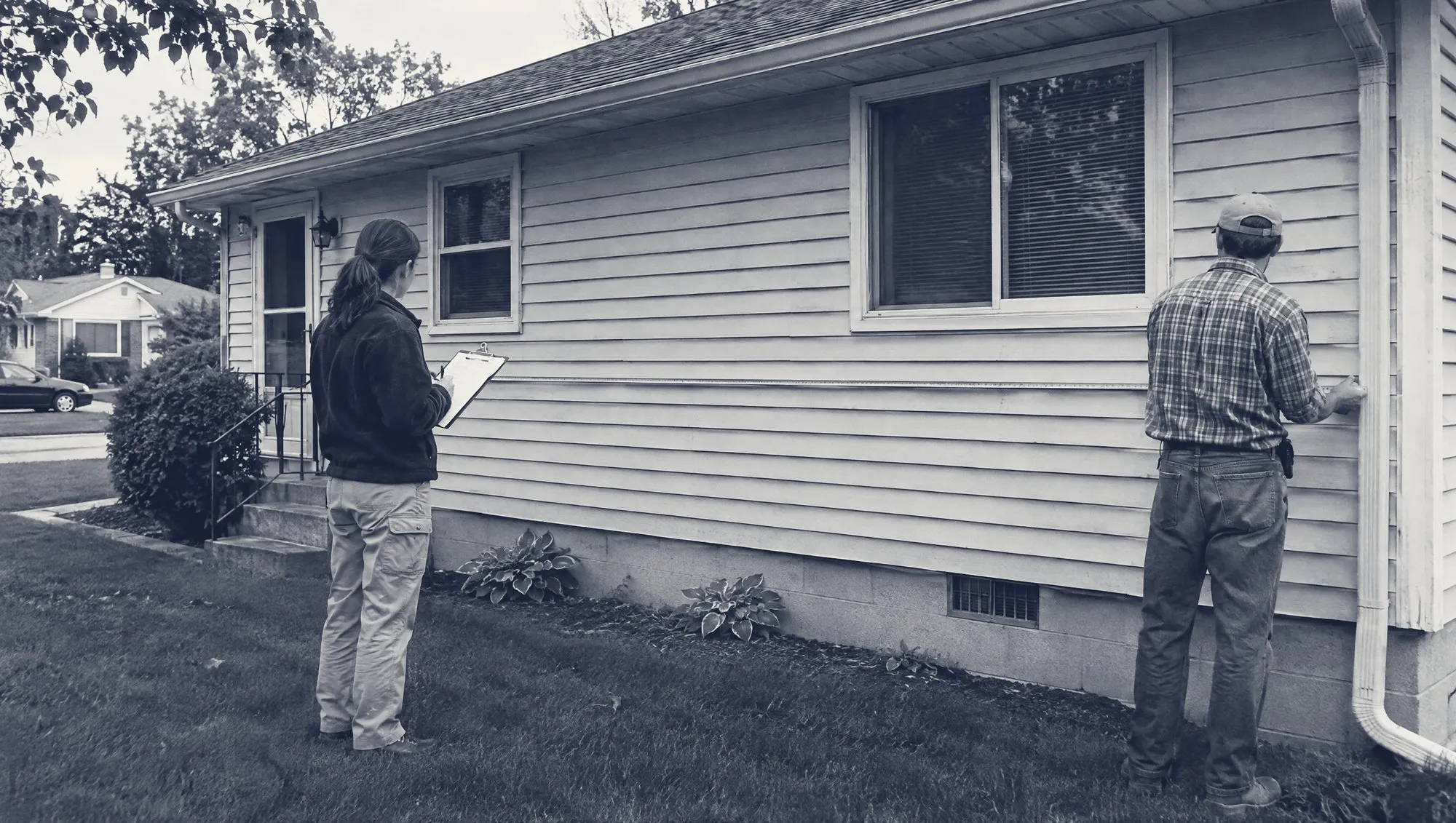
Experience
Licensed Residential1,000hours6 month minimumNo month minimum
Certified Residential1,500hours12 month minimumNo month minimum
Certified General3,000hours, at least 1,500 in non-residential work18 month minimumNo month minimum
The board's view is that the months measured time. The rule that experience be "progressive," showing growing skill across the appraisal process, measures the work instead. Several states disagreed. North Dakota wrote that it "has not seen evidence demonstrating that eliminating calendar minimums results in more competent appraisers" and suggested keeping two of the three minimums.2
An applicant can earn experience hours four ways. They are a supervised log; a PAREA program (Practical Applications of Real Estate Appraisal, which uses simulated assignments with a mentor); and a practicum on real properties under an instructor. For Licensed Residential only, a fourth path is the Demonstration Pathway: three reports, a written review and an oral defense. PAREA becomes available for Certified General. The pathway was the most argued part of the whole package. It came up in 70 of the 106 letters on the final draft, and our October article covers it in detail.24
The Licensed Residential definition also changes. The AQB's text now says the credential qualifies its holder for "non-complex one-to-four residential units" and leaves dollar limits to U.S. and state law. The Appraisal Institute warned of a risk: states that adopt the Criteria by reference could strip their licensees of current authority over complex homes valued under $400,000.2 Lenders and appraisal management companies that use the AQB definition in their panel rules should check the final text once it appears.
What commenters said
Across the review the AQB counted 1,030 comment letters before the final draft, and 106 more arrived by the October 25 deadline. The board said it reads each letter and reports "no tallies because comment review is not a vote." The counts below are our own reading of the 106 letters.2 Letters come from people motivated enough to write. So they show what commenters argued, but say little about how the whole profession views the changes.
- Degree concept paper254
- Experience options concept paperAbout 190
- Pathway concept papers191
- Second exposure draft389
- Third exposure draft106
- 69Individual appraisers
- 9Other individuals
- 7Trainees and candidates
- 5Anonymous
- 9National organizations
- 3State and local groups
- 2State boards
- 2Companies
Most of the argument was about experience. Seventy letters addressed the three-report pathway, and 39 of them opposed it. The education changes drew far less attention. Thirty-seven letters took a side on the degree. The analytics course, the end of electives and the end of the trainee coursework clock drew no pushback at all. Letters favored testing right after courses by 9 to 1.
Many individual objections came from appraisers who earned their hours under the current rules. “As a practicing appraiser who completed over 300 reports to earn my 2,000 hours of experience, I can say with certainty that competency cannot be demonstrated -- let alone mastered -- through only three assignments,” one wrote (letter 63, Gray). From the other side, a Florida appraiser holding the MAI designation and a former member of the state's appraisal board described the shortage of supervisors: “For the past five years, we have had at least 260 ready-to-work people with Trainee credentials who cannot find a supervisor (despite many making heroic efforts).” (letter 32, Wilson)
| Letter | Degree removal | Fair housing change | Other points |
|---|---|---|---|
| Appraisal Institute (96) | Earlier objections stand | · | Concern over the Licensed Residential definition; asks whether states must accept the new pathways |
| National Association of Realtors (93) | Supports | Opposes optional CE | Credit for valuation work by agents and brokers |
| NFHA, LDF and NCLC (92) | Supports | Opposes the cut | Guardrails for the pathway |
| IAAO (78) | · | Drop the course | States should credit assessment-office experience |
| “IAC” (106) | Supports | Supports | Supports adoption on schedule |
| Iowa appraiser board (53) | Opposes | · | Timeline too short for state law changes; keep trainee USPAP updates |
| North Dakota appraiser board (69) | Opposes full removal | Supports | Supports analytics course and testing after coursework; keep some month minimums |
| Ohio Coalition of Appraisal Professionals (54) | Supports | · | Supports analytics course; pilot the pathway first |
| Rocket Close (60) | Supports | · | Five demonstration reports instead of three |
The letter signed “IAC” gives no full name. The Foundation has an Industry Advisory Council, which the AQB says it met with during the review; we have not confirmed the letter came from it.2

When it reaches each state
Title XI of the U.S. law that created the AQB requires states to meet its minimums for credentials used in federally related transactions. The AQB explained the two dates in its draft. The start date is when the revised Criteria become the minimum in force. Because most of the changes lower a rule rather than raise it, a state can apply them as soon as its own statutes and rules allow. A state that keeps a stricter rule in the meantime stays in compliance. A state may always require more than the federal floor. The implementation deadline is the outer date for everything. That covers the parts that need new courses and new state steps.2
The AQB proposed Jan. 1, 2029. States the board surveyed said the dates "would largely work," while noting that "where legislation must precede rulemaking, timelines lengthen considerably." Iowa's board wrote that the schedule "does not provide adequate time for required statutory and administrative rulemaking changes."2 Until the Foundation publishes the adopted text, treat the 2029 date as proposed.
- First exposure draft
- Second exposure draft; 389 letters
- Third exposure draft, 173 pages
- Written comments close; 106 letters
- AQB adopts the third draft
- Effective date
- State deadline proposed in the draft

Other pieces follow the rules. The AQB says it is aligning the national exam with the revised curriculum. It is also working with the Appraisal Subcommittee, the U.S. agency that checks state programs. Together they plan to update Policy Statement 4, which describes experience in months as well as hours. Course providers have to build the analytics course and the five-hour fair housing course, and win approval for both. The Demonstration Pathway needs its policies set and its providers approved before anyone can use it.24
The change arrives as the number of credentialed appraisers declines. Our rebuild of the U.S. appraiser registry counts 41,136 active Certified Residential credentials in 2026, down 16% from 2016. It also counts 5,697 Licensed Residential credentials, down 28%. Certified General credentials held near 40,200.7 The AQB framed its changes around minimum qualifications. Many letters argued about supply instead. The chart is context for that argument; the AQB did not cite it.
Path check
Your path under each set of rules
Pick where you are and where you want to go. The result compares the national minimums; your state's rules control, and the new minimums apply once your state adopts them.
2026 rules
From July 1, 2027, once your state adopts
Decisions by role
Each note compares the national minimums. Your state's own rules and its adoption date decide what applies to you, so check with your state board before changing plans.
A trainee partway through coursework
Completed courses keep their credit and stay valid past five years. Once your state adopts the new rules, you can sit for the exam as soon as your courses are done. Your score will stay valid. If you passed the seven-hour fair housing course, it still counts for the new five-hour rule.
A Licensed Residential appraiser aiming for Certified Residential without a degree
Today you need one of the five college options, or five years as a licensee with a clean record. Under the adopted rules, you need 45 course hours, including the 15-hour analytics course. You'll also need the experience hours and the exam. The analytics course has to be written and approved before you can take it.
A Certified Residential appraiser thinking about Certified General
The degree drops out. The added coursework rises from 100 to 120 hours, with 15 hours of general market data analytics. Experience stays at 3,000 hours with 1,500 non-residential, and the 18-month minimum ends. PAREA becomes an option for the general credential.
Someone outside the profession without a degree
The certified credentials open to you once your state adopts the rules. Licensed Residential has had no college rule since 2018. The Demonstration Pathway may offer a route that needs no supervisor, once its policies are final and providers are approved. Until then, plan on a supervised log, PAREA or a practicum.
A supervisory appraiser
Your duties stay the same. Some trainees may show up having passed the exam. They'll owe continuing education only if your state requires it. Trainee logs still need your signature. The exception is work in an assessment office that follows USPAP Standards 5 and 6, where the office's oversight and the state's verification take its place.
Lenders, AMCs and collateral risk teams
A Certified Residential appraiser credentialed after the change will have taken a 15-hour analytics course where earlier holders took electives. The total stays the same 200 hours. Degree status will drop out of the rules entirely. Drop it as a screen if your panel rule uses it. Federal banking rules set when a certified appraiser is required, with the $1,000,000 and $400,000 thresholds among them, and FHA's roster requires certification now. Check any panel rule that cites the AQB's Licensed Residential definition instead. Expect different rules in different states from July 2027 until the deadline.
Our Appraiser Finder lists active credentials by state from the same federal registry.
Method and limits
- Status. The Foundation's notice says the board adopted the Third Exposure Draft. We compared that draft with the 2026 Criteria. As of November 20 the final edition, the summary of the board's actions and the state deadline were still unpublished; the open questions in chapter 01 list what that leaves unverified.
- Course hours. From the Required Core Curriculum tables and the upgrade tables in both documents. Hours include each course's exam.
- College hours. Semester credits times 15, from the instruction time in the federal credit-hour definition; out-of-class work is excluded and programs vary. The figure shows proportion, not an exact count.
- Comment letters. We read all 106 letters on the final draft and sorted each one by topic and position. We checked every quote against the posted file. Four letters share paragraphs word for word. The counts describe the letters, and the AQB itself reports no tallies.
- Credentials. ValuSignal's rebuild of the Appraisal Subcommittee's National Registry from its full download of active and inactive records, validated against the ASC's published monthly counts. Credentials count once per state.
- Outreach. We worked from published documents and sent no questions to the AQB or the Foundation.
This article is general information, not legal or licensing advice. The photographs are AI-generated illustrations.
Sources
- The Appraisal Foundation, Real Property Appraiser Qualification Criteria page (adoption notice) (accessed Nov. 20, 2026)
- Appraiser Qualifications Board, Third Exposure Draft of Proposed Changes to the Criteria, with all comments (Sept. 24, 2026; comments posted Nov. 10, 2026)
- Appraiser Qualifications Board, The Real Property Appraiser Qualification Criteria, effective Jan. 1, 2026 (2026 edition)
- Appraiser Qualifications Board, Draft Demonstration Pathway Policies (Sept. 24, 2026)
- Appraiser Qualifications Board, Second Exposure Draft of Proposed Changes to the Criteria, with comments (June 22, 2026)
- Code of Federal Regulations, 34 CFR 600.2, definition of credit hour (accessed Nov. 20, 2026)
- Appraisal Subcommittee, National Registry, full download of active and inactive credentials, rebuilt by ValuSignal (as of Nov. 17, 2026)
- The Appraisal Foundation, Exposure Drafts page (accessed Nov. 20, 2026)
Comment letters are cited by the number the Foundation assigned in source 2.
The Signal / Twice-monthly briefing
Get the next appraisal policy update in The Signal.
One sourced briefing, twice a month.
Unsubscribe in one click. We don't sell your email or share it with sponsors. Privacy Policy