The Signal / Policy / October 27, 2026
FHA draft, comments due Nov. 6, 2026FHA’s proposed property rules replace a repair checklist with condition ratings
FHA’s September 22 draft removes 23 listed property requirements and sets a floor of C4 condition and Q5 quality on the Fannie Mae and Freddie Mac scale. A rating is a judgment, so FHA’s control moves from a checklist to how consistently appraisers and reviewers apply the rating. This is what changes, what the rating has to catch, and what to send FHA before comments close. Status as of October 27, 2026.
Comments due 10 days to Nov. 6, 2026
The draft in four numbers
- Minimum condition and quality
- C4 / Q5
- Listed requirements removed
- 23
- Changes HUD itemized
- 97
- Effective date announced
- None
Key points
- FHA posted draft Handbook 4000.1 revisions on September 22, 2026. Comments are due November 6. The draft cannot be used on FHA loans until finalized, and no effective date has been announced.
- The draft sets a floor of C4 condition and Q5 quality on the GSE UAD 3.6 scale. A property rated C5, C6 or Q6 must have the causes cured before closing.
- If any portion of the improvements has a C5 or C6 deficiency, the whole property takes that rating. Ratings are on an absolute basis.
- Attic, crawl space, utility and appliance requirements are removed. Appraisers must identify readily observable defective conditions, and the draft no longer asks for an estimated cost to cure.
A draft with a deadline and no effective date
FHA posted the draft on September 22 and will take feedback until November 6
FHA’s minimum property requirements decide whether a house is acceptable collateral for an FHA-insured loan. HUD began a review of them this year: its request for information appeared in the Federal Register on May 29 (Docket FR-6609-N-01), and the ABA Banking Journal reports that the review is part of the March executive order on access to mortgage credit. On September 22, FHA INFO 2026-22 posted proposed updates to Handbook 4000.1 on HUD’s Drafting Table. FHA says the standards “have not been updated in over two decades and no longer reflect current industry practices,” according to HousingWire.
The package has four documents: a summary of changes, a clean draft, a redline and a feedback worksheet. The notice says the draft cannot be used in connection with any FHA-insured mortgage until finalized, and existing policy stays in effect. HUD has not announced a final date or an effective date.
- May 29HUD publishes a request for information on single family minimum property requirements (Docket FR-6609-N-01).
- June 29RFI comments close. Appraiser organizations had written on June 26.
- July 6ABA and 10 other associations ask HUD to adopt the GSE condition-rating approach.
- July 27FHA waives well-water distance requirements for existing construction.
- Sept. 22FHA INFO 2026-22 posts the draft Handbook 4000.1 revisions: summary, clean draft, redline and feedback worksheet.
- Nov. 6Feedback due.10 days to Nov. 6, 2026
- No dateFinal handbook update and effective date. HUD has not announced either.
Sources: FHA INFO 2026-22 ↗ Federal Register RFI ↗ ABA Banking Journal ↗ HousingWire ↗
HUD’s own count
Most of the 97 changes move or rename text; 15 change policy and 23 delete listed requirements
HUD’s summary numbers every change from 1 to 97 and sorts them into five groups. Four add content, 11 modify existing policy, 21 are technical edits (mostly the terms MPR and MPS becoming “Property Eligibility and Acceptability Criteria”), 38 move text into a new consolidated section II.D, and 23 remove content. The draft covers Title II forward and reverse mortgages.
The four additions are the new consolidated section II.D, the GSE condition and quality ratings (in two places), a clarification that highest and best use must be the present use, as improved or as proposed, and new appraiser protocols for it. The 11 modifications include lead-based paint repair scope limited to the dwelling, public water and sewer connection required only where local authority mandates it, well-distance rules dropped for existing homes, and the manufactured housing foundation standard.
New content, items 1 to 4. Sections that add policy.
- II.D Property Eligibility and Acceptability for Title II Forward and Reverse Mortgages
- II.D.2.a.iii(B) Property Condition and Quality of Construction (GSE ratings, C4 and Q5 floor)
- II.E.3.a.i Appraisal Condition and Quality of Construction Ratings and Level of Updating Definitions
- II.D.2.a.iii(F) Highest and Best Use (adds appraiser protocols)
Modified content, items 5 to 15. Existing policy changed in substance.
- II.D.2.a.iii(D) Lead-Based Paint (dwelling structure only)
- II.E.3.k.i Lead-Based Paint (appraiser guidance)
- II.D.2.c.i Foundation Systems (skirting)
- II.D.1.c.vii Manufactured Housing (HUD model installation standard)
- II.D.1.c.vii(C)(2) Certification of Structural Modifications
- II.E.3.b.v Nonstandard House Construction
- II.D.2.a.ii(F)(1) Public Water Supply System
- II.D.2.a.ii(F)(3) Requirements for Well Water Testing
- II.D.2.a.ii(J) Sewage System
- II.D.2.a.ii(L) Swimming Pools
- II.E.3.d Utilities, Mechanical Components
Technical edits, items 16 to 36. Mostly MPR and MPS renamed Property Acceptability Criteria.
- II.A.1.a.iii(B)(10) Ordering an Update to an Appraisal
- II.A.1.b.iv Property Valuation
- II.A.1.b.iv(C) Verifying Property Acceptability Criteria
- II.A.2.a.v(A) Appraiser Required Repairs
- II.A.3 Underwriting the Property
- II.A.3.a Defective Conditions
- II.A.8.a.xiv(B) Required Documentation for Standard 203(k) Only
- II.A.8.i.vi Property Considerations
- II.A.9.b.ii Consultant Inspection
- II.B.2.b.iii(B) Property Valuation
- II.B.4.a Property Acceptability Criteria
- II.B.4.a.ii(B) Minimum Required Repairs
- II.B.6.a.xiv(A)(2)(a) Seasoning Requirements for Existing Non-HECM Liens
- II.B.8.a.vi(D) Property Considerations
- II.B.8.a.vii Completion of Construction
- II.E Appraiser and Appraisal Requirements for Title II Forward and Reverse Mortgages
- II.E.2 General Appraiser Requirements
- II.E.3.a.ii(B) Defective Conditions Requiring Repair (removes cost to cure)
- II.E.3.b Property Acceptability Criteria
- II.D.1.a.vi(B) Nonresidential Use of Property (Mixed Use)
- II.D.1.a.ii Property Location
Moved content, items 37 to 74. Relocated into the new section II.D.
- II.A.8.i.vi Property Considerations
- II.B.4.a.i Definitions
- II.B.8.a.vi(E) Sales Comparison Approach: Comparable Selection
- II.D.1 Property Eligibility
- II.D.1.a General Property Eligibility
- II.D.1.a.ii Property Location
- II.D.1.a.iii(A) Real Estate Entity
- II.D.1.a.iv Property Rights
- II.D.1.a.v Leasehold Interest
- II.D.1.a.vi.(B) Nonresidential Use of Property (Mixed Use)
- II.D.1.a.vii Special Flood Hazard Areas
- II.D.1.a.viii Seller Must Be Owner of Record
- II.D.1.a.ix Restrictions on Property Flipping
- II.D.1.a.x Restriction on Investment Properties for Hotel and Transient Use
- II.D.1.a.xi Property Assessed Clean Energy
- II.D.1.a.xii Dwelling Unit Limitation
- II.D.1.b.i Lava Zones
- II.D.1.c Property Type Eligibility
- II.D.2.a.ii Site Considerations
- II.D.2.a.ii(A) Encroachment
- II.D.2.a.ii(B) Access to Property
- II.D.2.a.ii(C) Onsite Hazards and Nuisances
- II.D.2.a.ii(C) Onsite Hazards and Nuisances (previously Overhead Electric Power)
- II.D.2.a.ii(C) Onsite Hazards and Nuisances (previously Abandoned Gas and Oil Well)
- II.D.2.a.ii(D) Environmental
- II.D.2.a.ii(E) Utility Services
- II.D.2.a.ii(F) Water Supply Systems
- II.D.2.a.ii(G) Shared Wells
- II.D.2.a.ii(H) Individual Residential Water Purification Systems
- II.D.2.a.ii(I) Required Documentation
- II.D.2.a.ii(J) Sewage System
- II.D.2.a.ii(K) Airport Hazards
- II.D.2.a.ii(L) Swimming Pools
- II.D.2.a.iii(A) Requirements for Living Unit
- II.D.2.a.iii.(C) Structural Conditions
- II.D.2.a.iii.(D) Lead-Based Paint
- II.D.2.a.iii.(E) Termites
- II.D.2.b.iv. Completion of Construction
Removed content, items 75 to 97. Stand-alone requirements deleted or absorbed.
- Kitchen appliances (four sections)
- II.B.4.a.ii(B)(11) Defective Exterior Paint Surfaces
- Methamphetamine Contamination (two sections)
- II.D.2.a.iii(B) Heating and Cooling
- II.D.3.g Roof Covering
- II.D.5.e Perimeter Enclosure
- II.D.3.b.i(C) Planned Unit Development
- II.D.3.b.ii(A) Party or Lot Line Wall
- II.D.3.b.iii(C)(4) Proximity to High Pressure Gas Lines
- II.D.3.b.iii(C)(5) Overhead Electric Power Transmission and Local Distribution Line
- II.D.3.b.iii(C)(7) Stationary Storage Tanks
- II.D.3.b.iv(C) Topography
- II.D.3.b.iv(D) Grading and Drainage
- II.D.3.b.iv(E) Suitability of Soil
- II.D.3.b.iv(F) Land Subsidence and Sinkholes
- II.D.3.b.iv(G) Oil or Gas Wells
- II.D.3.b.iv(H) Slush Pits
- II.D.3.b.iv(M) Soil Contamination
- II.D.3.b.iv(N) Residential Underground Storage Tanks
- II.D.3.b.vi Excess and Surplus Land
- II.D.3.b.viii Characteristics of Property Improvements
- II.D.3.j. Attic Observation Requirements
- II.D.3.l. Crawl Space Observation Requirements
Source: HUD, Summary of Changes, items 1 to 97 ↗. Counts and titles are HUD’s; the grouping is HUD’s.
One scale, one line
FHA would accept C4 or better and Q5 or better, and require cure before closing below that
The draft adds the UAD 3.6 condition ratings (C1 to C6) and quality ratings (Q1 to Q6), based on Freddie Mac policy, and makes C4 the minimum condition and Q5 the minimum quality for acceptability. HUD’s rationale is that the ratings give “a holistic view of the property condition to determine property acceptability.” Ratings are assigned on an absolute basis: “Describe the subject property on an absolute basis as of the effective date of the appraisal report, meaning the property must be rated on its own merits.” Comparable sales are rated the same way as of their sale dates.
Scroll through one house at five conditions. The images are AI-generated illustrations of a single property, not photographs of a real one, and the definitions beside them are HUD’s.
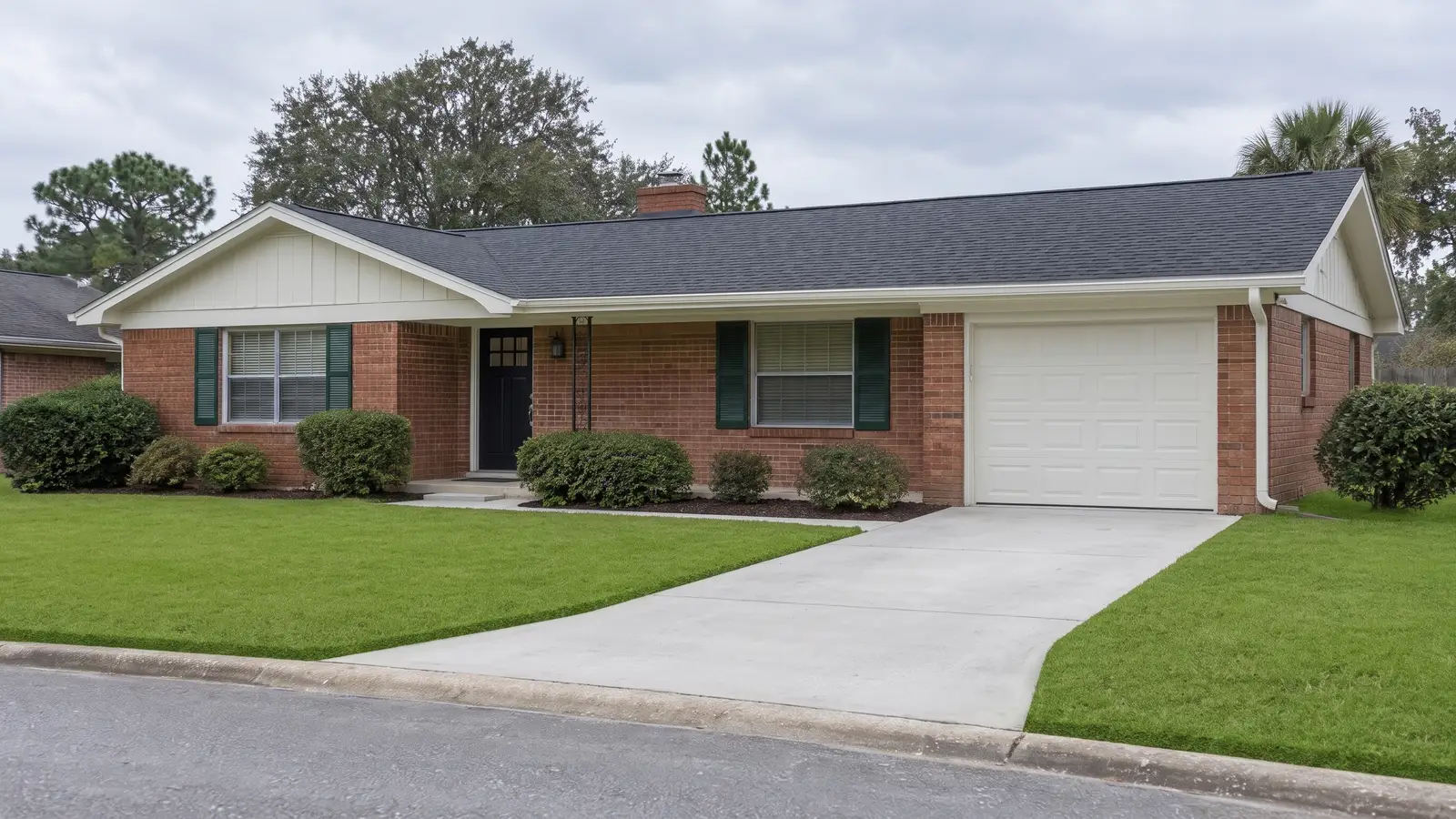
C2Like new: recently constructed or entirely remodeled within 36 months, virtually no wear and tear.Acceptable as is
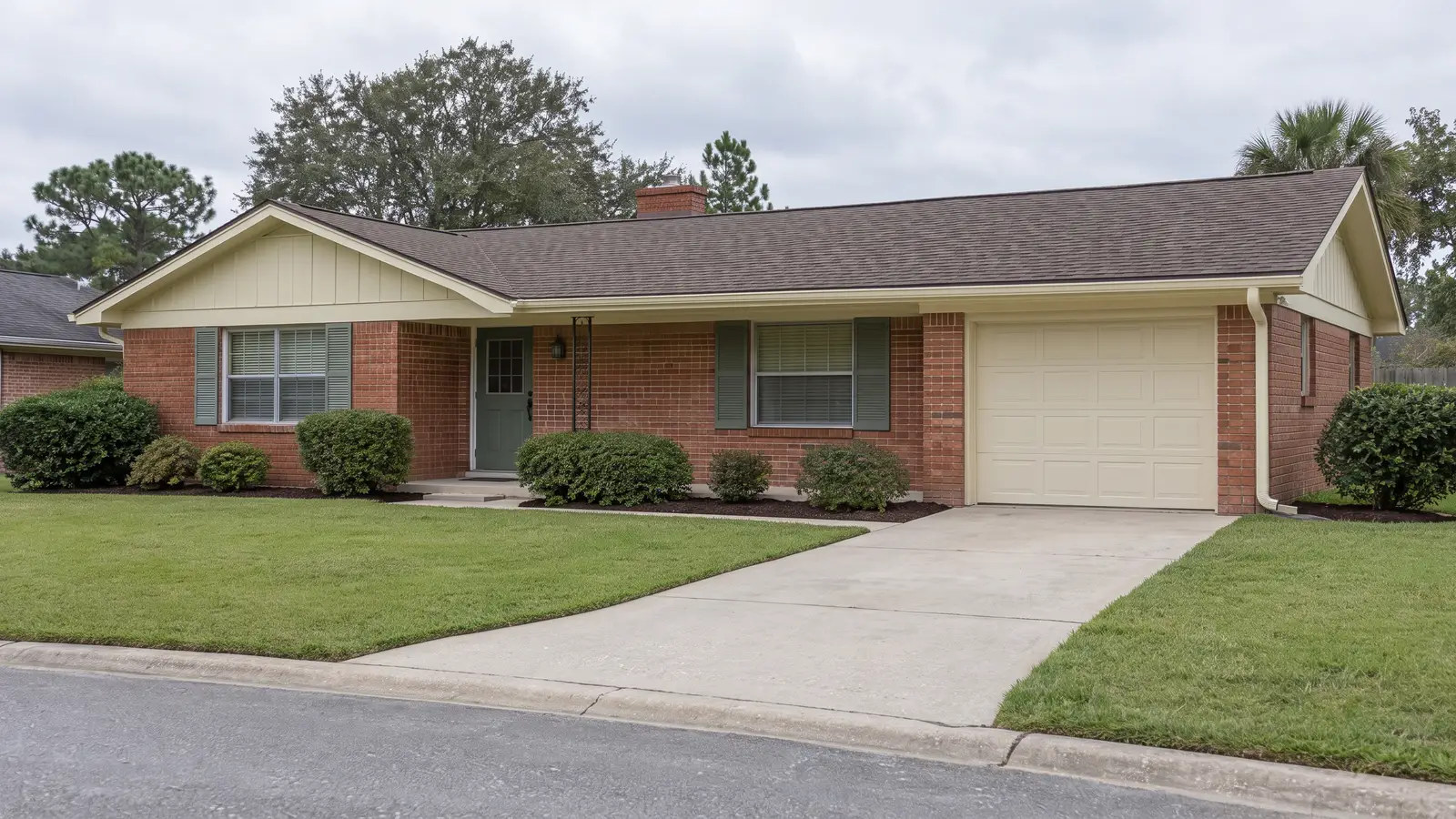
C3Well maintained with minimal wear and tear, or most but not every major component updated.Acceptable as is
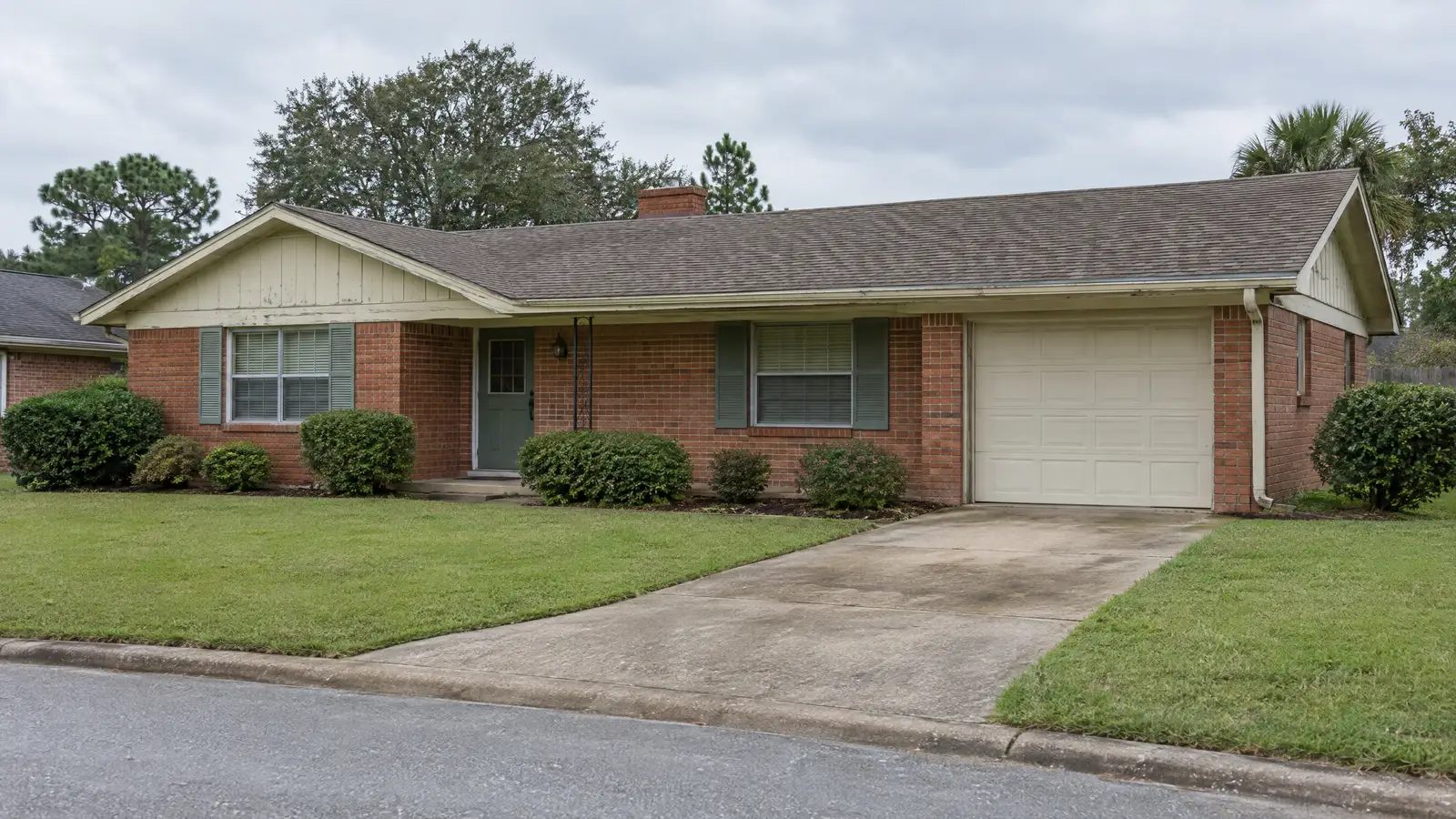
C4Adequately maintained with moderate wear. Deferred maintenance is generally minor or cosmetic.Acceptable as is
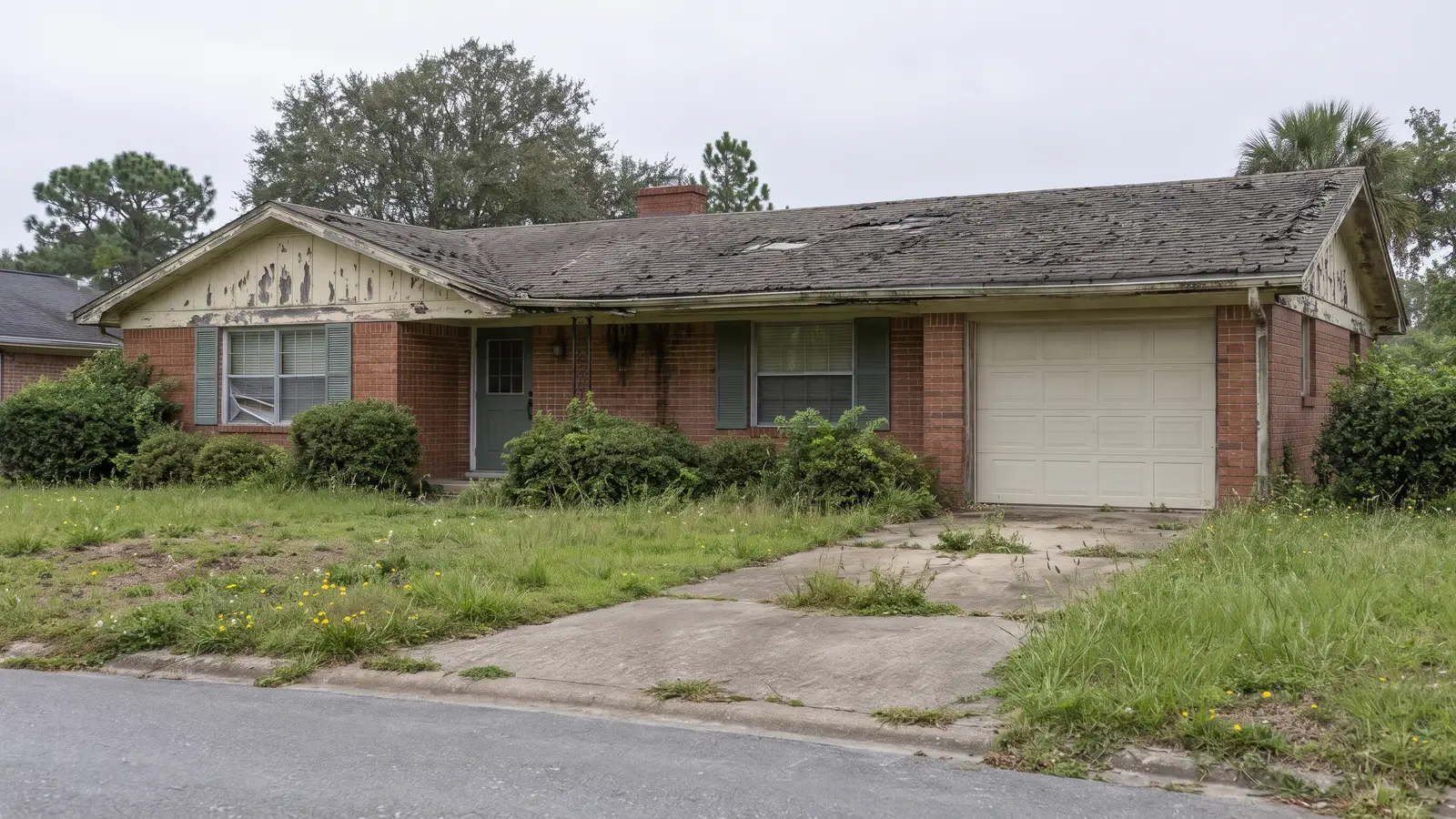
C5Significant wear from inadequate maintenance. Soundness and structural integrity still sufficient to support occupancy.Cure before closing
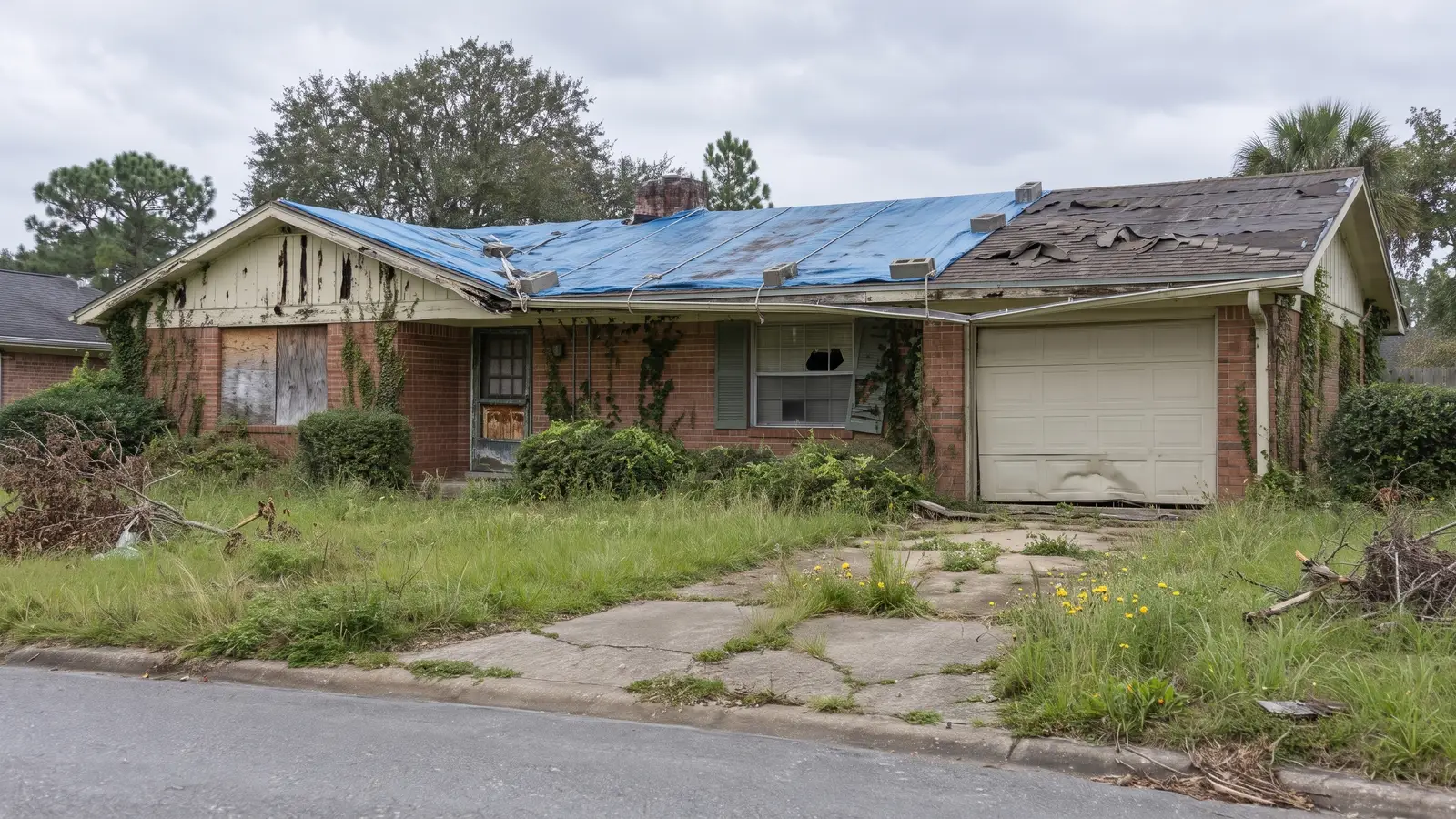
C6Extreme lack of maintenance causing severe damage. Not suitable for occupancy.Cure before closing
AI-generated illustration. One house, five conditions.
C4 is “adequately maintained” with “moderate wear and tear,” and deferred maintenance that is “generally minor or cosmetic in nature.” C5 shows “significant wear and tear resulting from inadequate maintenance, but the soundness and structural integrity are sufficient to support occupancy.” C6 is an “extreme lack of maintenance, resulting in severe damages.” A C5 or C6 property is not acceptable collateral unless the issues behind the rating are cured before closing, and the report is written “subject to” those repairs with the rating reflecting the hypothetical condition after the work. A property with any portion rated Q6 is treated the same way. HUD’s Q6 examples are a house that is not habitable as a year-round residence, minimal or non-existent systems, and substandard additions. National Mortgage News describes Q5 as allowing less costly materials and simpler designs that still meet building codes.
C5 is described as a house whose soundness is still enough to live in, and the draft still makes it ineligible until cured.
The rating is a six-point judgment, so two appraisers can place the same house on opposite sides of the floor. The draft’s defense against that is the absolute-basis rule and its lists of examples. Review teams can test consistency by pulling comparable properties’ ratings, checking that photos support the rating, and reading C4 files that carry adjusted cosmetic items. UAD 3.6 has no FHA history yet: it becomes mandatory for GSE deliveries on November 2, and HousingWire reports a one-time seller exception that delays mandatory use to May 20, 2027. Our UAD 3.6 coverage follows the timeline.
Source: Clean draft, II.E.3.a.i, printed pages 54 to 58; II.D.2.a.iii(B), printed pages 44 to 47 ↗. Rating names and wording are HUD’s.
Sort twenty examples
The draft lists examples on both sides of the floor, and several sit close together
The draft lists examples of deficiencies consistent with C5 or C6, and examples of “minor needed repairs or cosmetic deferred maintenance” that can be reported “as is” with adjustments. Every card below is one of those listed examples. Decide which side each falls on, then check the draft. Missing handrails and curled roof shingles are both on the lists.
0 of 20 matched the draft
Active roof leak
Draft p. 45, consistent with C5 or C6.
Worn floor finishes or coverings
Draft p. 46, minor needed repairs or cosmetic deferred maintenance.
Missing handrails
Draft p. 46, minor needed repairs or cosmetic deferred maintenance.
Uncapped wiring
Draft p. 45, consistent with C5 or C6.
Curled, cupped or missing roof shingles
Draft p. 45, consistent with C5 or C6.
Damaged or failing foundations
Draft p. 45, consistent with C5 or C6.
Minor cracks in windows
Draft p. 46, minor needed repairs or cosmetic deferred maintenance.
Damaged or missing interior doors
Draft p. 46, minor needed repairs or cosmetic deferred maintenance.
A mechanical system that is non-functional
Draft p. 45, consistent with C5 or C6.
Standing water, seepage or significant plumbing leaks
Draft p. 45, consistent with C5 or C6.
Missing light fixtures, switches or faceplates
Draft p. 46, minor needed repairs or cosmetic deferred maintenance.
Minor plumbing leaks that do not cause damage, such as dripping faucets
Draft p. 47, minor needed repairs or cosmetic deferred maintenance.
Missing or damaged exterior components that let water or other elements into the dwelling
Draft p. 45, consistent with C5 or C6.
Damaged or deteriorating countertops
Draft p. 46, minor needed repairs or cosmetic deferred maintenance.
Damaged or missing trim
Draft p. 47, minor needed repairs or cosmetic deferred maintenance.
Missing or severely damaged floor coverings in most of the living area
Draft p. 45, consistent with C5 or C6.
A sanitary system with evidence of failure
Draft p. 45, consistent with C5 or C6.
Damaged or missing window screens or cabinet doors
Draft p. 46, minor needed repairs or cosmetic deferred maintenance.
Missing or severely damaged drywall or plaster that exposes wall framing (excluding basements)
Draft p. 45, consistent with C5 or C6.
Deteriorated sidewalks
Draft p. 47, minor needed repairs or cosmetic deferred maintenance.
Three checks follow from the lists. Does the same defect get the same rating from different appraisers on your panel? Do the photos show the item at the severity the narrative describes? And when a file has several C4 items that are each cosmetic, does the sum still read as C4? The draft says a rating should reflect a “holistic view of the property” and does not give a count.
Source: Clean draft, II.D.2.a.iii(B)(1) and (3), printed pages 45 to 47 ↗. Card wording is shortened from HUD’s lists.
A rule that works like a tripwire
One C5 or C6 deficiency anywhere in the improvements sets the whole property’s rating
The draft says: “If any portion of the improvements is impacted by one or more deficiencies that are consistent with a C5 or C6 condition rating, the property must be identified with a C5 or C6 condition rating.” The same applies to quality: any portion consistent with Q6 gives the property a Q6. The rating does not average. Tick items below to see how the property’s overall rating responds to the draft’s own examples.
C4Acceptable as is, adjust for the items
What happens next is a cure path. The report is written subject to the repairs, and the rating reflects the house as it would stand after them. HUD’s draft names two exceptions. A C5 property with incomplete improvements can be cured after closing if it meets the Repair Completion Escrow Requirements, and C5 or C6 deficiencies can be cured after closing within a 203(k) mortgage that meets the program’s requirements.
- Appraiser finds C5 or C6 deficienciesOne item is enough.
- Report written “subject to”The rating reflects the hypothetical condition after repair.
- Cure before closingExceptions: C5 incomplete improvements under repair escrow rules; 203(k) renovations.
- How the cure is verifiedThe draft does not say. One of our questions for FHA.
The same section removes a sentence from II.A.3.a. Today the mortgagee may approve the property only “after the Mortgagee confirms that all defects reported by the Appraiser have been corrected.” HUD labels the edit a clarification, and the draft keeps “When defective conditions exist and correction is not feasible, the Mortgagee must reject the Property.” What replaces the confirmation step is not stated.
Sources: Clean draft, II.E.3.a.i, printed page 55; II.D.2.a.iii(B)(1), pages 45 to 46 ↗ Redline, II.A.3.a ↗ Summary, item 21 ↗
Twenty-three removals
Four removed requirements defer to the rating, twelve fold into hazards standards, and seven are gone or handled elsewhere
This is the chapter that tests the idea that the rating replaces the checklist. Of the 23 removed items, 4 defer to the rating: heating and cooling, roof covering, party or lot-line walls, and defective exterior paint. HUD calls heating and cooling and roof covering “redundant” to the UAD condition guidance, and party or lot-line walls “unnecessary” given it. Twelve fold into broader standards, mostly Onsite Hazards and Nuisances and Environmental, so soil, grading, sinkholes, storage tanks, gas lines and similar hazards stay covered under those headings. HUD’s summary does not name the destination for topography and soil suitability, only “a broader standard.” Two, attic and crawl space observation, give way to the appraiser’s general duty. Five are dropped or relocated: kitchen appliances, perimeter enclosure for manufactured homes, PUD approval, excess land and a section header.
| Item | Removed requirement | Destination | HUD’s rationale |
|---|---|---|---|
| 75 | Kitchen appliances (four sections) | Dropped as obsolete, relocated or replaced | Appliance observation and standards removed. HUD: an unnecessary burden that did not affect whether a home is “safe, sound and secure.” |
| 76 | II.B.4.a.ii(B)(11) Defective Exterior Paint Surfaces | Absorbed by the condition rating | Defers to general structural integrity standards and the UAD condition ratings. |
| 77 | Methamphetamine Contamination (two sections) | Folded into a broader hazards or environmental standard | Incorporated under the broader Onsite Hazards and Nuisances standard. |
| 78 | II.D.2.a.iii(B) Heating and Cooling | Absorbed by the condition rating | Redundant to the guidance in the UAD condition rating. |
| 79 | II.D.3.g Roof Covering | Absorbed by the condition rating | Redundant to the guidance in the UAD condition rating. |
| 80 | II.D.5.e Perimeter Enclosure | Dropped as obsolete, relocated or replaced | Key enclosure requirements now sit in the manufactured housing foundation guidance. |
| 81 | II.D.3.b.i(C) Planned Unit Development | Dropped as obsolete, relocated or replaced | FHA no longer requires approval of PUDs. |
| 82 | II.D.3.b.ii(A) Party or Lot Line Wall | Absorbed by the condition rating | Unnecessary given the guidance in the UAD condition rating. |
| 83 | II.D.3.b.iii(C)(4) Proximity to High Pressure Gas Lines | Folded into a broader hazards or environmental standard | Incorporated under the broader Environmental standard. |
| 84 | II.D.3.b.iii(C)(5) Overhead Electric Power Transmission and Local Distribution Line | Folded into a broader hazards or environmental standard | Incorporated under Onsite Hazards and Nuisances. |
| 85 | II.D.3.b.iii(C)(7) Stationary Storage Tanks | Folded into a broader hazards or environmental standard | Incorporated under Onsite Hazards and Nuisances. |
| 86 | II.D.3.b.iv(C) Topography | Folded into a broader hazards or environmental standard | Aligns with VA. Incorporated under a broader standard. |
| 87 | II.D.3.b.iv(D) Grading and Drainage | Folded into a broader hazards or environmental standard | Aligns with VA. Incorporated under Onsite Hazards and Nuisances. |
| 88 | II.D.3.b.iv(E) Suitability of Soil | Folded into a broader hazards or environmental standard | Incorporated under a broader standard. |
| 89 | II.D.3.b.iv(F) Land Subsidence and Sinkholes | Folded into a broader hazards or environmental standard | Incorporated under Onsite Hazards and Nuisances. |
| 90 | II.D.3.b.iv(G) Oil or Gas Wells | Folded into a broader hazards or environmental standard | Incorporated under Onsite Hazards and Nuisances. |
| 91 | II.D.3.b.iv(H) Slush Pits | Folded into a broader hazards or environmental standard | Incorporated under the broader Environmental standard. |
| 92 | II.D.3.b.iv(M) Soil Contamination | Folded into a broader hazards or environmental standard | Incorporated under Onsite Hazards and Nuisances. |
| 93 | II.D.3.b.iv(N) Residential Underground Storage Tanks | Folded into a broader hazards or environmental standard | Incorporated under Onsite Hazards and Nuisances. |
| 94 | II.D.3.b.vi Excess and Surplus Land | Dropped as obsolete, relocated or replaced | Aligns with VA. Outdated policy replaced by Real Estate Entity, Multiple Parcels. |
| 95 | II.D.3.b.viii Characteristics of Property Improvements | Dropped as obsolete, relocated or replaced | Header removed; Requirements for Living Unit kept. |
| 96 | II.D.3.j. Attic Observation Requirements | Replaced by the appraiser’s general standard | Aligns with VA and the GSEs. The specific attic observation is replaced by the duty to identify readily observable defective conditions. |
| 97 | II.D.3.l. Crawl Space Observation Requirements | Replaced by the appraiser’s general standard | Aligns with VA and the GSEs. The specific crawl space observation is replaced by the duty to identify readily observable defective conditions. |
The roof shows what absorption means in practice. The redline shows the current appraiser text asking whether the roof covering prevents entrance of moisture, provides reasonable future utility, durability and economy of maintenance, and has a remaining physical life of at least two years, with the appraisal made subject to a professional roofer’s inspection when it has less. The draft keeps one test: the appraiser notifies the mortgagee if the roof covering “does not prevent entrance of moisture.” It also lists active roof leaks and curled, cupped or missing shingles among C5 and C6 examples, and describes C5 roofing as “significantly worn, cupped or curled but with no apparent active leaks.” A roof near the end of its life with no leak and no curling is a case the draft does not address by name.
The deleted requirements carried fixed tests, such as two years of remaining roof life. The ratings carry descriptions and examples. Where the old test was a number, the new one is a reading of wear, so file review needs a stated expectation for roofs and mechanical systems that neither leak nor fail. That expectation is our suggestion; the draft does not set one.
Sources: Summary, items 75 to 97 ↗ Redline, II.E.3.h Roof Covering ↗ Clean draft, rating definitions, printed pages 57 to 58 ↗
Observation, not inspection
The draft narrows the listed steps and keeps one standard: identify readily observable defective conditions
Appraisers are affected in four ways. The specific attic and crawl space observation requirements are removed, with the general duty carrying them. Utilities no longer have to be turned on and operated, which HUD says follows VA and industry practice. Kitchen appliance requirements are gone. And “cost to cure” comes out of the defective-conditions language and the repair requirements, while descriptive photographs remain. The draft also adds appraiser protocols for highest and best use: the highest and best use of the property as improved, or as proposed per plans and specifications, must be the present use.
On June 26, the Appraisal Institute, the American Society of Appraisers, the American Society of Farm Managers and Rural Appraisers, and MBREA wrote to HUD on the RFI. They supported modernization and wrote that much of the burden comes from “inconsistent interpretation and application of MPR requirements rather than from the standards themselves.” They said appraisers “perform property observations rather than home inspections,” and asked FHA to preserve the appraiser’s role in observing and reporting readily observable conditions, citing refinance and reverse mortgage transactions where an inspection may not occur. They supported repair escrows and holdbacks for non-critical items, with the condition that any post-closing flexibility “should not alter the appraiser’s responsibility to identify and report material property conditions.” They also asked FHA to evaluate whether the attic and crawl space rules were still necessary, and for a framework separating material deficiencies from cosmetic conditions. The draft removes the specific attic and crawl space steps and supplies lists of both kinds of conditions.
| Topic | Today | Draft | June letter |
|---|---|---|---|
| Attic observation | A stand-alone requirement (II.D.3.j). | Removed. Removed. Falls under “must identify readily observable defective conditions.” | Evaluate whether the attic and crawl space rules are still necessary; confusion since the 2023 and 2025 changes. |
| Crawl space observation | A stand-alone requirement (II.D.3.l). | Removed. Removed. Same general standard. | Same request as the attic. |
| Utilities turned on and operated | Appraiser guidance in II.E.3.d. | Removed. Requirement removed. Observation-based approach, aligned with VA. | Not addressed. |
| Kitchen appliances | Observation and standards in four sections. | Removed. Removed. HUD: not needed for a home to be safe, sound and secure. | Not addressed. |
| Cost to cure | Appraiser “must … provide an estimated cost to cure.” | Removed. Removed from Defective Conditions Requiring Repair (item 33) and from Repair Requirements. Descriptive photographs remain. | Not addressed. |
| Roof covering | Roof must prevent entrance of moisture, provide reasonable future utility, and have at least two years of remaining physical life; less than two years means the appraisal is made subject to a professional roofer. | Changed. Roof covering must not allow entrance of moisture. The two-year remaining-life test and the roofer condition are not in the draft. | Not addressed. |
| Readily observable defects | Already the standard in II.E.3.a.ii(B). | Kept. Kept, and now the general standard behind the removed attic and crawl space steps. | Preserve the appraiser’s role in observing and reporting readily observable conditions, especially in refinances and reverse mortgages. |
| Inspection by a qualified person | Required when the appraiser cannot determine that the property meets the criteria. | Kept. Kept, with a similar list of triggers (standing water, hazardous materials, structural movement, defective systems, pests, leaking roofs). | Keep disclosure with the appraiser; let lenders clear conditions without a return visit. |
The draft and the letter agree on some points and diverge on others. Both keep the safety, soundness and security purpose and the appraiser’s observation duty. The draft goes further than the letter on utilities, appliances and cost to cure, which the letter did not address. Two of the letter’s requests, a return-visit workaround and reliance on seller photographs to clear conditions, are not in the draft text we found; the draft does not say how conditions are cleared.
Sources: Appraisal organizations’ RFI letter, June 26, 2026 ↗ Clean draft, II.E.3 ↗ Redline ↗ Summary, items 15, 33, 75, 96, 97 ↗
After the checklist
The controls shift to rating consistency, the single-defect rule and whatever overlays lenders keep
| Risk | Today | Draft |
|---|---|---|
| Roof | Stand-alone roof covering rule, two years of remaining physical life, roofer inspection if less. | No moisture entry (appraiser section). Curled, cupped or missing shingles and active leaks are C5/C6 examples. Roof covering removed as a stand-alone owner-side requirement. |
| Heating and cooling | Stand-alone requirements for the heating system; central air must be operational if installed. | Removed as redundant to the rating. A non-functional mechanical system is a C5/C6 example. |
| Exterior paint | Defective exterior paint surfaces required repair. | Removed. Lead-based paint rules for pre-1978 dwellings remain, limited to the dwelling. |
| Attic and crawl space | Appraiser observation requirements. | General duty to identify readily observable defective conditions. |
| Utilities and appliances | Utilities on and operated; kitchen appliances observed. | Observation only; appliance rules removed. |
| Wells and public hookups | Minimum well distances; public water and sewer connection whenever feasible at reasonable cost. | Distances removed for existing homes; connection required only when local authority mandates it. |
Lenders and reviewers have four things to settle if the draft becomes final. They can adopt the ratings as FHA writes them, or keep stricter rules on roofs and mechanical systems as overlays. National Mortgage News advises lenders to decide whether FHA’s standards match their own or whether they need overlays. They can set a review test for rating consistency across comparables. They can decide how a cure before closing gets verified, because the draft is silent on it. And they can write panel guidance for the new C4 examples, since that is where appraisers will place borderline files.
HousingWire reports that the Mortgage Bankers Association, the Broker Action Coalition and Community Home Lenders of America urged HUD to address the minimum property requirements and appraisal reforms. The ABA and 10 other associations wrote in July that FHA’s property requirements are among the largest obstacles to FHA financing, and that some of them “do not reduce the lenders’ collateral risk.” National Mortgage News quotes the groups calling the requirements “one of the most significant impediments to the utilization of FHA financing by prospective homebuyers.” WRE News adds that older and lower-cost housing may be most affected by repair triggers, and that the final language will decide whether friction falls in practice. We found no statement from the appraisal organizations on the September draft as of October 27, 2026.
Sources: National Mortgage News ↗ ABA Banking Journal, July 6 ↗ WRE News ↗ Redline ↗
Before November 6
Ten questions to send FHA, tied to the section they concern
HUD’s instructions are to download the Feedback Response Worksheet, add feedback that references page and line numbers and sections in the clean version, and email the completed worksheet to the address on the Drafting Table page. The deadline is November 6, 2026. The questions below come from the gaps this article found, and each is tied to a draft section so it can go straight into the worksheet.
- 01
Does removing “cost to cure” end repair-cost reporting for appraisers, or only the text in the Defective Conditions section? Please state where, if anywhere, an appraiser reports repair cost on a subject-to file.
Item 33, II.E.3.a.ii(B); Repair Requirements, II.E.3.l
- 02
For a C5 or C6 property made subject to repairs before closing, who verifies the cure, and on what evidence? Does the appraiser return?
II.D.2.a.iii(B)(1), draft p. 45
- 03
Item 21 removes the sentence that the mortgagee may approve the property only after confirming all appraiser-reported defects were corrected. What replaces that confirmation?
Item 21, II.A.3.a
- 04
Will FHA publish rating examples for borderline items? The draft lists missing handrails as minor and curled roof shingles as C5 or C6, and reviewers will meet items between those.
Draft pp. 45 to 47
- 05
The draft drops the two-year remaining-life test and the roofer condition for roofs. Is a worn roof with no active leak a C4 or a C5 for FHA, and which rating text controls?
II.E.3.h Roof Covering; C5 definition, p. 57
- 06
How should FHA files be handled during the GSE UAD 3.6 transition, when some reports will be UAD 2.6?
II.E.3.a.i, draft pp. 54 to 55
- 07
Will the final language say what “readily observable” excludes, so appraisers and reviewers apply it the same way?
II.E.3.a.ii(B), “Standard”
- 08
Will FHA add a framework that separates material deficiencies from cosmetic or normal wear, with examples?
Condition definitions, draft pp. 56 to 58
- 09
What is the effective date, and will FHA allow a transition period for pipeline loans?
Draft cover; FHA INFO 2026-22
- 10
How do the C5 and C6 exceptions apply to HECM and to 203(k) loans?
II.D.2.a.iii(B)(1) Exceptions, draft pp. 45 to 46
- 10days to Nov. 6, 2026
FHA feedback on the draft Handbook 4000.1 revisions closes.
Add the deadline to your calendar (.ics)
Steps before the deadline
Your ticks stay in this browser only.
AI-generated illustration. One house aging from C2 to C6.
What we will watch
- The final handbook updateWhether the rating floor, the cost-to-cure removal and the roof test survive comment.
- An effective date or transition ruleNone announced for loans in the pipeline.
- FHA answers on cure verificationThe draft names the cure but not how it is confirmed.
- Statements from appraisal organizationsNone found on the September draft as of October 27, 2026.
This article draws on HUD’s Summary of Changes, clean draft and redline for the September 22, 2026 draft of Handbook 4000.1, the June 26, 2026 letter from four appraisal organizations, and reporting by HousingWire, the ABA Banking Journal, National Mortgage News and WRE News, checked October 27, 2026. Page numbers are the printed page numbers in the clean draft. Points marked “For collateral review” are our reading. Images and video are AI-generated and show no real company, document or property. This article is general information, not legal or compliance advice, and the draft may change before it is final.
The Signal / Twice-monthly briefing
Follow the rules that change how collateral gets valued.
One sourced briefing, twice a month.
Unsubscribe in one click. We don't sell your email or share it with sponsors. Privacy Policy