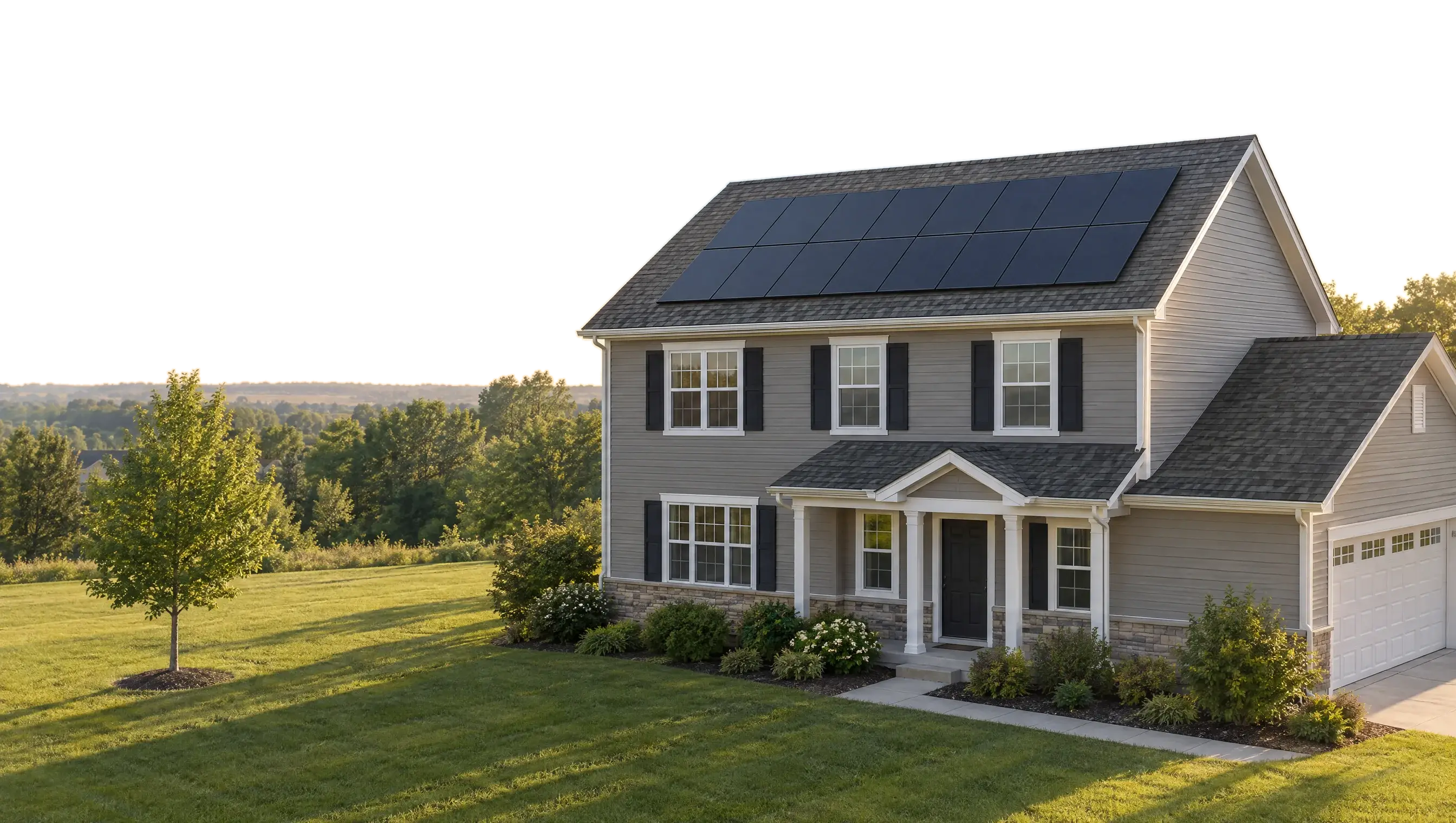
The Signal / Practice / October 12, 2026
Solar at the closing tableWho owns the panels, and what are they worth?
NAR’s consumer guide to solar in a home sale raises questions every solar transaction has to answer. For lenders and appraisers, the answers come from the contracts, the system’s documented performance, and what local buyers pay.
Solar panels show up in a listing photo. The records that decide what they mean for a sale do not: who owns the equipment, what the seller still owes or pays, how much electricity the system has produced, and what local buyers have paid for similar homes.
This feature follows those records through three separate decisions: what transfers at closing, what the mortgage program recognizes, and what the market pays. It covers existing single-family homes in the United States and conventional loans, mainly under Fannie Mae’s rules. FHA, VA and USDA loans have their own requirements, which this article does not summarize.
NAR’s consumer guide asks the questions a solar sale has to answer
The National Association of REALTORS consumer guide How Solar Impacts a Real Estate Transaction walks buyers and sellers through ownership arrangements, energy savings, the condition of the panels and roof, permits, warranties, insurance and what buyers may pay. NAR presents it as consumer education: “Consumer guides do not constitute any change in NAR policy.”1
The Long Island Board of REALTORS posted the guide, shared with NAR’s permission, on May 6, 2026, so it was circulating by that date. We could not confirm when NAR first published it.2
For a financed system, the guide says the “loan must be paid off before the home sale closes.” Mortgage programs are more specific: Fannie Mae’s guide describes separately financed systems whose debt stays in the borrower’s ratios, so the applicable program and lender decide what has to happen at closing.13
- 01What transfers at closingSeller, buyer, title and closing
Purchase records, contracts and recorded filings
- 02What the mortgage program recognizesLender and underwriter
Program rules applied to the same documents
- 03What local buyers payAppraiser
Comparable sales and verified system details
The three decisions draw on overlapping documents and reach separate conclusions. A system can transfer cleanly and add little in a market where buyers pay little for solar, and a valuable system can still need a lien resolved before closing.
Two illustrative homes with the same array and different documents
Home A
- Purchase invoice and paid receipt
- Permit and final inspection
- 36 months of production data
PathThe equipment conveys with the house. Under Fannie Mae’s guide, standard requirements apply, and the appraiser can weigh market evidence for the system.
Home B
- 20-year lease, 12 years remaining
- Transfer needs the leasing company’s approval of the buyer
- Payment rises each year
PathThe panels belong to the leasing company. Their value is excluded from the appraised value, and the lender reviews the lease.3
Four ownership arrangements, and what each one sends to closing
NAR’s guide sorts residential solar into systems that were purchased, with cash or a loan, systems that are leased, and systems whose output the homeowner buys under a power purchase agreement, or PPA. Leases and PPAs come with monthly payments and conditions, and the guide tells buyers to read the agreement carefully.1
A purchased system splits again by how it was financed. When a separate solar loan is secured by the panels, the lender’s filing can treat them as a fixture of the real estate or as personal property, and Fannie Mae treats the two differently.3
Contract explorer
Same roof, five sets of documents
The house stays the same in each view. The selected arrangement changes who owns the equipment, what the buyer takes on and the questions to resolve. The Fannie Mae note summarizes B2-3-04 only; review the applicable mortgage program for any loan.3
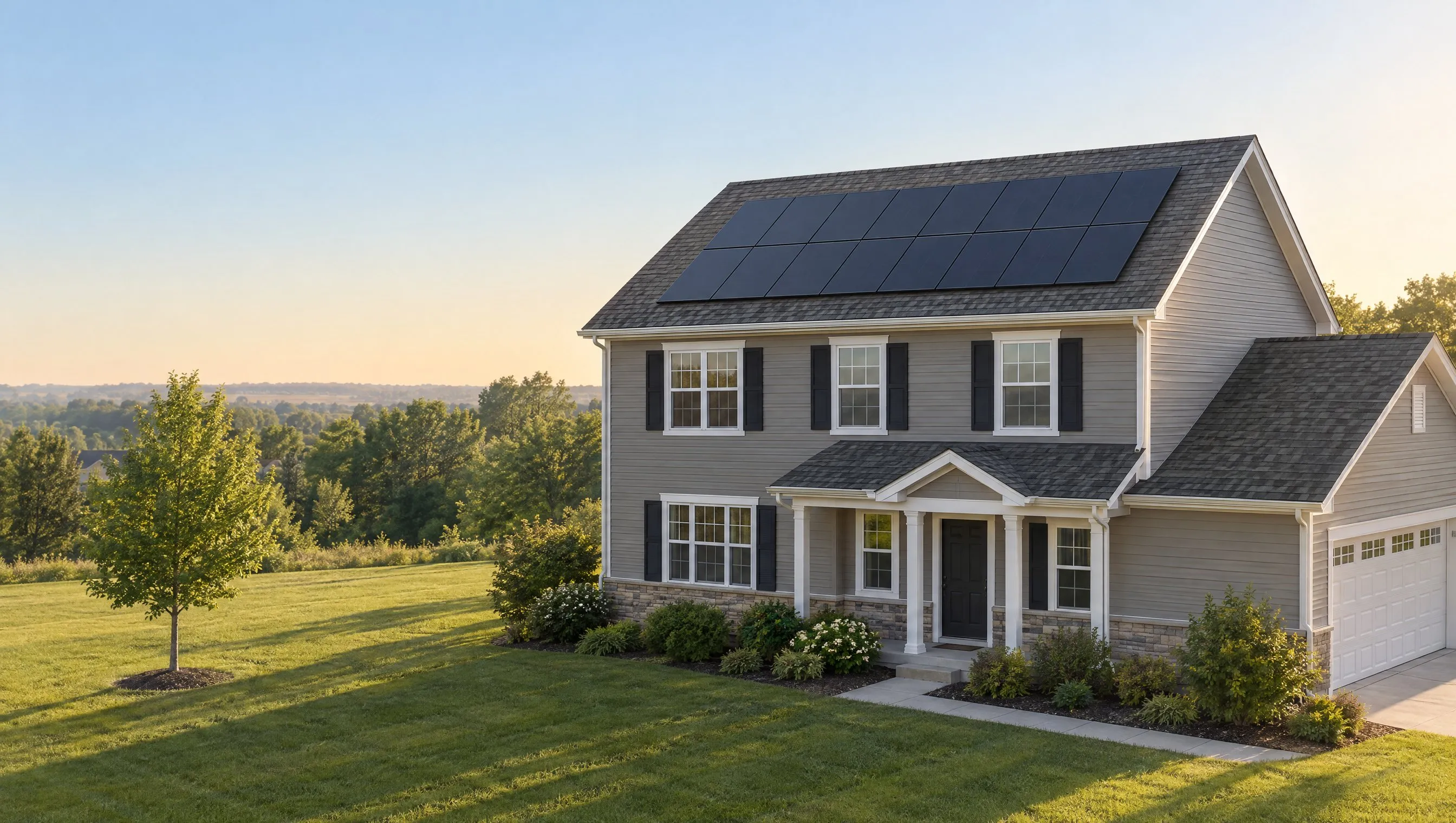
Owned outright, or paid for through the first mortgage
- Who owns the equipment
- The homeowner. The system is part of the real estate being sold.
- What the buyer takes on
- The equipment and any transferable warranties. No separate solar payment.
Questions to resolve
- Do the purchase records and payoff show no remaining solar debt?
- Are manufacturer and installer warranties transferable, and to whom?
- Was the installation permitted and inspected?
Fannie Mae, in briefStandard appraisal, title and insurance requirements apply.
Separately financed, secured as a fixture
- Who owns the equipment
- The homeowner, subject to a lender’s security interest recorded as a fixture filing.
- What the buyer takes on
- A payoff at closing or, where the program and lender allow it, debt that stays with the property.
Questions to resolve
- Do the financing documents say the panels cannot be repossessed on default?
- Is the fixture filing senior to the new mortgage, and will it be subordinated?
- What is the payoff, and does it include fees beyond the equipment price?
Fannie Mae, in briefValue may be considered only if the documents show the panels cannot be repossessed for default. The debt counts in DTI and CLTV, and a senior fixture filing must be subordinated.
Separately financed, secured as personal property
- Who owns the equipment
- The homeowner, with the panels pledged as personal property under a UCC filing.
- What the buyer takes on
- A payoff or an assumption, depending on the lender. The equipment may not stay with the house if the debt is unpaid.
Questions to resolve
- What does the UCC filing describe as collateral?
- Will the loan be paid off at or before closing?
- If not, what does the solar lender require to transfer it?
Fannie Mae, in briefThe appraiser is instructed not to give the panels contributory value. The debt counts in DTI.
Leased from a third party
- Who owns the equipment
- The leasing company. The homeowner pays to use the equipment.
- What the buyer takes on
- The remaining lease term and its payments, if the leasing company approves the transfer.
Questions to resolve
- How many years and payments remain, and do payments escalate?
- What does the leasing company need to approve a buyer?
- Does the lease guarantee production, and what happens at the end of the term?
Fannie Mae, in briefPanel value cannot be included in the appraised value. The lender must obtain and review the lease. A lease payment can be left out of DTI only with a production guarantee that compensates the borrower on a prorated basis.
Power purchase agreement (PPA)
- Who owns the equipment
- A third party. The homeowner buys the electricity the system produces.
- What the buyer takes on
- An agreement to keep buying the system’s output at the contract price, if the provider approves the transfer.
Questions to resolve
- What is the price per kWh, and how does it escalate?
- Is the payment based only on energy produced?
- What does the provider need to approve a buyer?
Fannie Mae, in briefPanel value cannot be included in the appraised value. The lender must review the agreement. PPA payments based solely on energy produced may be excluded from DTI.
PACE overlayProperty Assessed Clean Energy financing is repaid through the property tax bill and can sit on top of any arrangement. Fannie Mae will not buy the loan if the PACE obligation is not paid in full at or before closing.3
This explorer gives no approval or denial. Program, lender, title and state rules decide each transaction.
All five arrangements as a table
| Arrangement | Who owns the equipment | Fannie Mae, in brief |
|---|---|---|
| Owned outright, or paid for through the first mortgage | The homeowner. The system is part of the real estate being sold. | Standard appraisal, title and insurance requirements apply. |
| Separately financed, secured as a fixture | The homeowner, subject to a lender’s security interest recorded as a fixture filing. | Value may be considered only if the documents show the panels cannot be repossessed for default. The debt counts in DTI and CLTV, and a senior fixture filing must be subordinated. |
| Separately financed, secured as personal property | The homeowner, with the panels pledged as personal property under a UCC filing. | The appraiser is instructed not to give the panels contributory value. The debt counts in DTI. |
| Leased from a third party | The leasing company. The homeowner pays to use the equipment. | Panel value cannot be included in the appraised value. The lender must obtain and review the lease. A lease payment can be left out of DTI only with a production guarantee that compensates the borrower on a prorated basis. |
| Power purchase agreement (PPA) | A third party. The homeowner buys the electricity the system produces. | Panel value cannot be included in the appraised value. The lender must review the agreement. PPA payments based solely on energy produced may be excluded from DTI. |
Fannie Mae’s guide says that when ownership is unclear, no value may be attributed to the panels unless a UCC personal-property search confirms there is no competing lien.3

How Fannie Mae’s guide treats each arrangement
Fannie Mae’s Selling Guide section B2-3-04 sets property eligibility rules for solar panels by ownership and financing. The table summarizes the version dated Oct. 8, 2025.3
| Arrangement | Treatment |
|---|---|
| Owned, paid for or financed through the first mortgage | Standard appraisal, title and insurance requirements apply. |
| Separately financed, fixture collateral | Value considered only if the panels cannot be repossessed for default. Debt in DTI and CLTV. A senior fixture filing must be subordinated. |
| Separately financed, personal-property collateral | No contributory value for the panels. Debt in DTI, excluded from CLTV. |
| Leased or PPA | Panel value excluded. Lender reviews the agreement. Payments can be excluded from DTI only under the stated production or payment conditions. |
| PACE financing | Loan ineligible for delivery if the PACE obligation is not paid in full at or before closing. |
| Ownership unclear | No value attributed to the panels unless a UCC personal-property search confirms no competing lien. |
Source: Fannie Mae Selling Guide B2-3-04, Oct. 8, 2025.3 A summary of one investor’s rules, for orientation. Read the current guide and the lender’s overlays for a transaction.
Three terms the table depends on
- DTI
- Debt-to-income ratio: monthly debt payments divided by monthly income. A solar loan or lease payment can raise it.
- CLTV
- Combined loan-to-value ratio: every loan secured by the property, divided by its value. Fannie Mae counts a solar loan when a fixture filing secures it.
- UCC filing
- A public record under the Uniform Commercial Code of a lender’s claimed security interest. A fixture filing claims the equipment as part of the real estate; a personal-property filing treats it as separate goods. Title and underwriting professionals classify the actual documents.
Two rules carry the most weight for the appraisal. If separate financing is secured as a fixture, value may be considered only if the documents show “the panels cannot be repossessed for default” on the financing terms, and a fixture filing senior to the new mortgage “must be subordinated.” If the collateral is personal property, the appraiser is instructed “not to provide contributory value” for the panels.3
For leased and PPA systems, “the value of the solar panels cannot be included in the appraised value.” The lender must obtain and review the agreement. A lease payment can be left out of the debt-to-income ratio when the lease has “a production guarantee that compensates the borrower on a prorated basis,” and PPA payments may be left out when they are based only on the energy produced.3
Freddie Mac’s Seller/Servicer Guide addresses solar panels in its own section, 5601.4. We could not retrieve the current full text during research, so this article does not summarize Freddie Mac’s requirements. Read the current section for any loan sold to Freddie Mac.5
What buyers have paid for solar, and what supports an adjustment today
Fannie Mae’s appraisal guidance says “the appraiser must also analyze the market reaction to the energy efficient feature.” The cost and income approaches can support the sales comparison approach, but the guide rules out an adjustment made dollar for dollar from equipment and installation cost, or from the discounted value of expected savings.4 That section still refers to Form 1004; check the UAD 3.6 instructions for where the analysis goes in the new report.413
Historical research: sales from 2002 to 2013; host-owned systems
Average sale price premium for homes with host-owned solar, about $15,000 for an average 3.6 kW system.
- about 22,000 home sales
- almost 4,000 with solar
- 8 states
- 2002 to 2013 sale years
Scope and limits of the study
Lawrence Berkeley National Laboratory’s January 2015 report, Selling Into the Sun, analyzed sales in eight states. The systems were owned by the homeowners, so leased and PPA systems are outside its findings. The sales predate current equipment prices, utility rates and net metering rules, and the average premium is a historical estimate across many markets, not an adjustment for any one property.
The study shows that buyers in its sample paid premiums for host-owned systems. Equipment prices, utility rates, net metering rules and buyer preferences have changed since those sales, so the figures do not set an adjustment for a 2026 sale.
A current assignment asks a narrower question: which local sales show how buyers respond to this system, in this condition, under these contracts? Answering it means comparing similar properties, verifying the ownership arrangement of the subject and of each comparable, checking concessions and other differences, and stating how strong the evidence is.
Three kinds of evidence, three different questions
- Financing invoice or payoffWhat the system cost, with any financing charges
- Production history or estimateHow much electricity it makes
- Comparable salesWhat buyers paid
Each document answers its own question, and only sales show market reaction. The other two can support the analysis without replacing it.4
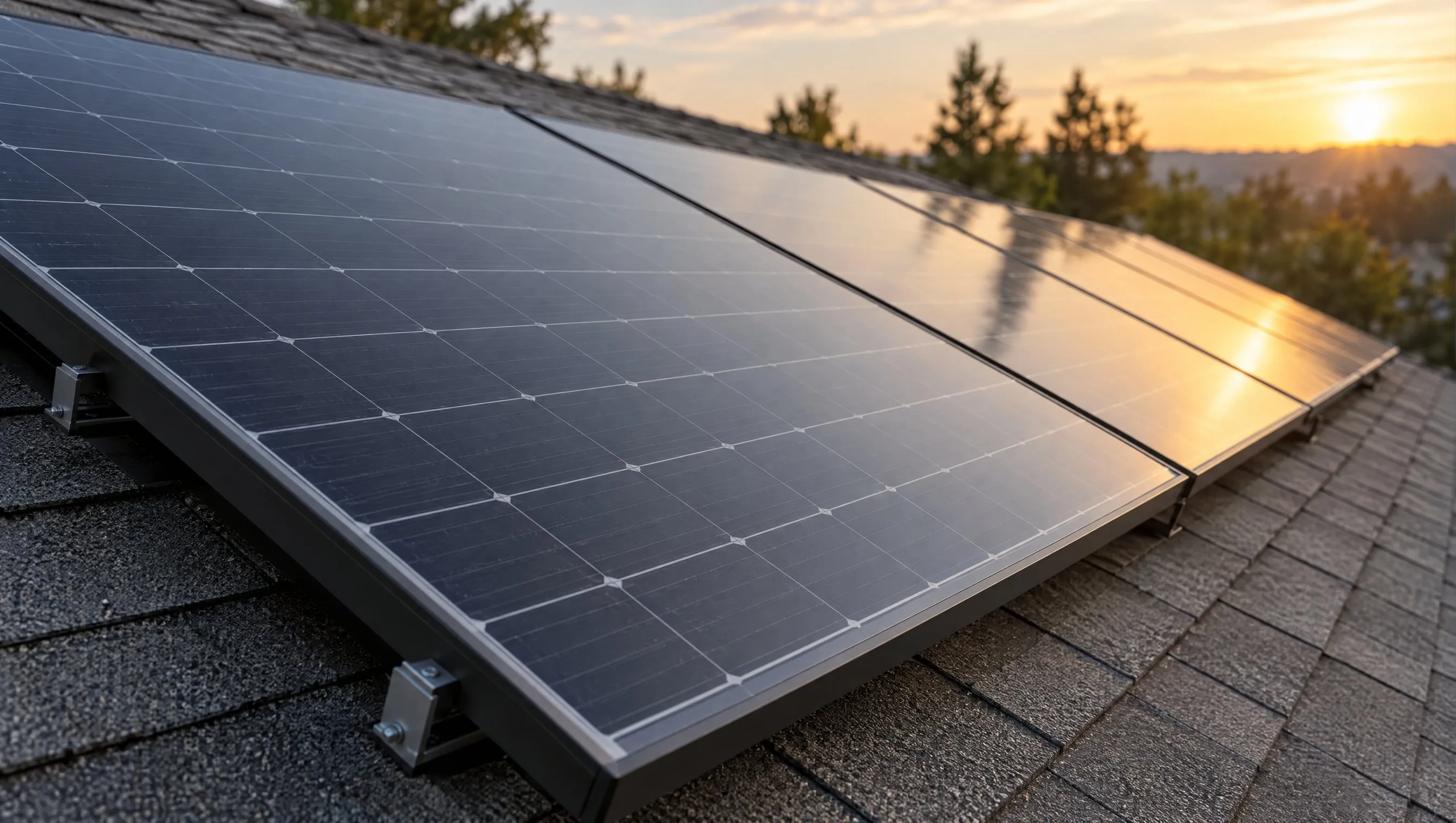
A solar loan balance can include more than the equipment
The Consumer Financial Protection Bureau’s August 2024 Issue Spotlight describes solar loans whose principal includes a fee that the borrower may not see as a separate charge. In its example, a system with a $30,000 cash price carries a $9,000 fee, and the loan principal is $39,000. The lender pays the installer $30,000 and keeps the fee.7
Source: CFPB, Aug. 7, 2024.7 The example illustrates a product structure and does not show how common it is.
The report also describes loans built around an expected prepayment sized to the federal tax credit, about 30% of the cost. If the borrower does not make it, the loan re-amortizes at a higher monthly payment, in the CFPB’s description at the 19th month of the term.7
In a sale, a payoff letter shows what the seller owes. An appraisal asks how the market responds to the property interest being valued. Keep the two amounts labeled separately: a $39,000 payoff is evidence of a debt, and it tells an appraiser nothing about what buyers will pay for the panels.
The same production can be worth different amounts to different households
A seller’s low electric bill reflects the household’s usage and rates as well as the equipment’s output. A documented annual production record and the buyer’s own tariff give a better basis. NAR’s guide notes that net metering policies “vary by state and utility provider.”1
Formula and data table
used = production × share usedexported = production − usedgross = used × avoided rate + exported × export creditnet = gross − operating allowance
| Line | Defaults | Exports at $0.20 |
|---|---|---|
| Used in the home | 4,800 kWh | 4,800 kWh |
| Exported | 3,200 kWh | 3,200 kWh |
| Avoided purchases | $960 | $960 |
| Export credits | $160 | $640 |
| Operating allowance | −$200 | −$200 |
| Net operating benefit | $920 | $1,400 |
With the defaults, 4,800 kWh used in the home at $0.20 avoids $960 of purchases, and 3,200 kWh exported at $0.05 earns $160. After the $200 allowance, the operating benefit is $920 a year. If exports were credited at $0.20, the result would be $1,400, a $480 difference produced by the tariff alone.
Every input is invented for teaching. The model leaves out tiered and time-of-use rates, fixed and demand charges, panel degradation, payment escalators and taxes. It estimates a household’s operating benefit and does not estimate home value.
The federal tax credit ended with 2025 installations
The IRS says the residential clean energy credit “is not available for any property placed in service after December 31, 2025.”9 The cutoff came from Public Law 119-21, enacted July 4, 2025.10 The credit belonged to the taxpayer who paid for the installation, so the buyer of a home with an existing array does not claim it, and a 2026 calculation should not add an automatic 30% credit.89 State and utility incentives need their own dated sources.
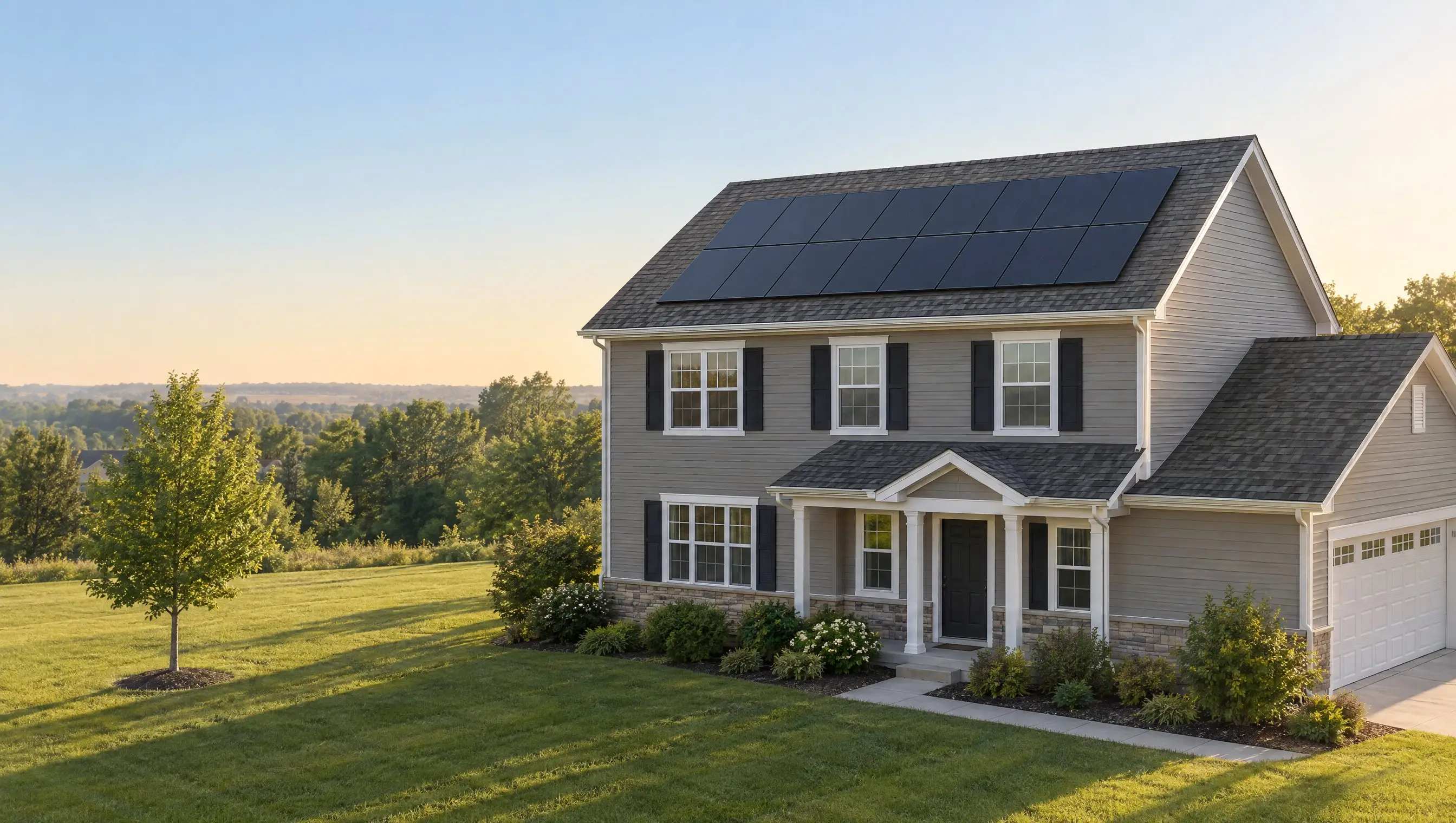
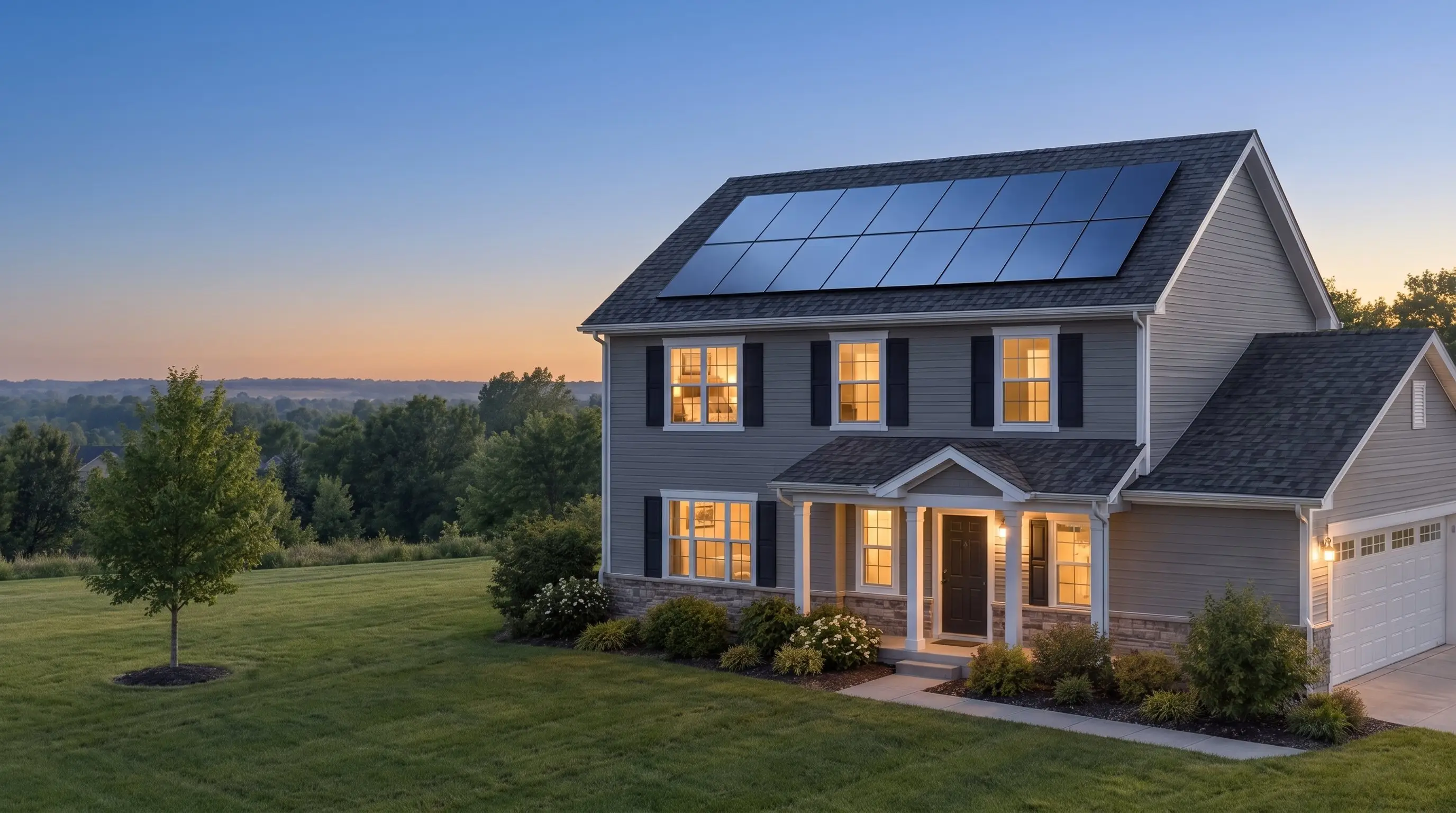
From daylight to dusk
- In daylight the array produces electricity, and the house uses it or sends it to the grid.
- Production falls toward zero as the sun sets, and the house draws from the grid.
- At night or in a grid outage, power from the system depends on storage and how the system was designed.
AI-generated illustration and time-lapse of a fictional home. A lit house shows nothing about backup capability.
Equipment, roof and backup: what the records need to show
The Department of Energy’s guide to buying a house with solar suggests asking about the age of the panels and inverter, the installer, the warranties, the production history and any contracts. It gives typical lifetimes of 20 to 25 years for panels and 10 to 15 years for string inverters.8 Records for the actual equipment should drive any estimate of remaining life.
- To the home
- Exported to the grid
- Battery charge or discharge
Daylight, grid on: the inverter supplies the home first and exports any surplus through the meter.
Records to request: Modules and production
- Spec sheet with system capacity in kW and the module count
- Installation date and installer
- Manufacturer warranty and its transfer terms
- Monitoring records of annual production in kWh
Records to request: Roof covering
- Roof age and condition under and around the array
- Cost to remove and reinstall the panels for a reroof
- Who is responsible for leaks at the mounts
Records to request: Inverter
- String inverter or microinverters, and the age of each
- Inverter warranty, often shorter than the module warranty
- Replacement history
Records to request: Meter and utility
- Utility permission to interconnect
- The current tariff and its export credit terms
- Whether those terms carry over to a new owner
Records to request: Battery, if installed
- Stored energy in kWh and power in kW
- Which circuits it keeps running in an outage
- Warranty and ownership: owned, financed or leased
Schematic. Arrows show the direction of flow, not measured amounts, and real installations differ.
NAR’s guide flags the roof: when it needs replacing, the owner has to “remove the panels, reroof and reinstall them,” a cost that belongs in the condition analysis.1
DOE explains that most residential systems are connected to the grid, so when the grid goes down the household loses power too, unless the system includes a battery or other equipment designed to keep circuits running.11 Battery specifications carry two numbers: kilowatt-hours (kWh) describe how much energy is stored, and kilowatts (kW) describe how much power it can deliver at once. Verify which circuits a battery backs up from the system’s design documents.
Where solar details go in a UAD 3.6 report
UAD 3.6 replaces the legacy appraisal forms with a redesigned report built on structured data, and energy and green features, solar included, have their own section. Our Section 6 feature walks through it. Fannie Mae’s UAD 3.6 supplement keeps the ownership principle: leased and PPA systems are personal property, and their value is not included in the appraisal.13
On the delivery side, Freddie Mac’s loan dataset has carried a Renewable Energy Component Type field since a 2022 update.12
Structured fields can make ownership differences easier to spot and route for review, as long as documents back each entry. A field cannot establish legal ownership, loan eligibility or a positive value. We did not validate exact UAD 3.6 field names for solar ownership and financing, so the mockup below uses plain labels.
Unresolved items route to the lender and title before closing.
A closing packet for a solar home, gathered early
Ask for the records at the start of the transaction and mark anything missing as unresolved. The list is an editorial workflow; program requirements come from the investor and the lender.
Before a price is attached to the panels, the ownership records, the contract, the production history and the local sales evidence should all be in the file.
Research checked Oct. 12, 2026; each source carries its own date. The two homes, the calculator inputs and the review record are illustrative and labeled. Freddie Mac’s current solar section could not be retrieved and is not summarized. Images and video were generated with Higgsfield as illustrations and do not show a real property; the hero’s sky and sun are drawn in code. No interviews were conducted for this article. General information, not legal, tax, lending or investment advice.
Sources
13 documents, accessed Oct. 12, 2026
- National Association of REALTORS, Consumer Guide: How Solar Impacts a Real Estate TransactionAccessed Oct. 12, 2026
- Long Island Board of REALTORS, Consumer Guide: How Solar Impacts a Real Estate Transaction (shared with permission of NAR)May 6, 2026
- Fannie Mae Selling Guide B2-3-04, Special Property Eligibility ConsiderationsOct. 8, 2025
- Fannie Mae Selling Guide B4-1.3-05, Improvements Section of the Appraisal ReportAccessed Oct. 12, 2026
- Freddie Mac Single-Family Seller/Servicer Guide, Section 5601.4Accessed Oct. 12, 2026
- Lawrence Berkeley National Laboratory, Selling Into the Sun: Price Premium Analysis of a Multi-State Dataset of Solar Homes (LBNL-6942E)Jan. 13, 2015
- Consumer Financial Protection Bureau, Issue Spotlight: Solar FinancingAug. 7, 2024
- U.S. Department of Energy, Consumer’s Guide to Buying a House with Solar PanelsAccessed Oct. 12, 2026
- Internal Revenue Service, Residential Clean Energy CreditAccessed Oct. 12, 2026
- Internal Revenue Service, FAQs for modification of sections 25C, 25D and others under Public Law 119-21 (One Big Beautiful Bill Act)Accessed Oct. 12, 2026
- U.S. Department of Energy, The Road to Resilience with Rooftop SolarJune 30, 2020
- Freddie Mac, ULDD Phase 4a announcement (Renewable Energy Component Type)April 26, 2022
- Fannie Mae, Selling Guide Supplement: UAD 3.6 PolicyAccessed Oct. 12, 2026
The Signal / Monthly briefing
Follow valuation policy, collateral risk and property technology, with sources.
One sourced briefing in the first week of each month.
Unsubscribe in one click. We don't sell your email or share it with sponsors. Privacy Policy