The Signal / Practice /
What is a hybrid appraisal?
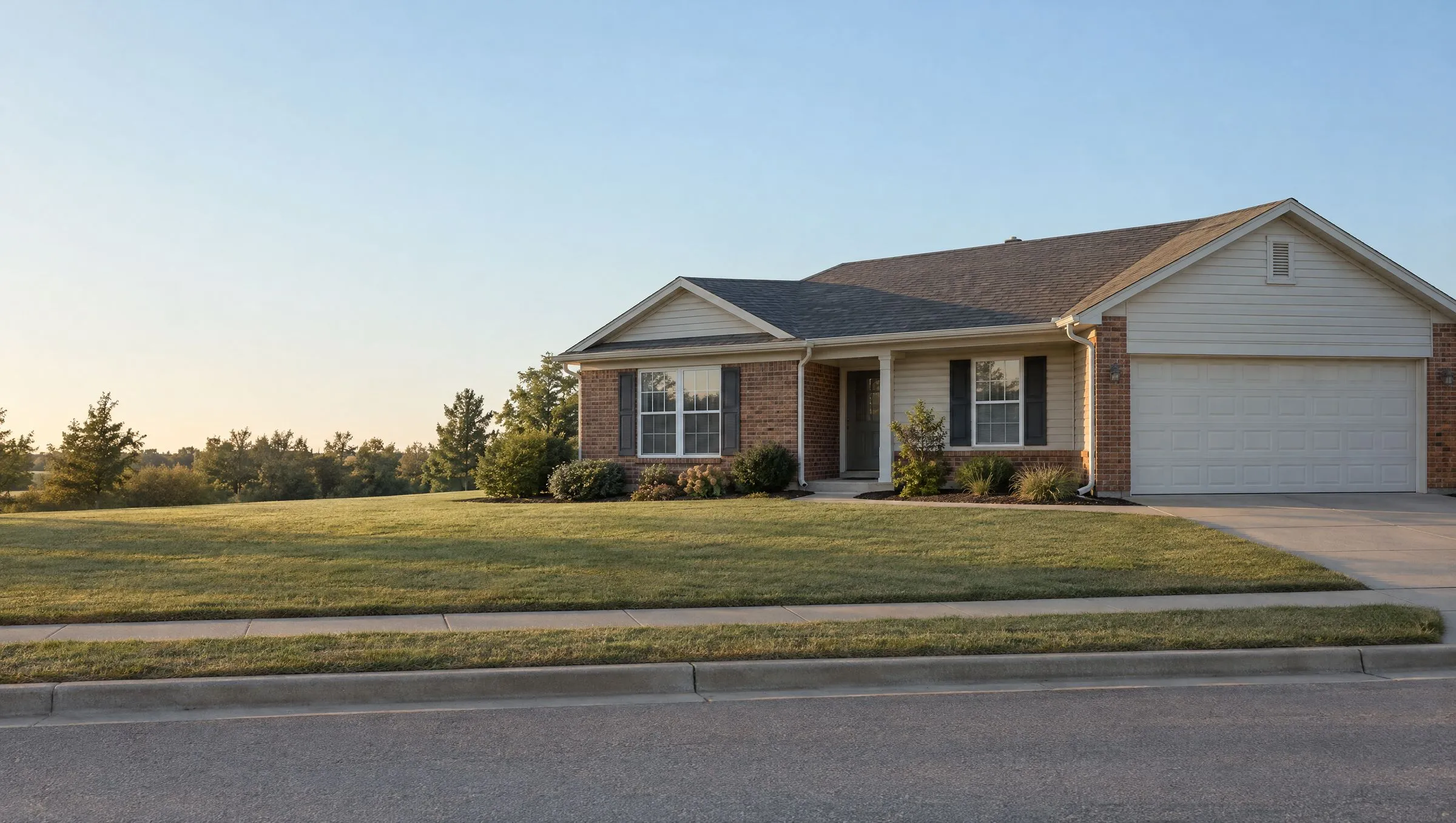
- 1Roof and exteriorData collector
- 2Rooms and conditionData collector
- 3Measurements and floor planData collector
- 4PhotosData collector
- 5Opinion of valueAppraiser
- Method
- Hybrid
- Who visits
- Data collector
- Who signs the value
- Appraiser
- Form
- 1004 Hybrid / 70H (UAD 3.6: Hybrid)
A collector visits and an appraiser signs the value. Regulation Z requires a visit inside only for non-exempt higher-priced loans. Fannie Mae and Freddie Mac set rules for loans they buy; FHA's handbook and VA's circular name no hybrid.
Who visits and who signs the value
- TraditionalVisitsAppraiserSignsAppraiser
- HybridVisitsData collectorSignsAppraiser
- DesktopVisitsExisting recordsSignsAppraiser
- Value acceptance + property dataVisitsData collectorSignsNo appraiser
Key points
- Fannie Mae says property data collection and the appraisal report are separate assignments that may be performed by different people. An appraiser hired first to collect the data and later to appraise still produces a hybrid.
- The banking agencies' appraisal rules list six minimum standards, and none is an inspection. Regulation Z requires the appraiser to visit the interior for a higher-priced mortgage loan unless the loan is exempt, and qualified mortgages are exempt.
- Fannie Mae allows hybrids on one-unit homes, including condo and PUD units, when DU offers one. Two- to four-unit properties, co-ops and manufactured homes are excluded.
- Public evidence is thin. The Appraisal Institute says Freddie Mac hasn't released the full study behind its claim, and appraisers who answered NAR's 2025 survey rated their comfort with hybrids 2.07 out of 5, against 4.56 for traditional appraisals.
A hybrid splits the visit from the value
In a hybrid appraisal, the visit to the house and the value can belong to two different people.
One person, a trained data collector, walks through the house. They measure the rooms, take photos and note the condition inside and out. An appraiser then works from that data, forms the opinion of value and signs the report. Fannie Mae puts it in one sentence: “Property data collection and the appraisal report are separate assignments and may be performed by different people.”1
The word that matters there is “may.” Fannie Mae still counts it as a hybrid when an appraiser is hired first as the data collector and later as the appraiser.1 So a hybrid splits two jobs, and the appraiser has to report that a data collection stood in for the appraiser's own visit.
Since Nov. 2, 2026, each new report names one of four valuation methods, and Hybrid is one. UAD 3.6 became required that day for new appraisal reports submitted to UCDP, the portal Fannie Mae and Freddie Mac (the GSEs) share, and its four methods are Traditional, Desktop, Hybrid and Exterior.9 In March 2026, Executive Order 14393 directed six federal agencies to consider expanding the use of desktop and hybrid appraisals.23
If you order, sign, review or underwrite hybrids, you need three answers: who does each job, whether federal law treats a hybrid as an appraisal, and which loans may use one.
Here's the short version. The banking agencies' appraisal rules require a State licensed or certified appraiser and list no inspection, so in our reading a hybrid can meet them if the appraiser's scope of work meets USPAP, whose text we couldn't read.14 One federal rule does require a visit: for a higher-priced mortgage loan that isn't exempt, Regulation Z requires the appraiser to visit the interior, and qualified mortgages are exempt.17 For loans sold to Fannie Mae or Freddie Mac, their rules decide. Fannie Mae limits hybrids to one-unit homes, including condo and PUD units, and Freddie Mac's 2025 bulletin opened them to one-unit homes, including PUD homes and homes with an ADU, and to condo units.17
Four products end with an appraiser's value, and hybrid is one
| Product | Who visits | Who states the value | Report or result | Sources |
|---|---|---|---|---|
| Traditional | Appraiser | Appraiser | 1004 / 70 (UAD 3.6: Traditional) | 339 |
| HybridAlso called a bifurcated appraisal | Data collector | Appraiser | 1004 Hybrid / 70H (UAD 3.6: Hybrid) | 132 |
| Desktop | Existing records | Appraiser | 1004 Desktop / 70D (UAD 3.6: Desktop) | 339 |
| Value acceptance + property dataFannie Mae | Data collector | No appraiser; the GSE accepts the lender's value. | No appraisal report | 2 |
| Exterior-only appraisal | Appraiser, exterior only | Appraiser | 2055 / 2055 (UAD 3.6: Exterior) | 339 |
| Property data collectionThe result is a property data report (PDR) | Data collector | No value; the data goes to the lender | Interior and exterior data, photos and an ANSI floor plan | 23 |
| Value acceptanceFormerly called an appraisal waiver | None in the offer | No appraiser; the GSE accepts the lender's value. | No appraisal report | 34 |
| Automated valuation model (AVM) | No one; a computer model | A computer model | A model estimate | 35 |
| Broker price opinion (BPO)May not be the primary basis for value on a loan to buy a principal dwelling | Varies; the law sets no visit | A real estate broker or agent | An estimate of the probable selling price | 36 |
Appraiser Data collector Existing records No appraiser The first four rows match the switch at the top of the page.
Read down the value column and the line between appraisals and the rest is easy to see. Traditional, hybrid, desktop and exterior-only work all end with an appraiser's opinion of value. A desktop appraiser works from existing records with no fresh visit to the house. A hybrid appraiser gets a fresh visit, made by someone else.
Two more look-alikes have no appraiser at all. An automated valuation model is a computer model,35 and a broker price opinion is an agent's estimate of the likely sale price.36 Federal law says a broker price opinion may not be the main basis for value on a loan to buy a principal dwelling.36
Two products are easy to mix up: a property data collection and a hybrid, because the visit is the same. What differs is what happens to the data. Under Fannie Mae's value acceptance + property data, a collector visits, no appraisal is required, and Fannie Mae accepts the value estimate the lender submits.2 If that offer is lost after the visit, the lender may hand the same data to an appraiser for a hybrid, or order a desktop or traditional appraisal.2
Value acceptance on its own, once called an appraisal waiver, ends with the lender's value. Fannie Mae accepts it and describes no visit in its value acceptance topic.34
A trained collector measures, photographs and records condition
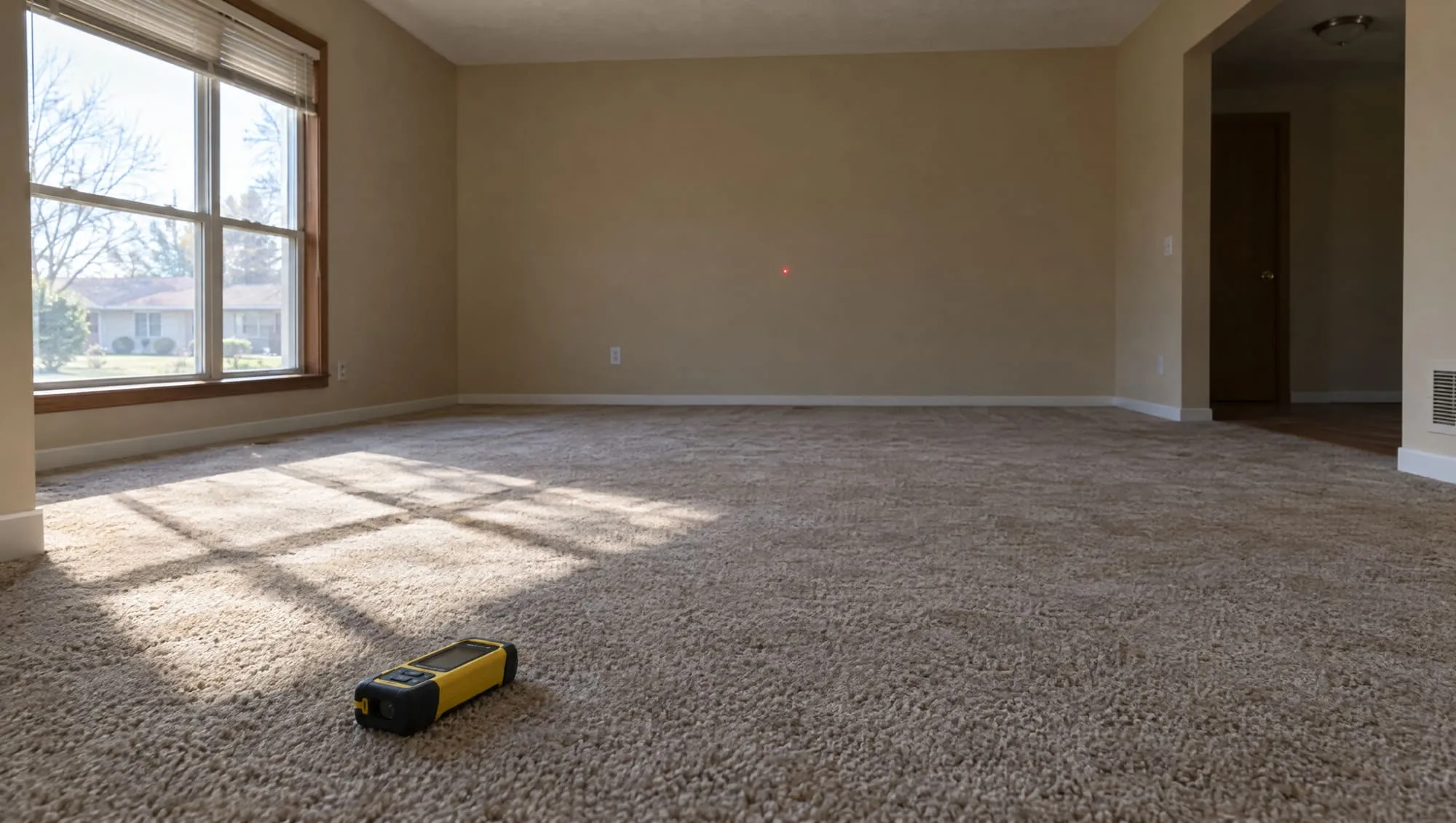
In a hybrid, a trained data collector visits the house and gathers what the appraiser will use. Fannie Mae names a real estate agent, an insurance inspector or an appraiser as examples of who may do it.1
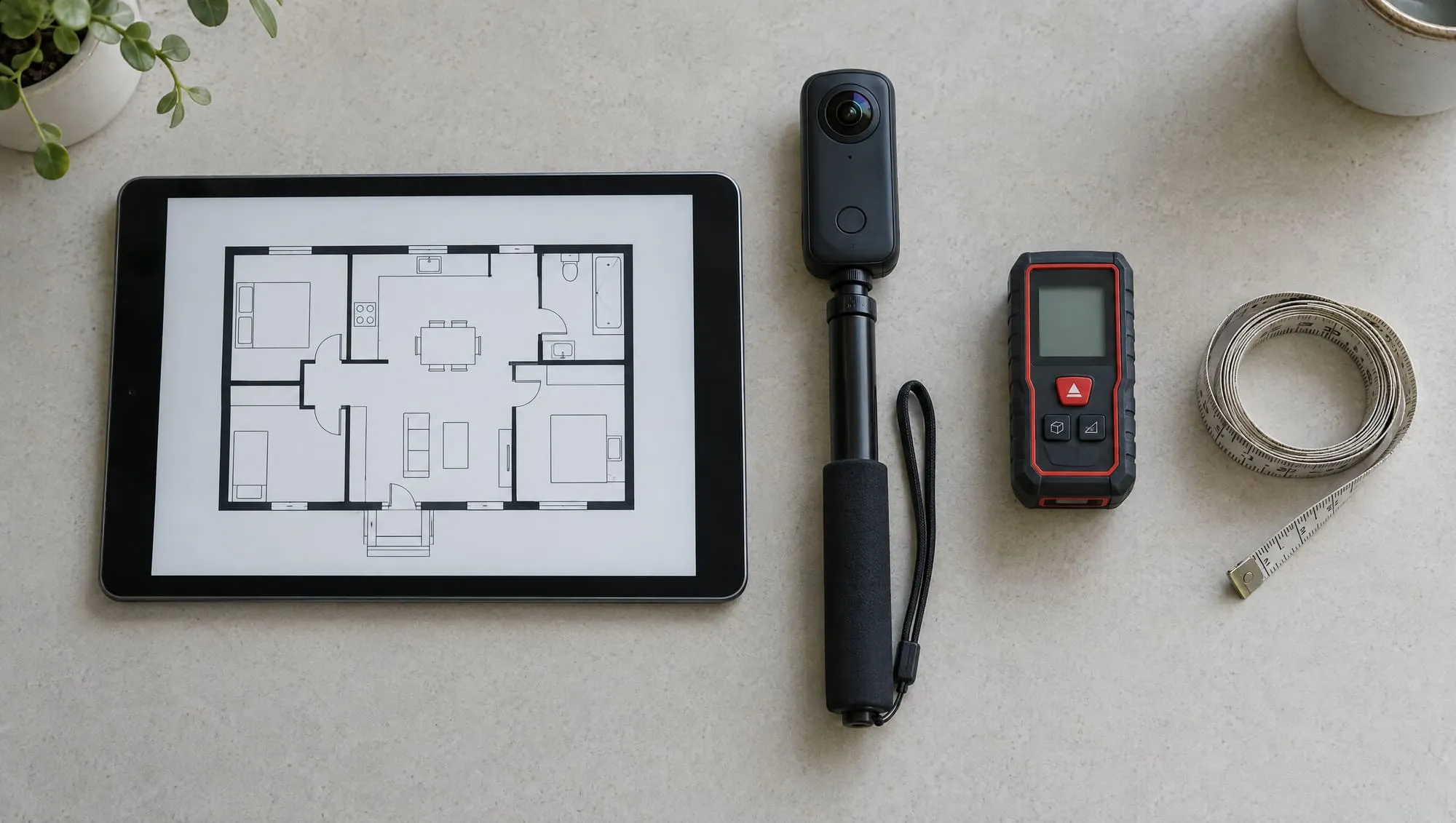
The collector's job is to record the house, and the value stays with the appraiser. Fannie Mae has the collector follow the Uniform Property Dataset, a fixed list of what to record, and add photos and a floor plan drawn to the ANSI standard for measuring homes.2 The five numbers on the plan match the list below.
- Interior and exterior Fannie Mae's collector makes a visual observation of the interior and exterior areas, following the Uniform Property Dataset.2
- Measurements and ANSI floor plan A floor plan that conforms to the ANSI standard (ANSI Z765-2021). In 2022, Freddie Mac set training for collectors on measuring for the floor plan and calculating living area.15
- Photos Fannie Mae requires photos. In 2022, Freddie Mac asked for the front, rear, street scene, kitchen, all bathrooms and main living area.25
- Characteristics and condition In 2022, Freddie Mac set collector training on property characteristics, adverse conditions and obsolescence.5
- Safety and structural issues Fannie Mae's collector must flag safety, soundness or structural issues.2
Under its value acceptance + property data rules, Fannie Mae treats the collected data as valid for 12 months from the collection date.2
The data also ages. In 2022, Freddie Mac required a new property data report once the old one passed 12 months, and the collection date had to fall on or before the hybrid's effective date.5
The collector doesn't have to be an appraiser, so the GSEs set rules for how collectors are picked, trained and checked. Fannie Mae requires the lender to vet each one with an annual background check and to keep collectors with ties to the deal off the job.2 In 2022, Freddie Mac allowed a non-appraiser, an appraiser or an appraiser trainee to collect. Non-appraisers had to finish training with an exam, and each collector had to certify no interest in the deal and no bias.5
Freddie Mac also gave appraisers a way to check the data. In its December 2022 bulletin, it said the appraiser “must be permitted to contact the property data collector.”5 If a photo or a measurement looks wrong, you can ask the person who took it. That is Freddie Mac's rule as of that bulletin.
The appraiser signs the value and says who inspected
At the desk, the appraiser has to consider the interior and exterior data the third party collected, as Fannie Mae requires.1 The appraiser signs for the analysis and has to be clear about where the data came from.

What the appraiser reports
- Who inspectedFreddie Mac says that in a hybrid certification, the appraiser states they “did not perform a personal visual inspection” and “relied on data provided by third parties.” The federal banking agencies note that USPAP requires the appraiser to disclose whether the property was inspected.319
- Effective dateUnder Fannie Mae's rule, the effective date the appraiser reports for a hybrid “is the date that the appraiser arrives at their opinion of value.” In Fannie Mae's UAD 2.6 data, the data collection date has its own field.1
- The data collectorUnder Freddie Mac's 2022 rules, the appraiser named the property data collector in the body of the hybrid report and attached the property data report. In Fannie Mae's UAD 2.6 data, the appraiser enters the collector type, from appraiser to insurance inspector.51
- UAD 3.6 methodHybridThe appraiser picks one valuation method: Traditional, Desktop, Hybrid or Exterior. Fannie Mae defines Hybrid as “using a recent collection of property data in lieu of the appraiser performing an on-site inspection.”329
Freddie Mac lists three statements in a hybrid certification. The appraiser did not inspect the house in person, relied on data from third parties, and “has examined and verified the data and data sources to determine reliability.”3 Freddie Mac groups these under the appraiser's potential liability. So the appraiser relies on another person's measurements and photos and still certifies having checked them. The GSEs' 2022 sample hybrid certification read: “I did not perform a personal visual inspection of the subject property as part of this appraisal assignment.”8
That leaves two dates on one report. The collector's visit has its own date, and the effective date is the day the appraiser forms the opinion of value.1 If prices move between the two, you are valuing the house as the collector saw it on an earlier day.
Fannie Mae puts part of the risk on the lender. The lender must share the collected data with the appraiser when it hires them. It stays responsible for the accuracy of the property description, whether the data is complete and whether the property is eligible.1
UAD 3.6 changes how you mark the report. The old form numbers, including 1004 Hybrid and 1073 Hybrid, give way to one dynamic report.10 The appraiser picks Hybrid as the method and, in Fannie Mae's words, must report “their use of a property data collection in lieu of the appraiser performing an on-site inspection.” Fannie Mae adds that a virtual inspection “is not an on-site inspection,” so a video call with the owner doesn't count as the appraiser's visit.32
Federal appraisal rules require a licensed appraiser, and one rule requires a visit
Under FIRREA's appraisal section, 12 U.S.C. 3339, federal agencies must require appraisals that follow the Appraisal Standards Board's standards, are in writing and are reviewed for USPAP compliance. The section doesn't mention an inspection.13
The banking agencies' rules add six minimum standards for a federally related transaction, and the last is that a State licensed or certified appraiser does the work. None of the six is an inspection.14 So in our reading of the text, a hybrid signed by a licensed or certified appraiser can meet the federal appraisal rules, as long as the appraiser's scope of work meets USPAP. We couldn't read USPAP's text to check how it treats hybrids. The agencies' 2010 appraisal guidelines don't mention hybrids, though they say institutions “should be cautious in limiting the scope of the appraiser's inspection.”19
The one federal regulation we found that requires a visit is Regulation Z. For a higher-priced mortgage loan, the appraiser must be certified or licensed and must conduct “a physical visit of the interior of the property that will secure the transaction.”17 That rule comes with a long list of exemptions, and the first is a qualified mortgage. In our reading, that leaves the visit rule mainly for higher-priced loans that aren't qualified mortgages. If you make those loans, plan on the appraiser going inside.
Smaller bank loans follow their own rule. If your bank lends $400,000 or less on a home, the appraisal rule doesn't apply, and the bank needs an evaluation instead.15 For evaluations, the agencies say an institution “should consider performing an inspection.”19 Credit unions have one more link: NCUA's list of exempt loans applies only when the loan isn't a higher-priced mortgage loan under Regulation Z.16
Loans sold to the GSEs follow a different track. A bank needs no separate FIRREA appraisal when the loan qualifies for sale to a GSE or the appraisal conforms to Fannie Mae or Freddie Mac standards.15 For those loans, the GSE guides set the hybrid rules. Work through the five checks in order; more than one can apply.
Is it a higher-priced mortgage loan?
12 CFR 1026.35(c)(3)(i); exemptions in 1026.35(c)(2)
A higher-priced mortgage loan is a closed-end consumer loan secured by the borrower's principal dwelling, so a home equity line of credit falls outside it. Its APR is 1.5 points or more above the average prime offer rate for a first lien within the conforming loan limit, 2.5 points for a larger first lien and 3.5 points for a subordinate lien. For these loans, Regulation Z requires a written appraisal by a certified or licensed appraiser “who conducts a physical visit of the interior of the property that will secure the transaction.” The CFPB's Regulation Z exempts a qualified mortgage, credit at or below $34,200 in 2026, a loan secured by a mobile home, boat or trailer, initial construction, bridge loans of 12 months or less, reverse mortgages, certain refinances and certain manufactured-home transactions.1718
Is it an FHA, VA or USDA loan?
HUD Handbook 4000.1; VA Circular 26-22-13
In Handbook 4000.1, FHA names no hybrid method and tells the appraiser to operate the applicable systems. In Circular 26-22-13, VA lists two alternative methods: exterior-only and desktop appraisals. USDA's handbook wasn't reviewed for this article.2021
Will Fannie Mae or Freddie Mac buy it?
Fannie Mae B4-1.2-03; Freddie Mac Bulletin 2025-1; 12 CFR 34.43(a)(10)
Fannie Mae says DU offers hybrid appraisals on certain loan casefiles, for the properties and loans in chapter 07. In Bulletin 2025-1 (Feb. 5, 2025), Freddie Mac opened hybrids to one-unit homes, including PUD homes and homes with an ADU, and to condo units, for LPA submissions on or after Apr. 7, 2025. Under 12 CFR 34.43(a)(10), a bank needs no separate FIRREA appraisal when the loan qualifies for sale to a GSE or the appraisal conforms to Fannie Mae or Freddie Mac standards.1715
Is it another loan from a bank or credit union?
12 U.S.C. 3339; 12 CFR 34.43 and 34.44; Fed, FDIC and NCUA rules
Under 12 CFR 34.44, an appraisal for a federally related transaction must conform to USPAP, be written, be reviewed for USPAP compliance, analyze deductions and discounts, use the market value definition, and be performed by a State licensed or certified appraiser. None of the six items is an inspection. A residential loan of $400,000 or less is exempt and gets an evaluation, where the 2010 guidelines say an institution “should consider performing an inspection.” The Fed and FDIC use the same items and line; NCUA ties its line to the uninsured and unguaranteed part of the loan.14151319
Does a state rule apply?
State appraisal boards and statutes
States set their own appraiser and appraisal management rules. One state bill to license data collectors, Mississippi House Bill 1663 (2024), died in committee on Mar. 5, 2024.31
This explains the rules; it isn't legal advice.
Since 2022, hybrids have grown from an upgrade path into one of four UAD 3.6 methods
Before hybrids came temporary rules. In March 2020, Fannie Mae allowed exterior-only and desktop appraisals during COVID.11 Freddie Mac started hybrids in 2022 as an upgrade path for loans that started with a property data report under ACE+ PDR, for submissions on or after July 17, 2022.4 At Fannie Mae, a lender whose value acceptance + property data offer is lost after the visit may give the data to an appraiser for a hybrid.2
Two standards came next, one for measuring and one for recording. Fannie Mae required ANSI Z765-2021 to measure living area from Apr. 1, 2022, on appraisals that need an interior and exterior inspection.12 Both GSEs required the Uniform Property Dataset for property data reports from Apr. 1, 2024.3
The wider change came on Feb. 5, 2025, when both GSEs announced broader hybrid eligibility on the same day. Fannie Mae said DU would show hybrid eligibility messaging from the weekend of Mar. 22, 2025.6 Freddie Mac applied it to loans submitted on or after Apr. 7, 2025, and hybrids there were no longer limited to the upgrade path.7 Since Nov. 2, 2026, the appraiser picks one of four methods on each new UAD 3.6 report, and Hybrid is one of them.9
Mar. 23, 2020
Fannie Mae allows temporary exterior-only and desktop appraisals during COVID.11
Apr. 1, 2022
Fannie Mae requires ANSI Z765-2021 to measure living area for appraisals that need an interior and exterior inspection.12
July 17, 2022
Freddie Mac hybrid appraisals begin as an upgrade path from ACE+ PDR, for submissions on or after July 17, 2022.4
Dec. 2, 2022
Freddie Mac adds Form 465H, the hybrid form for condominium units.5
Apr. 1, 2024
Both GSEs require the Uniform Property Dataset for property data reports.3
Feb. 5, 2025
Fannie Mae and Freddie Mac announce wider hybrid eligibility; Freddie Mac applies it to submissions on or after Apr. 7, 2025, and Fannie Mae's DU messaging follows the weekend of Mar. 22, 2025.76
Mar. 13, 2025
The Appraisal Institute answers Freddie Mac's research on hybrids, saying the full study has not been released.28
Mar. 13, 2026
Executive Order 14393 directs six agencies to consider expanding the use of desktop and hybrid appraisals (section 6; it sets no deadline).23
Nov. 2, 2026
UAD 3.6 becomes mandatory for new reports submitted to UCDP; Hybrid is one of four valuation methods.9
Fannie Mae keeps hybrids to one-unit homes when DU offers one
If you sell to Fannie Mae, its automated underwriting system decides first. DU must offer the hybrid option on the casefile, and the property and loan must be on Fannie Mae's eligible list.1 Existing one-unit homes qualify, and so do condo and PUD units. Two- to four-unit homes, co-ops, manufactured homes and proposed construction don't. These lists are from the topic's Dec. 10, 2025 version, checked Nov. 25, 2026.
Fannie Mae also rules out manually underwritten loans, loans DU marks ineligible, HomeStyle Renovation and HomeStyle Refresh loans, and construction-to-permanent loans.1 Investment homes, homes under construction and cash-out refinances can qualify.
Eligible under Fannie Mae1
- Existing one-unit properties, including a condo or PUD unit
- Principal residence, second home or investment property
- Under-construction properties and existing properties with incomplete construction or renovation
- Community land trust and resale-restricted properties, including Affordable LTV
- Texas 50(a)(6) loans
- Purchase, limited cash-out and cash-out refinance
Excluded under Fannie Mae1
- Two- to four-unit properties
- Co-ops and manufactured homes
- Proposed construction
- Construction-to-permanent loans, single- and two-close
- HomeStyle Renovation and HomeStyle Refresh
- Loans DU marks ineligible, and manually underwritten loans
Outside Fannie Mae's guide, check each program before you order. FHA and VA name no hybrid method in the handbook and circular we read, and at least one lender, U.S. Bank, has said in its guide that it won't accept hybrids. The notes below give the dates. EO 14393 also directs HUD and VA to consider bringing FHA and VA appraisal standards in line, but that part of the order doesn't mention hybrids.23
Freddie Mac
As of its Bulletin 2025-1 (Feb. 5, 2025), Freddie Mac allows hybrids for one-unit properties, including in a PUD or with an ADU, and for condominium units, on all transaction types, for submissions on or after Apr. 7, 2025. Hybrids are no longer limited to the ACE+ PDR upgrade path. We couldn't open Freddie Mac's current Guide pages when we checked on Nov. 25, 2026, so the Freddie Mac rules here come from its bulletins.7
FHA, VA and USDA
In Handbook 4000.1 (Update 18, revised Aug. 12, 2026), FHA names no hybrid method and tells the appraiser to observe the plumbing, heating and electrical systems and to operate the applicable systems. In Circular 26-22-13 (July 27, 2022), VA names exterior-only and desktop appraisals as its alternatives. USDA's handbook was not reviewed.2021
Lender overlays
A lender can set rules stricter than the GSEs'. In its correspondent and HFA guide (SEL-2026-023, July 2, 2026), U.S. Bank says it will not accept hybrid appraisals or property data reports. The copy we read is hosted by a third party, and the rule is one lender's own.22
Hybrid data is thin, and appraisers report low comfort
We found no public count of hybrid appraisals. The nearest figure, about 2% to 3% of GSE transactions at the end of 2025, counts property data collections used with waivers. Working RE, which reported it from AEI Housing Center data, says there is no good data on how many hybrids are done each month.25 Each tile below keeps its own period and source, and no two share a scale.
How much of the market
Under 1%
of GSE loan volume was desktop appraisals
- Period
- Share not dated; the audit covered Oct. 2021 to Mar. 2023
- Source
- GSE data cited in an FHFA inspector general audit24
- Limit
- Desktop appraisals, not hybrids.
2% to 3%
of GSE transactions used a property data collection
- Period
- End of 2025, by month
- Source
- Working RE, citing AEI25
- Limit
- This counts collections used with a waiver, not hybrid appraisals. Working RE says no good data exists on how many hybrids are done each month.
23%
of GSE loans had an appraisal waiver
- Period
- Oct. 2025
- Source
- Working RE, citing AEI25
- Limit
- Waivers, not hybrids. The AEI primary was not read.
What the GSEs say about performance
2 times
as likely to report property condition as Freddie Mac requires, hybrids with a property data report against traditional reports
- Period
- Pre-launch test, no dates given
- Source
- Freddie Mac26
- Limit
- No sample, method or period published; it measures compliance with condition rules, not accuracy of value.
Response The Appraisal Institute said on Mar. 13, 2025 that Freddie Mac has not released the full research study. Without the methodology, sample size and specific criteria, it said, appraisers cannot evaluate the finding.28
8.9%
lower delinquency rate for ACE waiver loans than for otherwise similar loans made with appraisals
- Period
- Loans from 2017Q2 to 2023Q2
- Source
- Freddie Mac research27
- Limit
- This is waiver data, not hybrid data. It is a relative rate, with no adjustment for COVID forbearance.
What appraisers say
35%
of appraisers who answered have done a hybrid appraisal, up from 26% in 2023 and 24% in 2022
- Period
- Oct. 2025 survey
- Source
- NAR's appraiser respondents29
- Limit
- Respondents only; the chart base reads 388, far below the 1,329 appraisers in the methodology, and NAR does not explain the gap.
- Period
- Oct. 2025 survey
- Source
- NAR's appraiser respondents29
- Limit
- NAR fielded the survey in Oct. 2025 to all appraiser members and a sample of other members; 2.7% responded. The methodology counts 1,329 appraisers, the chart base reads 1,382, and NAR does not explain the gap. The share of appraisers who rated hybrids 1, very uncomfortable, was 52%.
None of these numbers answers the core question for a reviewer: are hybrid values as accurate as traditional ones? Freddie Mac's figure measures condition reporting, and the Appraisal Institute said in March 2025 that the full study behind it hadn't been released.2628 The 8.9% figure is about waivers.27 The volume figures count desktops, waivers and data collections. As of Nov. 25, 2026, we found no independent academic, GAO or CFPB study of hybrid accuracy.
Appraisal groups make the case against. The Appraisal Institute said in March 2025 that collectors face “no uniform standards for training, licensing, or ethical responsibilities like those required of appraisers,” and that “no independent analysis confirms that consumers actually benefit from lower fees or faster loan processing.”28 Appraisers who answered NAR's 2025 survey rated their comfort with hybrids at 2.07 on a 1 to 5 scale, against 4.56 for traditional work, and 52% picked 1, very uncomfortable. That survey drew a 2.7% response rate.29
Real estate agents share some of the doubt. In NAR's 2024 survey of Realtors, most of them agents, 65% said they were concerned about the quality of the data collected, and 80% saw collector data as lower quality than an appraiser's. Those are agents' views, from a 4.1% response rate.30
The GSEs' answer is the controls. Fannie Mae requires lenders to vet, train and review collectors, with quality control before and after closing.2 Freddie Mac points to required training, background checks and Seller oversight.3 Whether those controls make hybrid values as accurate as traditional ones is the open question.
Check the loan, the data and the dates before you order or sign one
Lenders decide whether a hybrid is allowed, appraisers decide whether they can sign it, and borrowers can ask what was ordered. Each check names its source.
For lenders
- Check the loan against Fannie Mae's eligible and excluded lists before ordering a hybrid.1
- Test whether the loan is a higher-priced mortgage loan without an exemption; Regulation Z then requires the appraiser to visit the interior.17
- Read the investor's own guide for overlays; U.S. Bank said in July 2026 that it will not accept hybrids.22
- Confirm the FHA, VA or USDA rule before ordering one on a government loan; FHA and VA name no hybrid method in the handbook and circular checked here.2021
- Recheck Freddie Mac's current Guide; we couldn't open its pages on Nov. 25, 2026, so the Freddie Mac rules here come from bulletins through Feb. 5, 2025.7
For appraisers
- Read the collector's data before signing; Fannie Mae requires the appraiser to consider the interior and exterior data collected.1
- Report the data collector and the valuation method, as Fannie Mae and Freddie Mac require.51
- Set the effective date to the date of the appraiser's own opinion of value, not the collector's visit.1
- Review USPAP and the state board's guidance on scope of work; USPAP's text needs a login, and we could not read it.
For borrowers
- Ask the lender which method it ordered: traditional, hybrid, desktop or value acceptance + property data.32
- Ask who will visit the home; Fannie Mae's list of collector types runs from appraiser to insurance inspector.1
- Find out what happens if value acceptance + property data falls through; the lender may give the collected data to an appraiser for a hybrid, or order a desktop or traditional appraisal.2
Recheck the rules before you rely on this page. Fannie Mae's hybrid and property data topics carry a Dec. 10, 2025 date and were unchanged on Nov. 25, 2026.12 Freddie Mac's rules here come from bulletins dated through Feb. 5, 2025 and a January 2026 article; we couldn't open Freddie Mac's current Guide pages when we checked on Nov. 25, 2026.73 The exemption threshold for higher-priced loans is $34,200 for 2026 and resets every Jan. 1, so check the 2027 figure in January.18 And watch the six agencies named in section 6 of EO 14393; a rule change from any of them would update the federal checks above.23
How this explainer was built
ValuSignal read primary sources as of Nov. 25, 2026: Fannie Mae Selling Guide topics, Freddie Mac bulletins and articles, federal statutes and rules, Executive Order 14393, and documents from NAR and the Appraisal Institute. ValuSignal kept a claim ledger with the source, date and wording limit for each fact.
What ValuSignal could not read
- Freddie Mac's current Seller/Servicer Guide (its pages returned an error when checked on Nov. 25, 2026)
- The text of USPAP (login required)
- USDA's handbook on hybrids (download blocked)
The AEI figures on property data collections and waivers come through Working RE, not from AEI.
The images are AI illustrations of a composite house.
Rules and guides checked as of Nov. 25, 2026. This explains the rules; it isn't legal advice.
Sources
- Fannie Mae Selling Guide B4-1.2-03, Hybrid Appraisals (12/10/2025; checked Nov. 25, 2026)
- Fannie Mae Selling Guide B4-1.4-11, Value Acceptance + Property Data (12/10/2025; checked Nov. 25, 2026)
- Freddie Mac, Property Data Collection: An Overview (Jan. 16, 2026)
- Freddie Mac Guide Bulletin 2022-13 (ACE+ PDR with Form 70H hybrid upgrade path) (June 15, 2022)
- Freddie Mac Guide Bulletin 2022-24 (hybrid appraisal upgrade path, Form 465H) (Dec. 2, 2022)
- Fannie Mae Selling Guide Announcement SEL-2025-01 (hybrid appraisal expansion) (Feb. 5, 2025)
- Freddie Mac Guide Bulletin 2025-1 (hybrid appraisal expansion) (Feb. 5, 2025)
- Fannie Mae and Freddie Mac, URAR Hybrid and Desktop Appraisal Forms (updated Feb. 2022)
- Freddie Mac, UAD and Forms Redesign FAQ (entry updated Sept. 30, 2026)
- Fannie Mae Announcement SEL-2025-04, Selling Guide updates (UAD 3.6 summary) (June 4, 2025)
- Fannie Mae Lender Letter LL-2020-04, temporary appraisal flexibilities (Mar. 23, 2020)
- Fannie Mae Appraiser Update, ANSI required April 1, 2022 (Mar. 2022)
- 12 U.S.C. 3339, standards for appraisals (FIRREA sec. 1110) (current)
- 12 CFR 34.44, minimum appraisal standards (eCFR as of Nov. 23, 2026)
- 12 CFR 34.43, appraisals required; transactions requiring a State certified appraiser (eCFR as of Nov. 23, 2026)
- 12 CFR 722.103, NCUA transactions requiring appraisals (exemptions apply only to loans that are not higher-priced mortgage loans) (eCFR as of Nov. 20, 2026)
- 12 CFR 1026.35, requirements for higher-priced mortgage loans (eCFR as of Nov. 23, 2026)
- Federal Register 2025-22875, Appraisals for Higher-Priced Mortgage Loans exemption threshold (Dec. 16, 2025, effective Jan. 1, 2026)
- Interagency Appraisal and Evaluation Guidelines, 75 FR 77450 (Dec. 10, 2010)
- HUD Handbook 4000.1, Single Family Housing Policy Handbook (Update 18, revised Aug. 12, 2026)
- VA Circular 26-22-13, alternative appraisal methods (July 27, 2022)
- U.S. Bank correspondent and HFA guide, SEL-2026-023, acceptability of hybrid appraisals (July 2, 2026)
- Executive Order 14393, Promoting Access to Mortgage Credit, section 6 (signed Mar. 13, 2026; 91 FR 13203, Mar. 18, 2026)
- FHFA Office of Inspector General, AUD-2024-001, FHFA Did Not Document Reviews of Desktop Appraisal Reports (Oct. 25, 2023)
- Working RE, 2026 Market Update: Appraisal Volume, Waivers, and PDCs (citing AEI Housing Center) (2026)
- Freddie Mac, How Freddie Mac Develops Collateral Valuation Solutions (May 2026)
- Freddie Mac, Lowering Credit Risk: The Case for ACE (May 2024)
- Appraisal Institute, news release on Freddie Mac hybrid appraisal research (Mar. 13, 2025)
- National Association of REALTORS, 2025 Appraisal Issues Survey (Dec. 19, 2025)
- National Association of REALTORS, 2024 Appraisal Process Report (Nov. 14, 2024)
- Mississippi House Bill 1663 (2024), bill history (died in committee Mar. 5, 2024)
- Fannie Mae Selling Guide Supplement: UAD 3.6 Policy (published Nov. 4, 2026)
- Fannie Mae and Freddie Mac, Functioning without Form Numbers: Mapping Legacy Forms to Redesigned URAR Property Type Characteristics, v1.1 (June 10, 2025; transcribed for this site Oct. 2026, not re-read Nov. 25, 2026)
- Fannie Mae Selling Guide B4-1.4-10, Value Acceptance (06/03/2026; checked Nov. 25, 2026)
- 12 U.S.C. 3354, automated valuation models (definition in subsection (d)) (current; checked Nov. 25, 2026)
- 12 U.S.C. 3355, broker price opinions (current; checked Nov. 25, 2026)
The Signal / Twice-monthly briefing
Get the next practice feature in The Signal.
One sourced briefing, twice a month.
Unsubscribe in one click. We don't sell your email or share it with sponsors. Privacy Policy