The Signal / Policy / November 7, 2026
Most Florida homesteads would pay only school property tax under Amendment 3
We applied Amendment 3’s new exemption to all 11.1 million parcels on Florida’s 2026 tax rolls. About 3 million homesteads would pay only school property tax in 2028, and counties, cities and special districts would lose about a fifth of the revenue they raise outside school taxes.
Key points
- Condominium homesteads have a median assessed value of $162,120, so 70% of them would pay only school tax in 2028. Among manufactured home homesteads the share is 94%.
- Bradford, Dixie, Lafayette and Union counties already levy the 10-mill maximum for county operations. If every county raised its non-school rates evenly to replace the 2028 loss, 28 counties would pass that cap.
- Buyers who move to Florida after 2026 get a $50,000 non-school exemption for four years, slightly below today's $51,411, before the full exemption applies.
- The November 2027 tax bills are the first with the new exemption, so homestead escrow payments change at each servicer's next annual analysis after that bill.
The 2028 tax roll
About 3 million of Florida’s 5.2 million homesteads would pay only school property tax once the exemption reaches $250,000
Florida voters approved Amendment 3 on Nov. 3 with more than the 60% it needed, in unofficial counts. The Legislature had placed it on the ballot in a June special session as CS/HJR 1-F.29 From Jan. 1, 2027, a homestead owned by someone who lived in Florida at the end of 2026 is exempt from county, city and special district property taxes on the first $150,000 of assessed value. From 2028 the line moves to $250,000, and from 2029 it rises with inflation. School taxes keep today’s $25,000 exemption.17
We applied those rules to every parcel on the Florida Department of Revenue’s 2026 tax rolls, 11.1 million in all, and priced the change with each county’s 2025 average non-school tax rate.45 On 2026 values, 57% of homesteads are assessed below $250,000. In 2028 their only property tax would be the school levy. Today 4.4% of homesteads pay no county or city property tax.
Counties, cities and special districts set their 2027 tax rates in late summer 2027. Those decisions determine how much of the lost revenue moves onto rental homes, second homes and commercial property.
- Today
$248,589 taxable, about $2,599 a year
- 2027
$150,000 taxable, about $1,568 a year
- 2028
$50,000 taxable, about $523 a year
- Exempt from county, city and district taxes
- Taxable
The exemption today has two parts: the first $25,000 of assessed value, and the band from $50,000 to $76,411, which rises with inflation each year. Together they exempt $51,411 for most homesteads, and owners pay county and city tax on the slice between $25,000 and $50,000. The amendment replaces both parts with one band that starts at zero, so that slice becomes exempt as well.137
Savings per homestead
The saving grows with assessed value up to $250,000 and then levels off near $2,100 a year
On 2026 values and 2025 rates, the median homestead would save $941 on its 2027 county, city and district taxes and $1,460 in 2028, the first year at $250,000. A quarter of homesteads would save less than $681 and a tenth more than $2,423.
The added exemption is a fixed dollar amount, so the saving stops growing once a home’s assessed value passes $250,000. Above that line every homestead gets the same $198,589 of added exemption, worth about $2,076 a year at the statewide average rate.
- $96$0K to $50K197K homes
- $286$50K to $100K633K homes
- $724$100K to $150K744K homes
- $1,254$150K to $200K732K homes
- $1,794$200K to $250K673K homes
- $2,173$250K to $300K562K homes
- $2,177$300K to $400K719K homes
- $2,177$400K to $600K546K homes
- $2,218$600K+376K homes
Florida’s Save Our Homes cap limits a homestead’s yearly assessment increase to 3% or the change in the consumer price index, whichever is lower, until the home sells. The median homestead’s assessed value is 66% of the just value the property appraiser sets.37 Long-time owners are the most likely to fall under $250,000 and pay only school tax.
Single-family homesteads
54% would pay only school tax in 2028
4,254,371 homesteads. Median assessed value $237,863; median 2028 saving $1,588.
Condominium homesteads
70% would pay only school tax in 2028
597,389 homesteads. Median assessed value $162,120; median 2028 saving $1,087.
Manufactured home homesteads
94% would pay only school tax in 2028
229,438 homesteads. Median assessed value $73,203; median 2028 saving $254.
Condominium homesteads have lower assessed values than houses, so more of them fall entirely under the new exemption. The condo associations’ own costs are a separate matter, covered in our condo project rules feature.
Where the revenue goes
Counties would lose from 6% to 40% of their non-school property tax revenue, depending on how much of the tax base is homesteads
Statewide, the 2028 exemption removes $687.3 billion of taxable value. At 2025 rates that is $7.2 billion a year, 20% of the $36.3 billion that counties, cities and special districts levied outside school taxes in 2025.5 The state’s Revenue Estimating Conference, which also counted value growth, the lower assessment caps and newcomers, estimated losses of $4.9 billion in the 2027-28 fiscal year and $8.7 billion in 2028-29, reaching $11.8 billion a year by 2031-32.7
The share lost depends on how much of a county’s taxable value belongs to homesteads. In Sumter County, home to The Villages, homesteads hold 51% of non-school taxable value, and the county and its cities would lose 38% of 2025 non-school revenue. In Monroe and Walton counties, where second homes and rentals make up most of the base, homesteads hold 20% and 18% of it, and each would lose about 6%.
Median 2028 saving per homestead
- Under $600
- $600 to $1,000
- $1,000 to $1,400
- $1,400 to $1,800
- $1,800 to $2,200
- $2,200 and up
Highest 10: median 2028 saving per homestead
- Broward$2,572
- St. Lucie$2,356
- Miami-Dade$2,230
- Palm Beach$2,218
- Martin$2,161
- Orange$2,043
- Hillsborough$2,011
- Nassau$1,959
- Flagler$1,942
- Seminole$1,872
Show all 67 counties
| County | Homesteads | Median assessed value | Median saving 2027 | Median saving 2028 | School tax only, 2028 | Revenue lost, 2028 | Share of 2025 revenue | Rate increase to replace |
|---|---|---|---|---|---|---|---|---|
| Alachua | 55,002 | $184,462 | $1,443 | $1,829 | 67% | $96,179,338 | 26.2% | +33% |
| Baker | 6,531 | $145,858 | $824 | $824 | 71% | $5,966,141 | 37.8% | +56% |
| Bay | 46,089 | $203,582 | $726 | $947 | 66% | $39,699,046 | 16.9% | +19% |
| Bradford | 7,059 | $113,198 | $565 | $565 | 77% | $5,777,082 | 32.7% | +44% |
| Brevard | 172,347 | $196,620 | $834 | $1,184 | 64% | $184,134,955 | 29.8% | +40% |
| Broward | 415,764 | $252,055 | $1,319 | $2,572 | 49% | $781,138,661 | 18.3% | +21% |
| Calhoun | 3,282 | $77,499 | $253 | $253 | 81% | $1,560,337 | 21.7% | +26% |
| Charlotte | 67,630 | $210,806 | $905 | $1,398 | 62% | $81,570,325 | 25.7% | +34% |
| Citrus | 53,647 | $146,654 | $923 | $923 | 79% | $54,787,093 | 33.6% | +47% |
| Clay | 54,067 | $196,598 | $895 | $1,273 | 66% | $63,644,965 | 34.8% | +50% |
| Collier | 110,238 | $364,289 | $549 | $1,106 | 31% | $103,548,386 | 11.3% | +12% |
| Columbia | 16,878 | $130,120 | $569 | $569 | 74% | $12,716,960 | 28.8% | +38% |
| DeSoto | 6,398 | $128,333 | $661 | $661 | 73% | $5,692,455 | 18.5% | +22% |
| Dixie | 4,927 | $58,283 | $311 | $311 | 86% | $2,446,952 | 20.3% | +24% |
| Duval | 214,242 | $196,132 | $1,139 | $1,504 | 67% | $297,778,659 | 21.9% | +26% |
| Escambia | 76,290 | $156,437 | $784 | $784 | 79% | $65,798,370 | 22.7% | +28% |
| Flagler | 43,653 | $232,589 | $1,164 | $1,942 | 60% | $71,314,669 | 33.3% | +48% |
| Franklin | 3,469 | $153,563 | $554 | $554 | 69% | $2,218,899 | 9.1% | +9% |
| Gadsden | 10,087 | $100,090 | $448 | $448 | 79% | $7,260,991 | 27.0% | +36% |
| Gilchrist | 5,682 | $117,492 | $527 | $527 | 72% | $4,308,567 | 28.4% | +38% |
| Glades | 2,745 | $116,768 | $676 | $676 | 78% | $2,682,325 | 17.9% | +20% |
| Gulf | 4,227 | $151,144 | $548 | $548 | 69% | $2,822,343 | 10.3% | +11% |
| Hamilton | 2,904 | $88,783 | $250 | $250 | 83% | $1,512,542 | 11.9% | +13% |
| Hardee | 4,600 | $109,235 | $442 | $442 | 76% | $3,060,406 | 11.7% | +13% |
| Hendry | 8,762 | $133,008 | $833 | $833 | 80% | $9,221,707 | 16.4% | +18% |
| Hernando | 59,441 | $160,930 | $819 | $874 | 76% | $54,057,257 | 35.5% | +52% |
| Highlands | 26,275 | $127,656 | $659 | $659 | 84% | $21,064,237 | 26.3% | +33% |
| Hillsborough | 301,329 | $216,357 | $1,234 | $2,011 | 58% | $512,960,398 | 22.9% | +28% |
| Holmes | 4,926 | $87,046 | $257 | $257 | 72% | $2,415,312 | 31.6% | +42% |
| Indian River | 51,051 | $228,816 | $829 | $1,388 | 56% | $57,790,819 | 21.6% | +26% |
| Jackson | 10,592 | $94,030 | $246 | $246 | 76% | $5,476,549 | 25.6% | +32% |
| Jefferson | 3,951 | $126,695 | $554 | $554 | 63% | $2,786,314 | 27.5% | +36% |
| Lafayette | 1,805 | $94,892 | $426 | $426 | 68% | $1,223,537 | 28.8% | +38% |
| Lake | 114,442 | $220,388 | $941 | $1,482 | 60% | $143,520,721 | 33.5% | +46% |
| Lee | 217,152 | $238,067 | $856 | $1,536 | 54% | $265,120,657 | 20.4% | +24% |
| Leon | 56,873 | $200,309 | $1,226 | $1,799 | 63% | $92,230,978 | 27.1% | +35% |
| Levy | 13,699 | $110,629 | $560 | $560 | 80% | $10,772,749 | 29.6% | +39% |
| Liberty | 1,603 | $71,867 | $245 | $245 | 77% | $765,370 | 19.9% | +24% |
| Madison | 4,302 | $91,406 | $295 | $295 | 72% | $2,352,687 | 17.9% | +21% |
| Manatee | 109,767 | $277,572 | $813 | $1,638 | 42% | $139,588,679 | 22.6% | +27% |
| Marion | 117,514 | $161,152 | $943 | $1,027 | 77% | $123,057,068 | 33.8% | +46% |
| Martin | 49,119 | $270,493 | $1,073 | $2,161 | 46% | $78,289,841 | 18.3% | +21% |
| Miami-Dade | 451,610 | $248,892 | $1,169 | $2,230 | 51% | $763,782,247 | 12.6% | +14% |
| Monroe | 15,499 | $484,856 | $521 | $1,050 | 19% | $14,844,902 | 5.6% | +6% |
| Nassau | 30,310 | $262,890 | $973 | $1,959 | 45% | $45,005,427 | 25.0% | +30% |
| Okaloosa | 51,361 | $219,524 | $680 | $906 | 66% | $42,160,131 | 19.9% | +24% |
| Okeechobee | 8,975 | $122,830 | $538 | $538 | 82% | $6,563,235 | 15.7% | +18% |
| Orange | 256,479 | $251,670 | $1,081 | $2,043 | 51% | $399,486,341 | 15.5% | +17% |
| Osceola | 87,944 | $238,373 | $953 | $1,633 | 56% | $116,204,065 | 20.9% | +25% |
| Palm Beach | 362,677 | $270,406 | $1,101 | $2,218 | 45% | $602,981,347 | 15.7% | +17% |
| Pasco | 169,514 | $204,790 | $1,079 | $1,513 | 63% | $227,895,377 | 34.4% | +48% |
| Pinellas | 244,891 | $193,282 | $1,203 | $1,671 | 62% | $377,021,266 | 22.0% | +27% |
| Polk | 175,453 | $181,566 | $1,000 | $1,177 | 74% | $197,224,252 | 26.9% | +35% |
| Putnam | 20,553 | $99,890 | $381 | $381 | 87% | $14,412,204 | 17.3% | +20% |
| Santa Rosa | 55,546 | $211,214 | $621 | $795 | 67% | $40,539,133 | 34.9% | +47% |
| Sarasota | 139,851 | $261,166 | $656 | $1,322 | 48% | $140,560,327 | 19.2% | +23% |
| Seminole | 107,363 | $246,725 | $996 | $1,872 | 52% | $157,359,261 | 27.2% | +35% |
| St. Johns | 92,447 | $330,019 | $759 | $1,529 | 31% | $122,222,977 | 26.8% | +34% |
| St. Lucie | 106,343 | $220,570 | $1,505 | $2,356 | 59% | $212,991,500 | 31.4% | +42% |
| Sumter | 60,287 | $264,500 | $620 | $1,250 | 47% | $57,788,803 | 37.7% | +53% |
| Suwannee | 10,794 | $101,805 | $447 | $447 | 72% | $7,282,979 | 22.6% | +27% |
| Taylor | 5,464 | $83,880 | $245 | $245 | 82% | $2,797,148 | 16.6% | +19% |
| Union | 2,981 | $89,061 | $307 | $307 | 63% | $1,806,110 | 40.4% | +63% |
| Volusia | 151,678 | $194,093 | $1,197 | $1,648 | 66% | $228,210,033 | 28.5% | +38% |
| Wakulla | 10,551 | $152,728 | $703 | $703 | 73% | $8,146,829 | 40.2% | +63% |
| Walton | 22,788 | $265,347 | $482 | $921 | 46% | $14,449,416 | 6.3% | +6% |
| Washington | 6,443 | $107,181 | $401 | $401 | 79% | $3,892,866 | 27.2% | +34% |
The rest of the tax base
Replacing the revenue would take a 23% increase in the average non-school tax rate, paid mostly by rental homes, second homes and businesses
The amendment includes no state money for the lost revenue. Legislators removed a trust fund for that purpose during the special session because it had no funding source.8 Local governments can cut spending, raise other revenue or raise tax rates. Under the amendment, county and city property tax revenue can be spent only on listed categories, including public safety, schools, infrastructure, natural resources, debt and pensions, plus a general category for county and city operations.1
Homesteads hold 35% of non-school taxable value on the 2026 rolls. After the 2028 exemption their share falls to 19%, so a rate increase falls mainly on everything else: rental homes, second homes, apartments, commercial property and business equipment. If every county replaced its 2028 loss with the same percentage increase across its non-school levies, the statewide average rate would rise from 10.45 mills to about 12.88. In Wakulla, Union and Baker counties the increase would be 56% or more.
35%65%
19%81%
- Homesteads
- Rental homes, second homes, commercial and business property
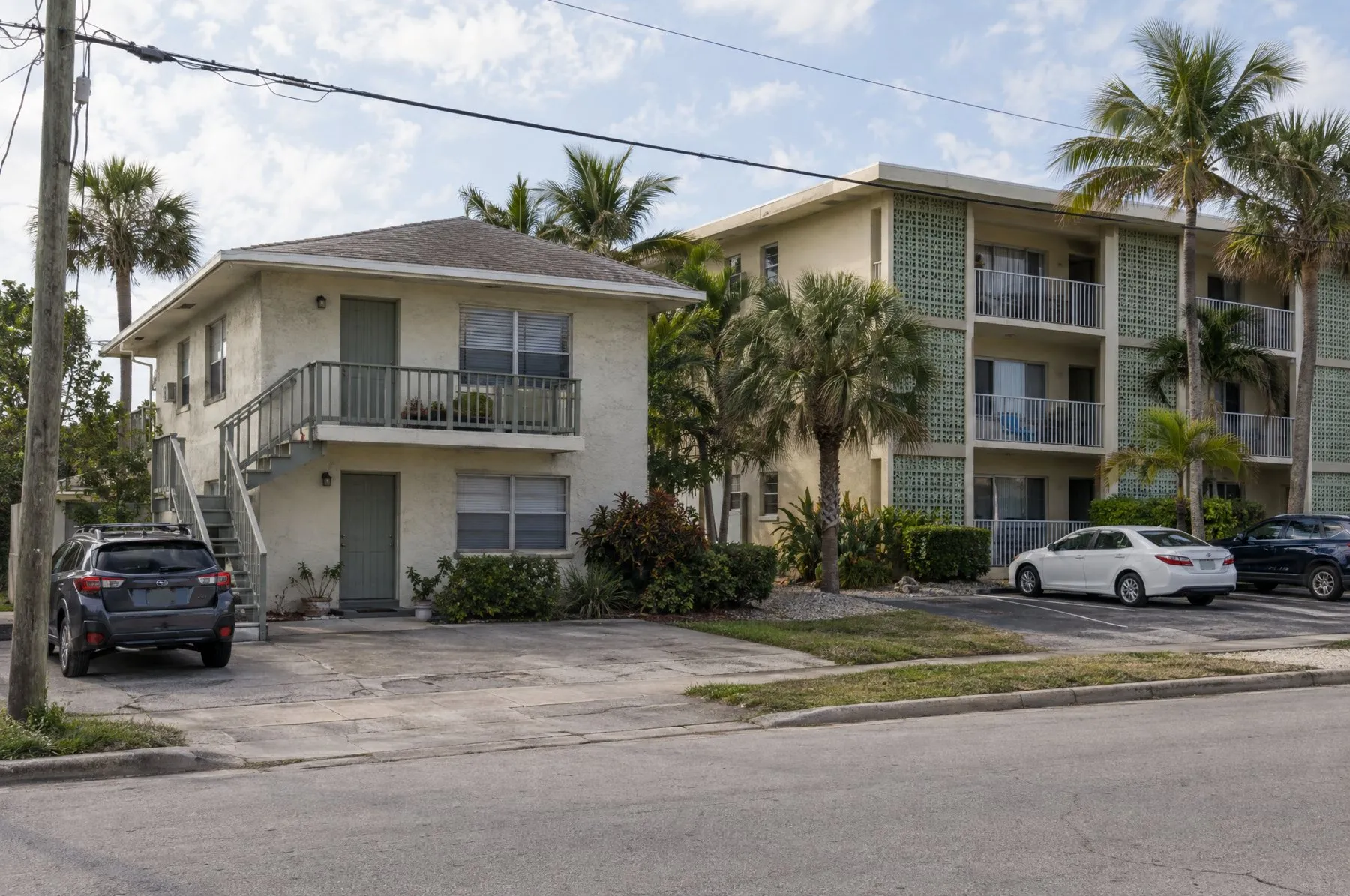
Some counties have little room to raise rates. The constitution caps county operating taxes at 10 mills, and Bradford, Dixie, Lafayette and Union counties already levied 10 mills for county operations in 2025, according to the Department of Revenue.15 If each county raised every non-school levy by the same share, the county operating rate would pass 10 mills in 28 counties.
A companion law passed in the same special session, CS/SB 4-F (Chapter 2026-240), sets the votes needed. A majority of a county commission or city council can adopt a rate up to the rolled-back rate, a two-thirds vote can go to 110% of it, and a higher rate takes a unanimous vote.1718 The rolled-back rate is the rate that raises the prior year’s revenue on the current tax base, leaving out new construction.17 As we read the statute, a rate that restores revenue lost to the exemption would fall within the majority-vote limit, subject to the 10-mill caps.
Homesteads above $250,000 of assessed value also pay part of any increase, on the value over that line. Where a county replaced its full loss, the higher rate would cancel the exemption’s saving for homesteads assessed above about $1,100,000 at the statewide average, and above about $560,000 to $630,000 in Wakulla, Union, Baker, Sumter and Hernando counties.
- Union
- Wakulla
- Baker
- Sumter
- Hernando
- Santa Rosa
- Clay
- Pasco
- Marion
- Citrus
- Lake
- Flagler
The amendment also lowers the yearly cap on assessment increases for non-homestead property from 10% to 5% starting in 2027. For homes and small rentals with nine or fewer units, the assessed value still resets to just value when the property sells; for commercial property and larger apartment buildings, the amendment leaves the reset after a sale to the Legislature.1 The 5% cap helps current owners of rental and commercial property. Buyers of homes and small rentals start over at just value.
What a buyer gets
A Florida resident who buys a home with a just value of $250,000 or more gets the same dollar saving, and a buyer new to the state waits four years for it
After a sale, the property appraiser resets a homestead’s assessed value to just value, so a buyer’s tax starts from the appraiser’s market value with the exemption subtracted.3 At the statewide average non-school rate, the 2028 exemption saves a resident buyer about $2,076 a year on any home with a just value of $250,000 or more, and less below that line.
Buyers who did not live in Florida on Dec. 31, 2026 get a $50,000 non-school exemption, indexed to inflation from 2028, and move to the full exemption in their fifth year.17 For their first four years that is slightly below today’s $51,411, about $15 a year more in tax at the average rate. In markets where many buyers move from other states, a resident and a newcomer would value the same house differently for four years. The state’s estimators wrote that it is unclear how property appraisers will determine which new owners lived in Florida on that date.7
| Just value | Yearly saving, resident | Worth, resident | Share of just value | Worth, newcomer |
|---|---|---|---|---|
| $150,000 | $1,031 | $17,200 | 11.5% | $13,600 |
| $250,000 | $2,076 | $34,600 | 13.8% | $27,400 |
| $350,000 | $2,076 | $34,600 | 9.9% | $27,400 |
| $500,000 | $2,076 | $34,600 | 6.9% | $27,400 |
| $750,000 | $2,076 | $34,600 | 4.6% | $27,400 |
Newcomer: four years at the $50,000 exemption, then the full exemption. Just value is the property appraiser’s estimate and is usually below the sale price.
How much of a tax cut ends up in prices is an old question in public finance, and the answers vary. Oates (1969) found differences in property taxes across New Jersey towns largely reflected in house values.14 Palmon and Smith (1998), studying Houston-area utility districts, estimated about 62% capitalization in one specification and about 9% in another, and attributed part of the spread in the literature to how studies are specified.12 Hilber (2015) reviewed the research and found capitalization is larger where the housing supply is constrained.13
The table is a ceiling. Partial capitalization, higher rates on the value above $250,000, cuts to local services and newcomer buyers all reduce the amount a buyer would pay for the exemption. Investors and second-home buyers receive none of it and may face higher rates.
Appraisers can test for an effect in sales data. The comparisons that would show one are paired sales of similar homes before and after the 2027 and 2028 rolls, homes on either side of $250,000 of just value, and owner-occupant purchases against investor purchases of similar property in the same market.
Escrow, debt-to-income and rental cash flow
Homestead escrow payments fall after the November 2027 tax bills, and rental cash flow depends on the tax rates local governments set in 2027
Proposed tax notices, called TRIM notices, go out in August. Taxes are due from Nov. 1, with discounts for paying early, and the full amount is due by March 31.15 The November 2027 bills are the first to include the $150,000 exemption, according to the Seminole County Property Appraiser’s Office.10 The $250,000 exemption first appears on the November 2028 bills.
Mortgage servicers analyze escrow accounts once a year under Regulation X and must refund a surplus of $50 or more within 30 days of the analysis when the account is current.11 A homestead borrower whose servicer runs that analysis after paying the November 2027 bill would see the lower payment then; others would see it at the next annual analysis.
On a purchase loan in 2027 or 2028, a tax estimate based on the seller’s bill reflects the seller’s assessed value and exemptions. The buyer’s bill depends on the reset assessed value and on whether the buyer lived in Florida at the end of 2026. Our negative equity feature covers Cape Coral, one of the metros where the largest shares of recent buyers owe more than their homes are worth.
Illustration / Homestead escrow
$78 then $122 a month
The median homestead saving, $941 in 2027 and $1,460 in 2028, spread over 12 escrow payments. It lowers the housing payment used in a debt-to-income ratio by the same amount.
Illustration / Rental cash flow
+$61 a month
A non-homestead rental assessed at $300,000 pays about $3,136 a year in non-school tax at the average rate. A 23% increase adds $729. With $2,400 rent and a $2,000 payment, the debt service coverage ratio moves from 1.20 to 1.16.
Nov. 3, 2026 Approved
Voters approve Amendment 3Unofficial counts put the vote above the 60% required.9
Jan. 1, 2027 In effect
$150,000 exemption and 5% capsAssessment date for the 2027 roll. Newcomers who arrive after 2026 start at $50,000.1
August 2027
TRIM notices with proposed 2027 ratesThe first look at how each county and city plans to respond.15
Nov. 1, 2027
First tax bills with the new exemptionEscrow analyses after this date pick up the lower homestead bills and any higher non-homestead bills.1011
Jan. 1, 2028
Exemption reaches $250,000Billed in November 2028.1
Jan. 1, 2029
Inflation indexing beginsThe $250,000 rises each year with the consumer price index when it is positive.1
The amendment also directs the Legislature to set a procedure for counties and cities to raise the exemption further, up to all remaining homestead value, with no timeline. The state’s estimators did not count it.17
Calculator
Estimate the county, city and district tax on one property in 2026, 2027 and 2028
Method and limits
- Data. The Florida Department of Revenue’s 2026 NAL tax roll files for all 67 counties: final rolls for 64 counties and preliminary rolls for DeSoto, Flagler and Liberty, 11,112,124 parcels.34 We kept values, use codes and exemptions and dropped owner names and addresses.
- Homesteads. Parcels with the first homestead exemption. A few cooperative and park parcels carry several exemptions; we counted one homestead per $25,000 of that exemption, 5,188,163 in all.
- The rule. For each homestead, the new non-school exemption is the assessed value up to $150,000 (2027) or $250,000 (2028), replacing the first and second exemptions on the roll. The added amount is limited to the parcel’s current non-school taxable value, so other exemptions, such as those for veterans and seniors, stay in place. Every homestead is treated as owned by a Florida resident.17
- Rates. Each county’s 2025 average non-school rate from the Department of Revenue: county, municipal and special district levies, with city and district levies converted to a county-wide average.5 Actual rates are higher inside most cities and lower outside them.
- Static. 2026 assessed values and 2025 rates, with no value growth, new construction or rate changes. The state’s estimate includes all three, the 5% caps and an offset for newcomers. Our county figures track the state’s 2028-29 county figures closely (correlation 0.998) and total 83% of them.7
- Replacement scenario. Each county raises all non-school levies by the same percentage to recover its 2028 loss. The base includes 2025 business personal property and centrally assessed property.6 Local governments may instead cut spending or use other revenue.
- Buyer table. A level saving valued forever at a 6% discount rate, at the statewide average rate. It ignores rate changes, inflation indexing after 2029 and the Save Our Homes cap after purchase.
- Not modeled. Local options to raise the exemption further, municipal-only exemptions, and the newcomer rule for existing homesteads. Election results are unofficial until certified.
This article is general information, not tax or legal advice. The parcel results are ValuSignal analysis; every other figure is from the cited source. Rental valuation methods are in our short-term rental valuation feature. Code and steps to rebuild the numbers are in the site repository under docs/fl-homestead.
Sources
- Florida House of Representatives, CS/HJR 1-F, Save Our Homes from Excessive Property Taxes, enrolled text (June 2026)
- Florida Senate, CS/HJR 1-F bill history and votes, 2026F special session (filed June 16, 2026)
- Florida Department of Revenue, 2026 User’s Guide: Department Property Tax Data Files (NAL, SDF, NAP) (July 24, 2026)
- Florida Department of Revenue, 2026 NAL tax roll data files, 67 counties (accessed Nov. 6, 2026)
- Florida Department of Revenue, 2025 Florida Property Valuations and Tax Data: Millage and Taxes Levied (Dec. 30, 2025)
- Florida Department of Revenue, 2025 Florida Property Valuations and Tax Data: Taxable Value (Dec. 30, 2025)
- Florida Revenue Estimating Conference, CS/HJR 1F, Homestead Exemption Increases; Assessment Increase Limitation 10% to 5% (reviewed June 12 and July 10, 2026)
- Florida Association of Counties, HJR 1F Joint Resolution Backgrounder (June 2026)
- News Service of Florida via NBC 6 South Florida, Voters approve property tax cut, reject other ballot measures (Nov. 4, 2026)
- WFTV, Amendment 3 passes, expanding property tax exemptions (Seminole County Property Appraiser’s Office on first tax bills) (Nov. 4, 2026)
- CFPB, Regulation X, 12 CFR 1024.17, Escrow accounts (current)
- Palmon and Smith, New Evidence on Property Tax Capitalization, Journal of Political Economy 106(5), 1099 to 1111 (1998)
- Hilber, The Economic Implications of House Price Capitalization: A Synthesis, Real Estate Economics 45(2), 301 to 339 (2015, issue 2017)
- Oates, The Effects of Property Taxes and Local Public Spending on Property Values, Journal of Political Economy 77(6), 957 to 971 (1969)
- Florida Department of Revenue, Tax Collector Property Tax Calendar (current)
- U.S. Census Bureau county boundaries, as published in Plotly’s public datasets (geojson-counties-fips) (accessed Nov. 6, 2026)
- Florida Revenue Estimating Conference, CS/SB 4F, Rolled Back Rate; Maximum Millage Rate and Voting Threshold Changes (June 12, 2026 packet) (June 12, 2026)
- Florida Senate, CS/SB 4-F bill history, Chapter 2026-240 (approved July 1, 2026)
The Signal / Twice-monthly briefing
Get the next data feature in The Signal.
One sourced briefing, twice a month.
Unsubscribe in one click. We don't sell your email or share it with sponsors. Privacy Policy
More from The Signal

The money behind the House
Explore the donors, organizations and disclosed financial support behind the incoming House, with interactive charts and a seat-by-seat research guide.
VantageScore: the credit bureaus’ score, now priced like FICO on Fannie Mae and Freddie Mac loans
The credit bureaus built VantageScore in 2006 to rival FICO. In 2026 Fannie Mae and Freddie Mac opened it to all lenders and priced it on the FICO fee grid.
Condo rules: what changed Aug. 3, what changes Jan. 4 and what the price data can’t say
Fannie Mae and Freddie Mac raise the condo reserve minimum to 15% on Jan. 4. Five years of Dallas County sales show where condo values had already fallen.