- Affects soundness
- No
- Recommended action
- None
- Affects soundness
- No
- Recommended action
- None
UAD 3.6 series Part 4 of 7
The Signal / UAD 3.6 / November 5, 2026
Condition and quality become structured dataRatings, components and defect tables under UAD 3.6
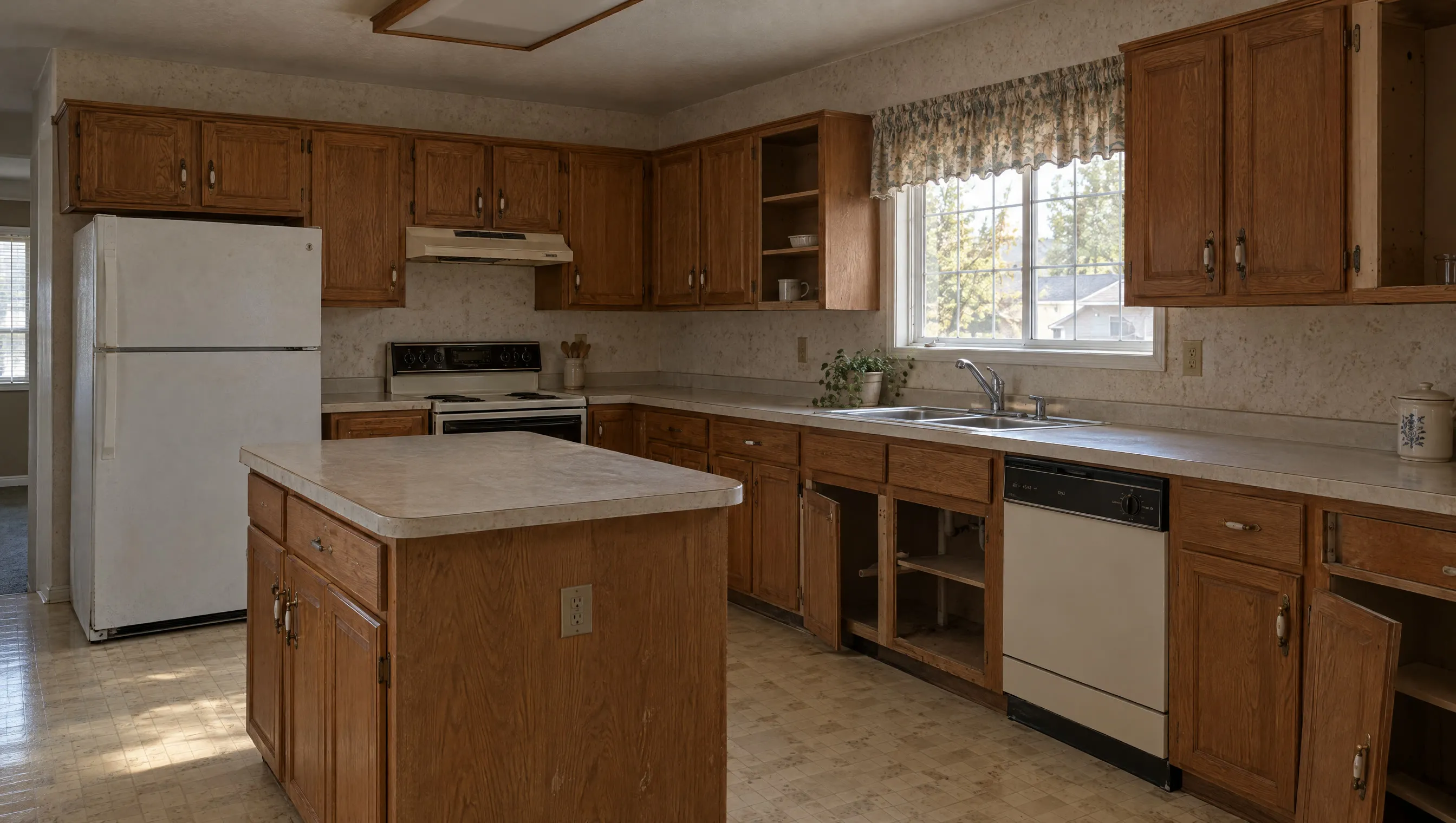
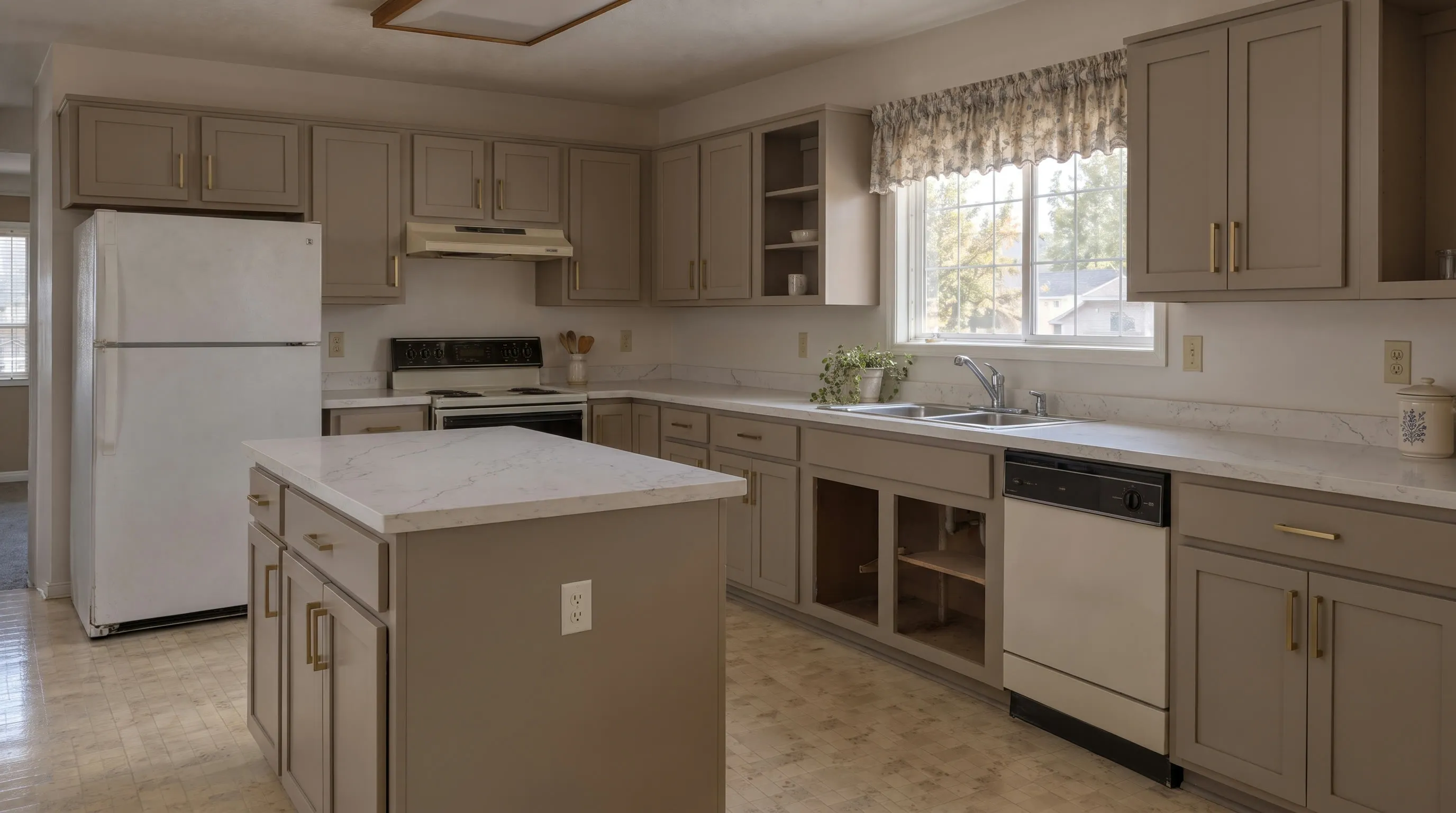
One condition rating and one free-text paragraph once reported a property's entire physical condition. UAD 3.6 replaces that with separate exterior, interior and overall ratings, six tables that log defects, damages and deficiencies, and a documented path from a cracked foundation to a completion report. Tap a pin on the kitchen below for a logged example.
Key points
- UAD 3.6 replaces one legacy condition narrative and one deficiency checkbox with three rated pairs (exterior, interior, overall) and six Defects, Damages, Deficiencies tables. That is more than 40 fields; the legacy form had 2.
- Every DDD table shares the same five fields. Two of the six, Unit Interior and Outbuilding, enumerate Location; the other four leave it free text, which will make portfolio-level aggregation noisier for those sections.
- None of the six DDD tables has a repair cost field. Cost to repair lives only in Reconciliation, with three reporting methods, and an itemized example in the GSE documents rolls three defects up to a $2,000 total and a C5 As Is rating.
- Fannie Mae's Collateral Underwriter already runs rule-based peer and implausibility checks on condition ratings. The 98% figure from its 2023 computer-vision test is the precision of flags on a small, screened subset of more than a million appraisals.
A lender, an MI underwriter or a model can now query and cross-check a property's condition field by field, using ratings, components and dated defect rows.
One rating and one paragraph reported a property's entire condition
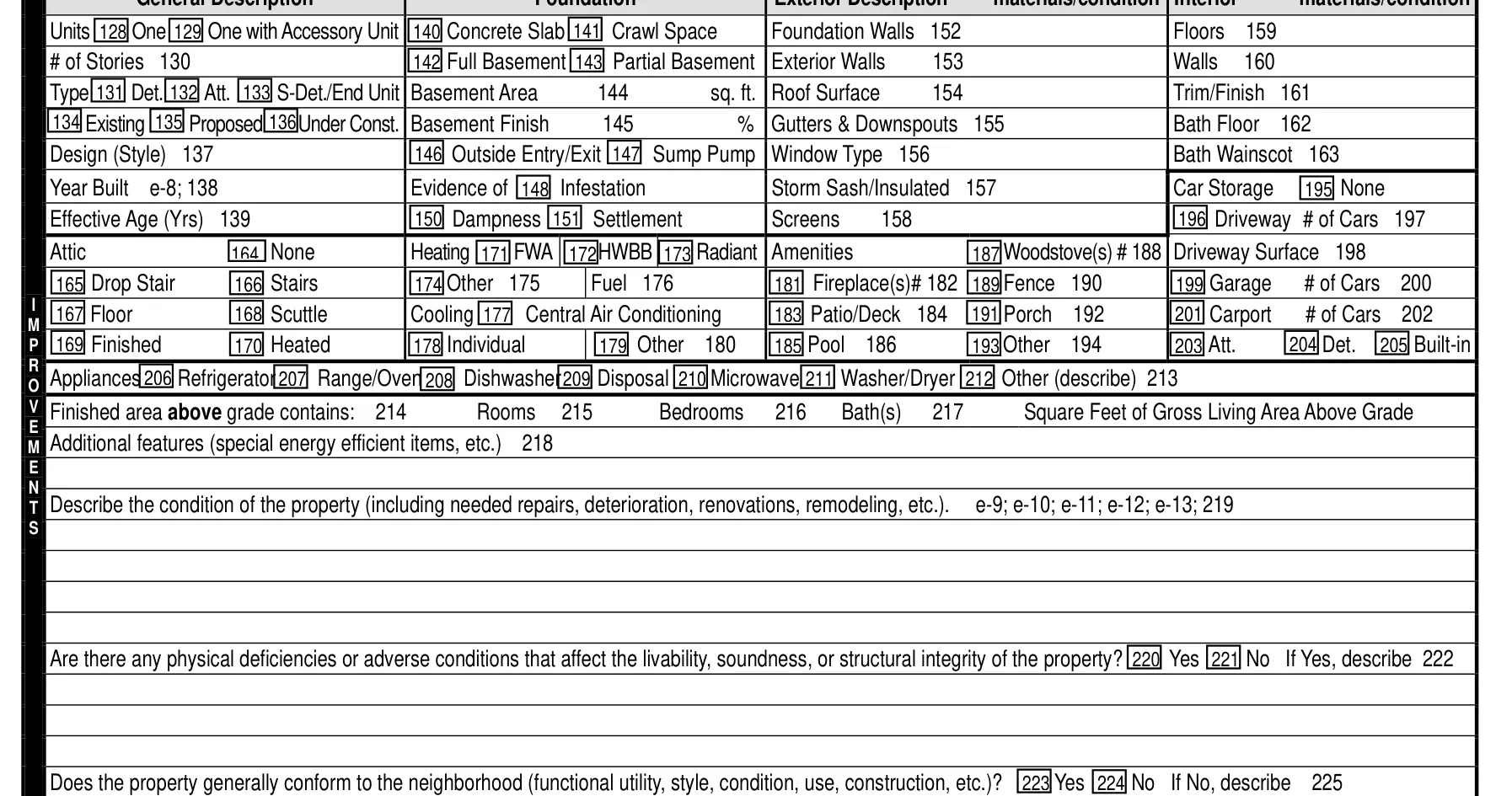
The legacy Form 1004 recorded condition in one free-text line, "Describe the condition of the property," one grid Condition cell per comparable, and one Yes/No deficiency question with a single free-text box.5 That is 2 field groups on the subject side of the form.
UAD 3.6 replaces that with three independently rated pairs: Exterior Quality and Condition (8.022 / 8.023), Interior Quality and Condition (10.034 / 10.035, per unit), and Overall Quality and Condition (15.000 / 15.005). Six per-section Defects, Damages, Deficiencies (DDD) tables come under those ratings: Site, Dwelling Exterior, Unit Interior, Outbuilding, Vehicle Storage, and Subject Property Amenities.1 Counting the three rating pairs, all six DDD tables and the fields for one kitchen or bathroom, the condition and quality side of the report now totals 42 fields. The legacy form had 2.
For a collateral-risk team, the practical difference is that structured fields can be queried with SQL or a rules engine across a loan population, while narrative text needs NLP or a manual read. An earlier post mentioned the split interior and exterior ratings in passing; this part covers the full build.
- Exterior Quality / Condition
8.022 / 8.023 - Interior Quality / Condition
10.034 / 10.035 - Overall Quality / Condition
15.000 / 15.005 - Six Defects, Damages, Deficiencies tables
4.100 to 14.010 - Reconciliation: cost to repair and the DDD rollup
26.009 to 26.072 - As Is Overall Condition Rating
26.071
The same six letters and numbers now mean something more specific
C1 to C6 and Q1 to Q6 are kept, but every condition definition is rewritten. C1 now has an explicit 12-month cap, and C2 an explicit 36-month window; the legacy definitions stated neither.1 Both scales are absolute: a rating is judged against the fixed definition, never against other properties, and that rule extends to View and Location ratings too.3
- C1100% newly constructed, completed within the past 12 months, never occupied, no physical depreciation.
- C2Like-new; recently constructed or entirely remodeled within the past 36 months; no deferred maintenance.
- C3Well-maintained with only minor age-related depreciation, or most major components recently updated.
- C4Adequately maintained with moderate wear and tear; deferred maintenance is minor or cosmetic.
- C5Significant wear from inadequate maintenance; items need repair or replacement soon, but soundness and structural integrity still support occupancy.
- C6Severe damages or defects that impact the soundness or structural integrity; the dwelling is not suitable for occupancy.
Quality has its own six-point scale, reported the same three ways: Exterior, Interior and Overall.1
- Q1Individually designed, one-of-a-kind structure built to exacting standards; exceptional materials and workmanship.
- Q2High-quality structure, often custom or complex; extended-life materials and high-quality workmanship.
- Q3Reproducible from standard plans with a higher-than-standard degree of complexity and some customization.
- Q4Standard building plans and designs reproduced with minimal customization; widely available materials.
- Q5Basic design meeting minimum building standards; efficient to build, with minimal refinements.
- Q6Lacks basic architectural design and may not meet local building standards; low-quality or non-customary materials.
The legacy C6 definition read "deficiencies or defects that are severe enough to affect the safety, soundness, or structural integrity of the improvements."6 UAD 3.6's C6 drops the word "safety": "severe damages, deficiencies, or defects that impact the soundness or structural integrity, and the dwelling is not suitable for occupancy."1 That threshold is what blocks a C6 delivery specifically: a C6 dwelling needs repair to a minimum C5 before Fannie Mae will purchase it, and if any portion of a dwelling is rated C6, the entire dwelling is rated C6, at that dwelling's level only; other dwellings in the same property keep their own ratings.3 Incomplete items, such as an unfinished kitchen or addition, and uninsured property damage can also force a report away from As Is, independent of whether soundness is affected.3
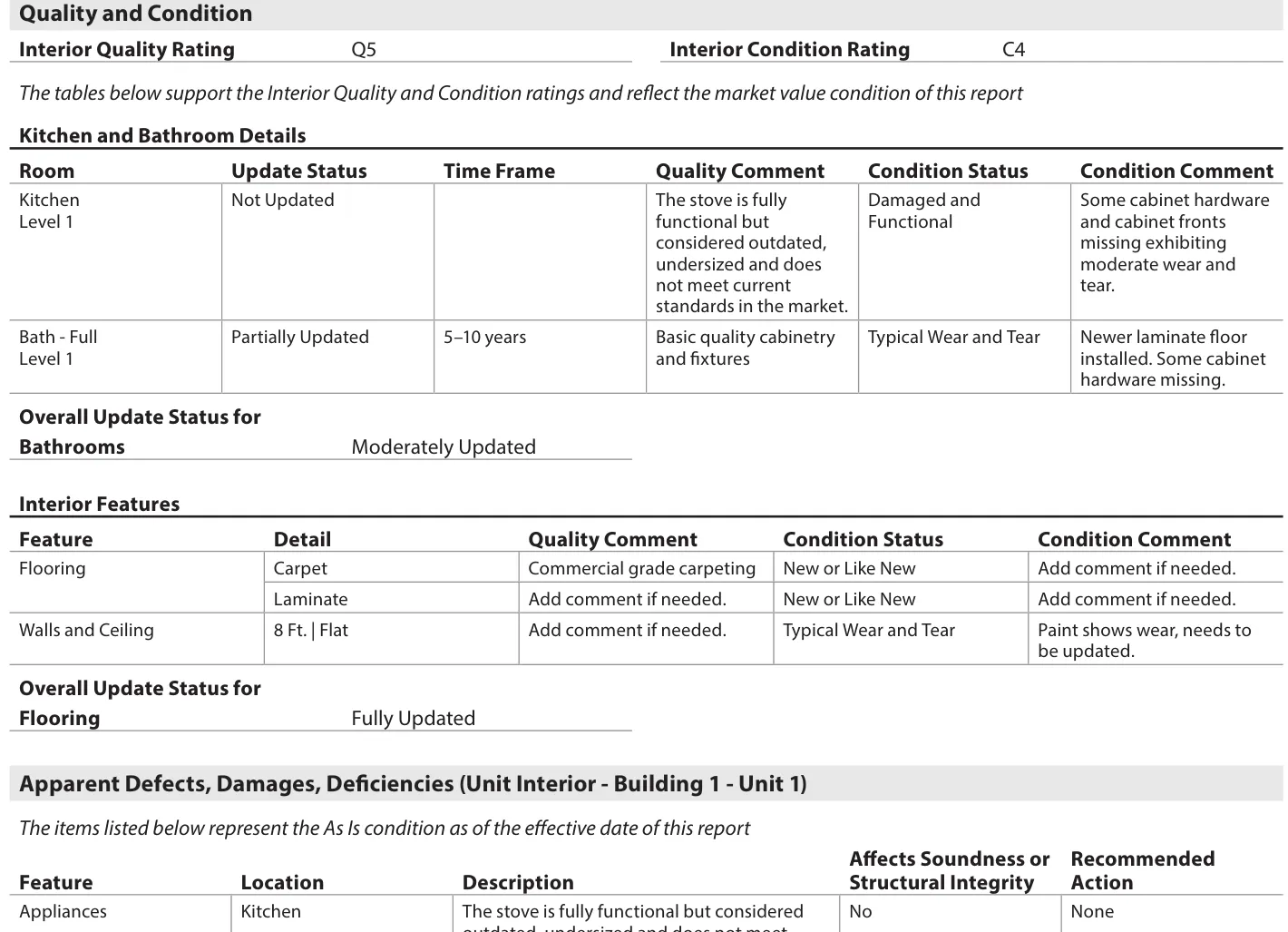
10.037Room10.038Update Status10.039Time Frame10.040Quality Comment10.041Condition Status10.042Condition CommentTwo separate four-point aggregate fields, Overall Update Status for Bathrooms and for Flooring, use a different scale than the three-point per-room Update Status field (Fully Updated, Partially Updated, Not Updated). A rules engine reading both fields needs to handle the mismatch.1 New construction must be reported Fully Updated. The Lessons Learned job aid names Not Updated on new construction as a habit to break from UAD 2.6.4
One row shape repeats identically six times
Every DDD table has the same five fields: Feature, Location, Description, Affects Soundness or Structural Integrity, and Recommended Action (Completion, Inspection, Repair, or None). Selecting anything other than None forces Market Value Condition away from As Is.1 Every row needs its own photo, tied to the Feature.
| Section | Feature | Location | Description | Affects Soundness | Recommended Action |
|---|---|---|---|---|---|
| Site | 4.100 | 4.101 free text | 4.102 | 4.103 | 4.104 |
| Dwelling Exterior | 8.056 | 8.057 free text | 8.058 | 8.059 | 8.060 |
| Unit Interior | 10.056 | 10.057 enumerated | 10.058 | 10.059 | 10.060 |
| Outbuilding | 12.020 | 12.021 enumerated | 12.022 | 12.023 | 12.024 |
| Vehicle Storage | 13.005 | 13.006 free text | 13.007 | 13.008 | 13.009 |
| Subject Property Amenities | 14.006 | 14.007 free text | 14.008 | 14.009 | 14.010 |
2 of 6 tables enumerate Location; 4 leave it free text, which will make portfolio-level "where" aggregation noisier for those sections. Source: Appendix F-1 v1.4, pp. 81, 115, 147, 159, 165, 171.1
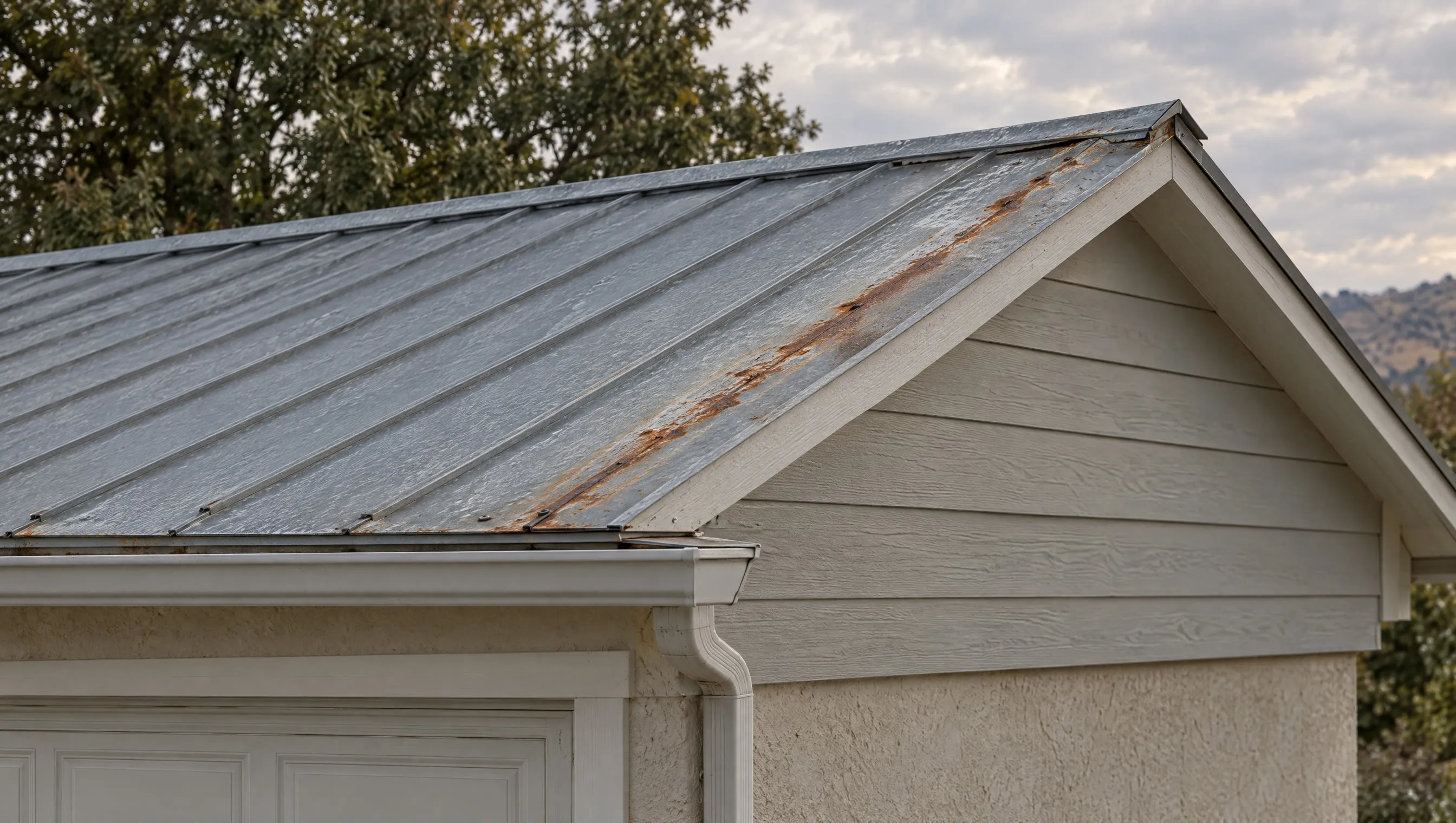
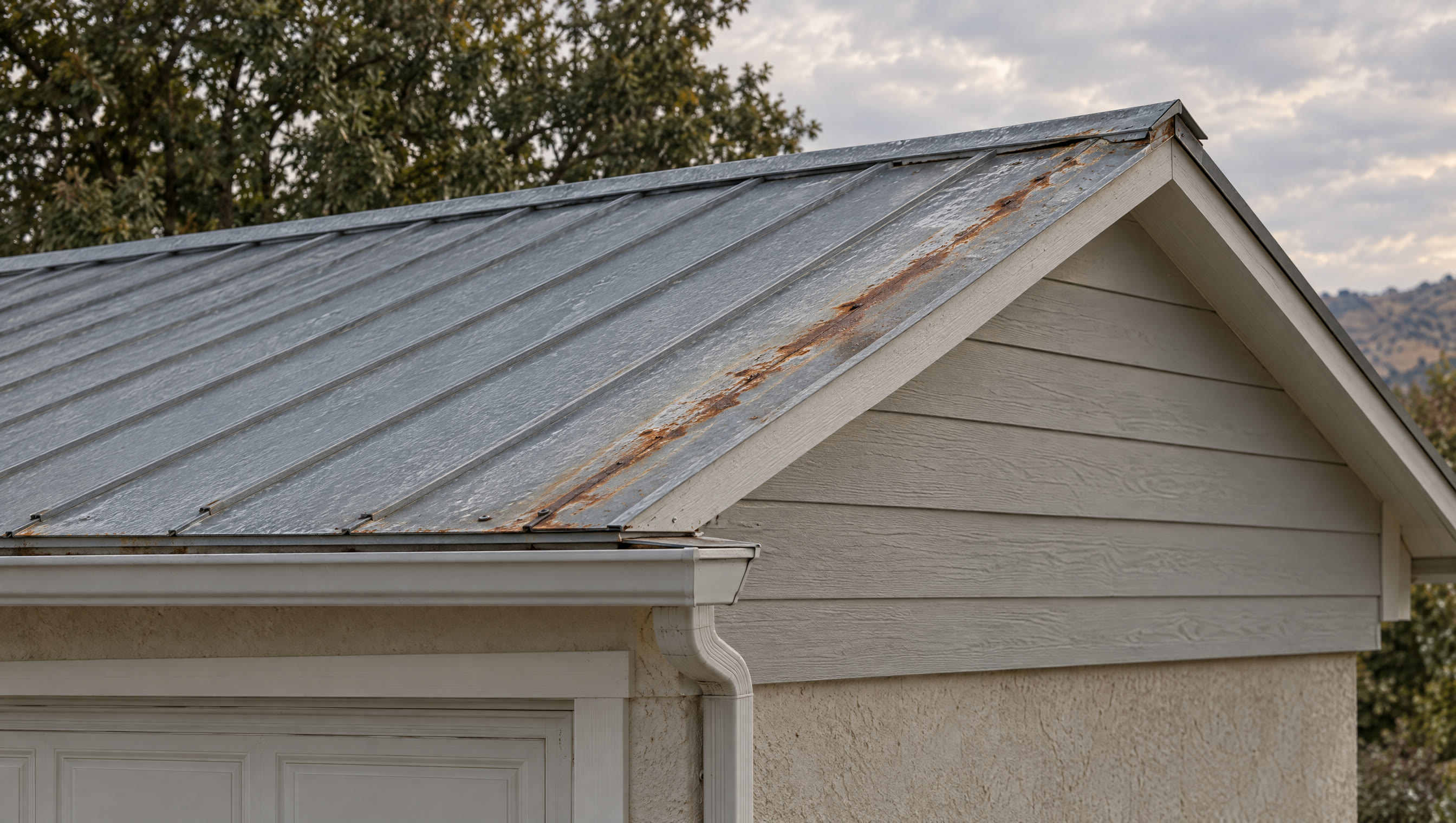
Building 1's roof
The printed exterior section
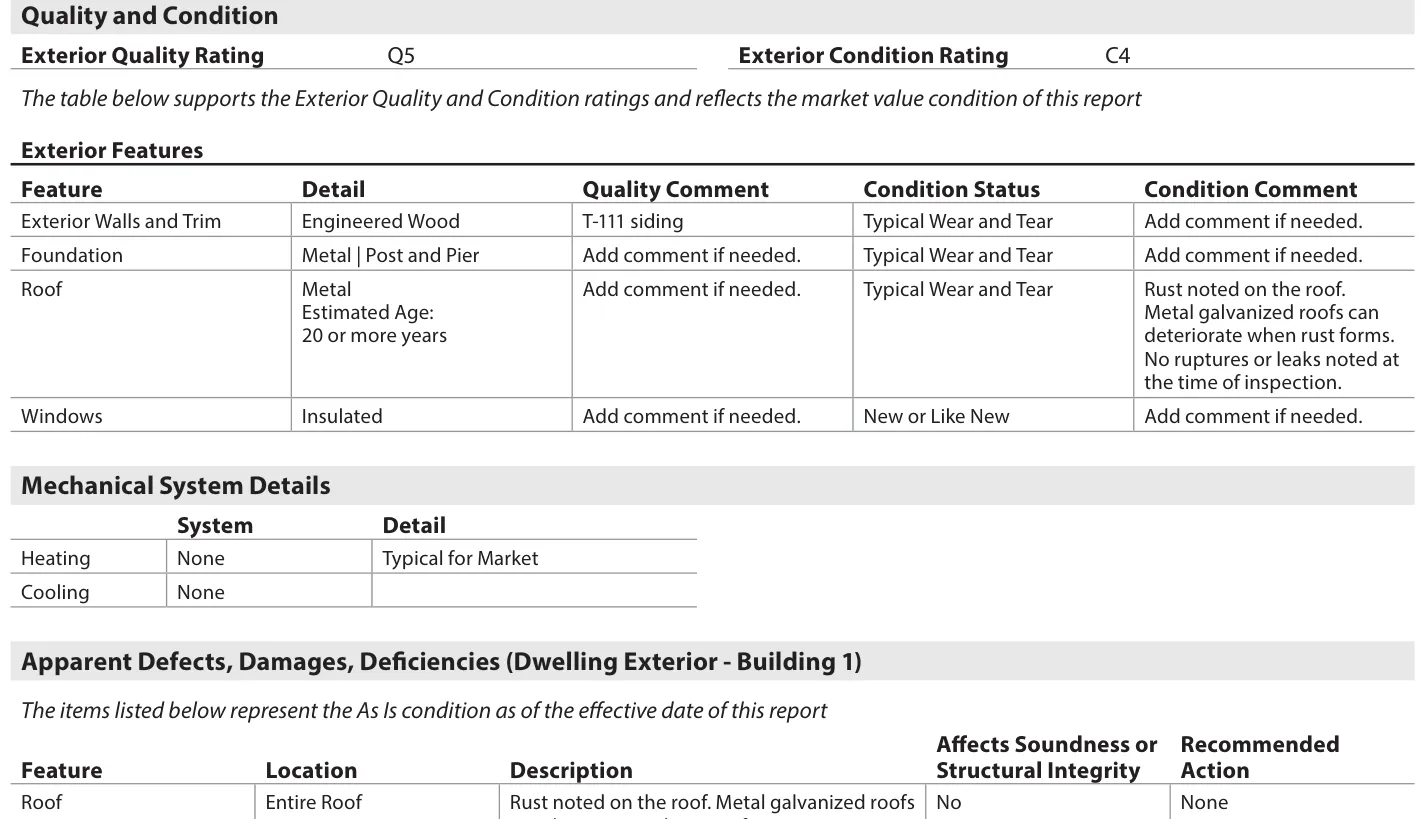
The same row as data fields
8.056FeatureRoof8.057LocationEntire Roof8.059Affects SoundnessNo8.060Recommended ActionNone
A rusted roof, named and described, still clears the as-is bar: it stays under the soundness or structural integrity threshold. The same unit's kitchen and bathroom log five more defects, every one Affects Soundness No and Recommended Action None: "Some areas of deferred maintenance noted and identified in the report for this unit, but the livability of the unit is not affected."2 A C4 rating can include several logged defects while the market value condition stays the same.
Change one answer and the same feature forces a different outcome. The actual row stays As Is; the "what if" row, same Feature and Location, forces Subject to Repair.
One missed answer breaks a three-field chain
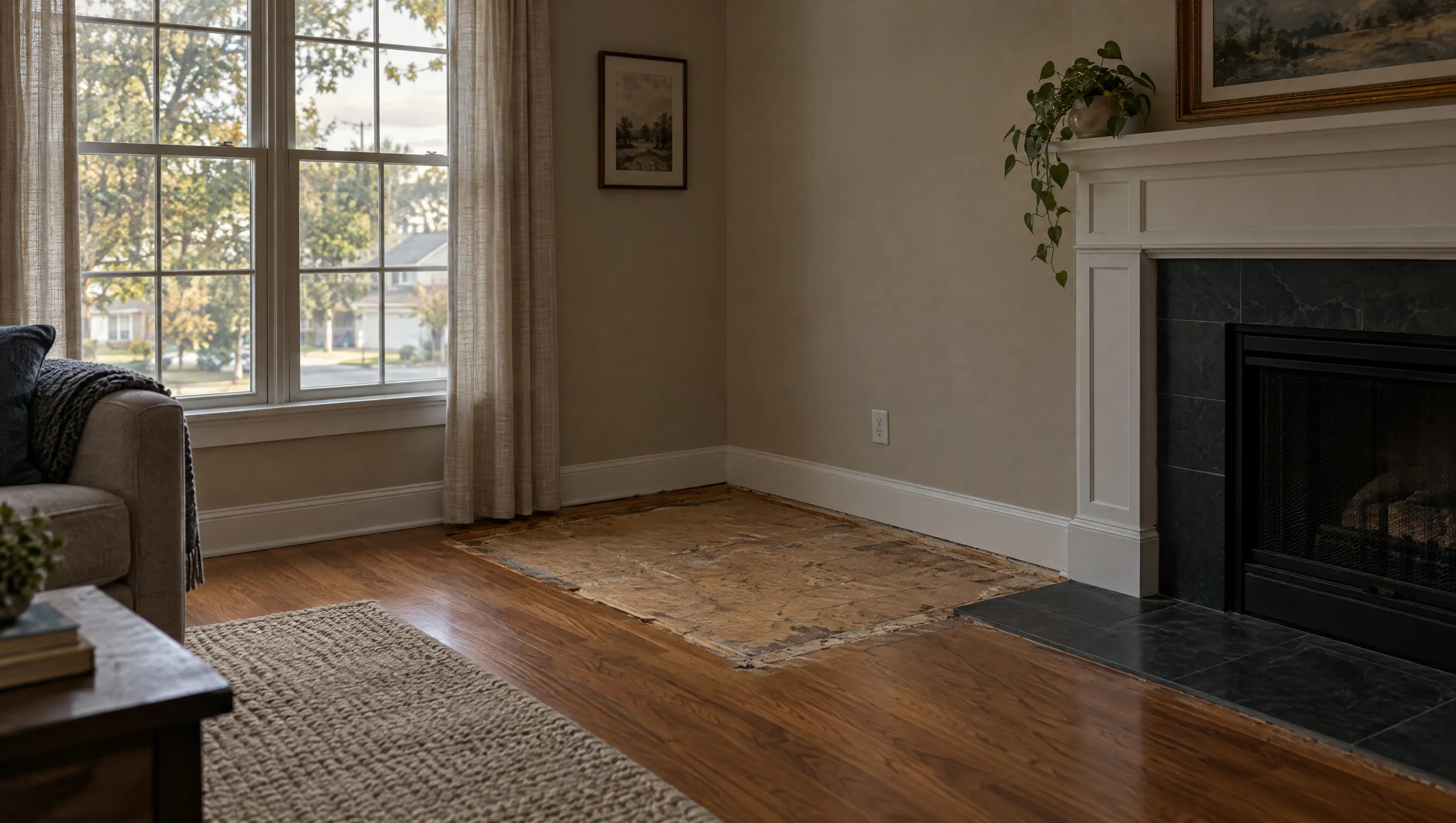
The GSEs' Lessons Learned job aid gives exactly this example: an appraiser logged missing floor coverings in the Unit Interior DDD table with Recommended Action None, which the condition definitions treat as a contradiction. As reported, missing floor coverings are a C5 condition; made subject to installing the flooring, it could be a C4.4 Toggle the chain below between what was reported and what the correction requires.
- 1Unit Interior DDD row, Recommended Action (10.060)
- 2Market Value Condition (26.009)
- 3Interior Condition Rating (10.035) / Overall Condition (15.005)
A C6 dwelling needs repair to a minimum C5 before it is eligible for delivery at all.3 Lesson 10 itself states only the condition-rating half of the chain above, C5 as reported or C4 corrected; the Recommended Action and Market Value Condition steps come from F-1's general rule that any DDD row other than None forces Market Value Condition away from As Is.1
Reconciliation holds the cost to repair
| Section | Feature, location | Description | Action | Cost |
|---|---|---|---|---|
| Dwelling Exterior - Building 1 | Roof, Section of roof | Roof is significantly worn and has damaged flashing, but no apparent active leaks. | Repair | $1,500 |
| Unit Interior - Building 1 - Unit 1 | Flooring, Dining Room | Flooring is stained in one corner of the dining room. | None | Not estimated |
| Subject Property Amenities | Deck, Rear of house | One of the deck supports is rotted and unsafe. | Repair | $500 |
| Total Cost (26.070) | $2,000 | |||
As Is Overall Condition Rating: C5. Two of the three rows affect soundness or structural integrity and have a Repair action. The flooring stain affects neither, so its action is None.
The Completion Report, a separate document (Appendix F-3), mirrors the original DDD fields one for one and adds two new ones: Repair Completed and Inspection Date. GSE policy requires at least one visually verifiable exhibit, authenticated using metadata and the geocode for the subject property, before a repair counts as verified.3
| Field | Label |
|---|---|
03.001 | Feature |
03.002 | Location |
03.003 | Description |
03.004 | Affects Soundness or Structural Integrity |
03.005 | Repair Completednew field |
03.006 | Inspection Datenew field |
03.007 | Completion Commentnew field |
The rollup to one Overall rating is a judgment call
Overall Quality and Condition redisplays the Exterior and Interior ratings per dwelling or unit and reconciles them into one Overall rating, with free-form commentary always required.1 The GSEs' worked example 3, a property with three units in two buildings, shows the rollup is not a minimum or an average.
Unit 3's interior, C4, is more severe than the Overall, C3. The free-form Reconciliation of Overall Quality and Condition (15.010) is always required, which gives a reviewer the commentary to check against a gap like this one. Source: Appendix F-1 v1.4, p. 174.1
ADUs get their own Unit Interior rating and are excluded from the per-unit interior rollup. These same component ratings reappear as grid rows once Part 6 of this series covers the sales comparison grid.
Rating compression is now independently checkable, per file
A vendor study of comparable homes, commissioned before UAD 3.6's split ratings existed, found that appraisers were already using the six-point scale as something closer to a two-point scale.11
The paper modeled 33.6% of evaluations as high risk and 73.9% as medium risk from mismatched condition or quality adjustments, estimating $27,100,000,000 to $59,700,000,000 in industry-wide repurchase-risk exposure. Vendor-commissioned; treat the dollar range as an estimate, not a GSE figure.11
UAD 3.6's split interior, exterior and overall ratings give three numbers, plus five to six DDD tables, to cross-check against each other and against the comp grid, in place of one overall number. Try the checker below: it runs the same six field-level checks a lender's rules engine, or a human reviewer, would run.
Rating consistency checker
Set the ratings, the DDD rows and the value condition, and read the violations
Starts on an internally consistent file.
What exists today
| Message | Checks |
|---|---|
424 Condition rating peer discrepancy | "The condition rating is materially different than what has been reported by other appraisers." |
423 Condition rating self-discrepancy | "The appraiser has reported a materially different condition rating in one or more appraisal reports." |
483 Implausible condition | "The condition rating of ‘C1’ conflicts with the reported age," such as a claimed C1 on a property that is not newly built. |
A rules engine built on this same logic should flag a file for review and leave any change to a specific rating to the appraiser. The AIR rules and most AMC compliance programs already draw that same line around any automated check, human or machine.
# Field IDs: Appendix F-1 v1.4. Thresholds and routing are the lender's choice.

# 1. Soundness-action mismatch (an inference from the DDD field definitions, generalized across all six DDD tables)
IF ddd.affectsSoundness IN (8.059, 10.059, 12.023, 13.008, 14.009, 4.103) = Yes
   AND ddd.recommendedAction IN (8.060, 10.060, etc.) = None:
    FLAG "soundness-action mismatch"

# 2. As Is with an open DDD row (F-1 p. 328)
IF marketValueCondition (26.009) = "As Is"
   AND EXISTS ddd row WHERE recommendedAction IN (Completion, Inspection, Repair):
    FLAG "as-is contradicts an open DDD row"

# 3. Missing As Is rating, only where F-1 p. 337 requires it
IF newConstruction (3.017) = No
   AND marketValueCondition (26.009) IN ("Subject to Completion Per Plans", "Subject to Repair")
   AND asIsOverallConditionRating (26.071) IS NULL:
    FLAG "missing As Is rating"

# 4. New construction update-status mismatch (Lesson 11)
IF newConstruction (3.017) = Yes AND roomUpdateStatus (10.038) != "Fully Updated":
    FLAG "new construction update-status mismatch"

# 5. Peer or self discrepancy (models CU Message 424 and 423)
IF conditionRating (exterior 8.023 / interior 10.035 / overall 15.005)
   differs materially from the same property's prior appraisal:
FLAG "peer or self discrepancy"Two kitchens, both rated C3, on Fannie Mae's page
Fannie Mae's June 2023 Appraiser Update describes a test of image recognition technology against C and Q ratings: "In a recent test, we analyzed more than a million appraisals with this technology. The test identified a small subset with high probability of erroneous C or Q ratings. Appraisal experts in our Loan Quality Center reviewed those reports and found the model prediction was 98% accurate."7 That is the precision of the model's flags on a small, already-screened subset after expert review. It is not "98% of a million appraisals confirmed." Deployment inside CU was stated as a 2023 plan; whether it runs in CU in production today is still open.
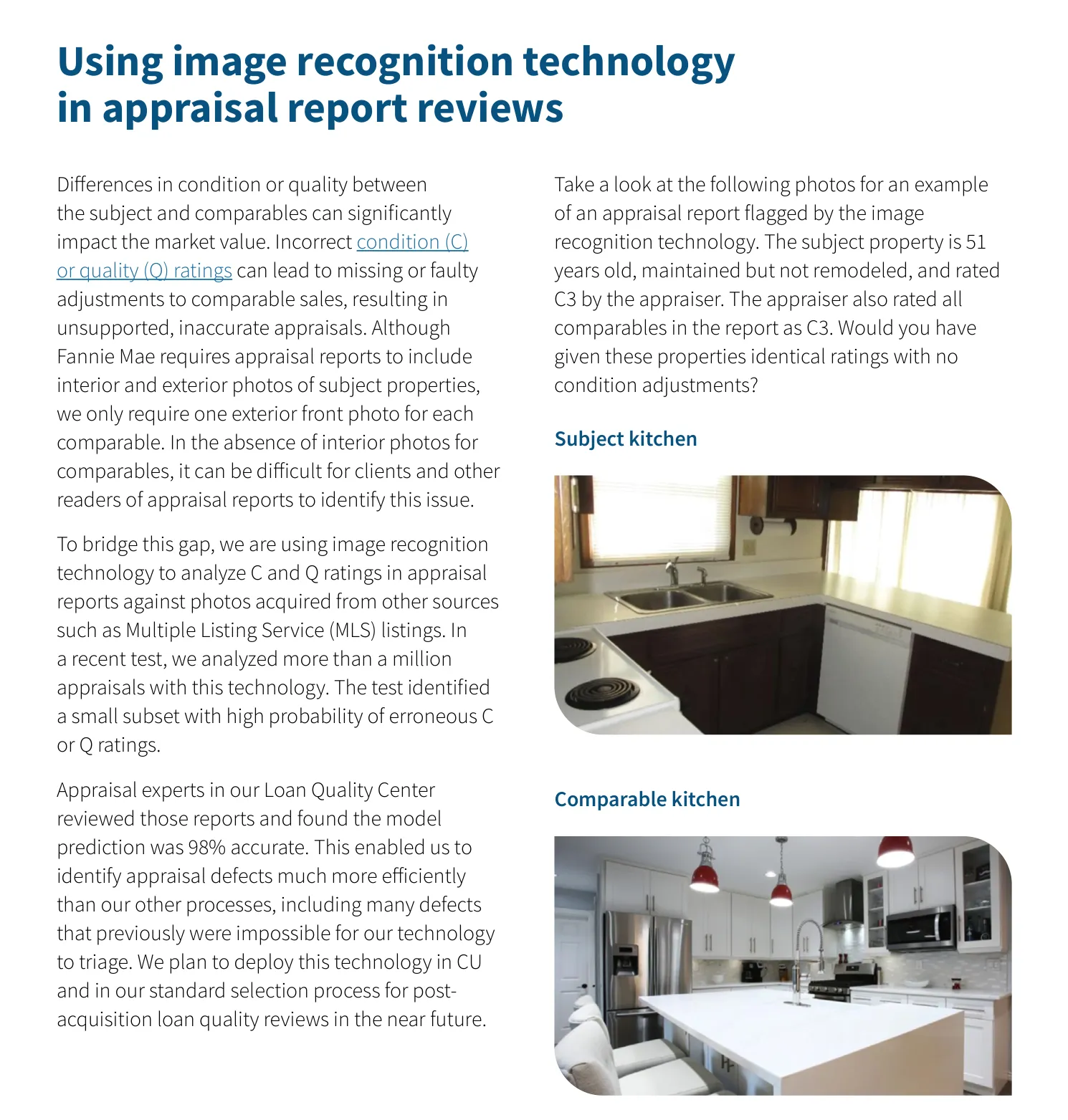
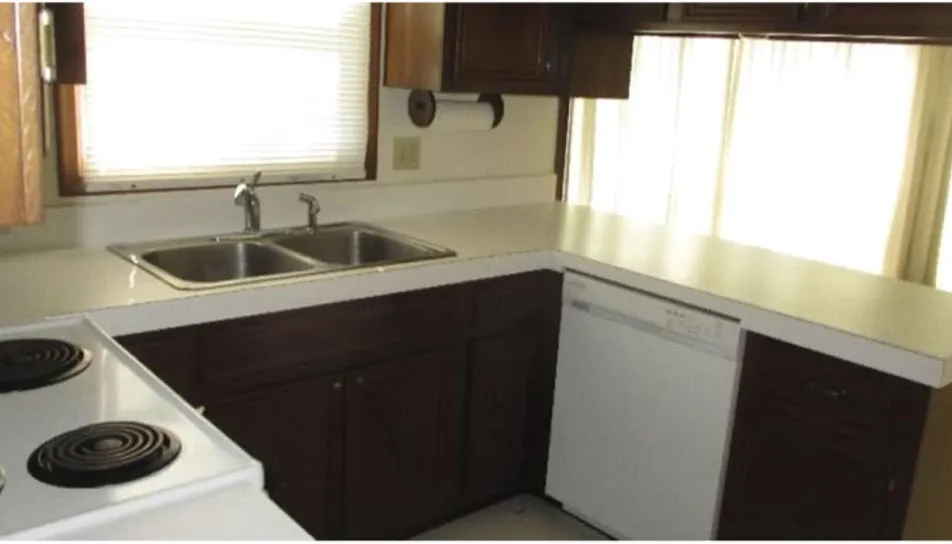 Subject, rated C3
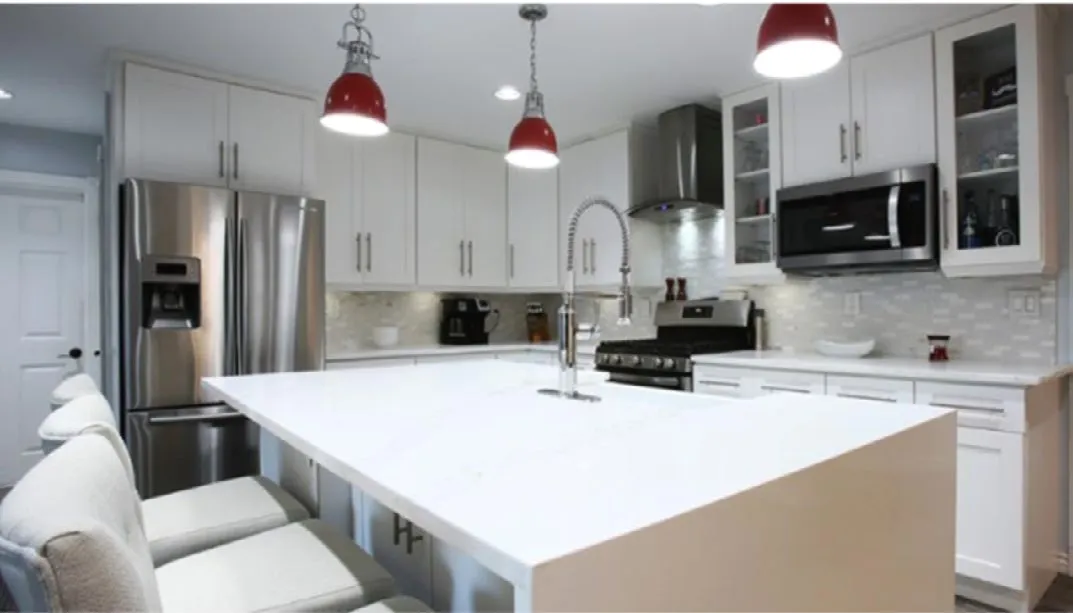 Comparable, also rated C3
Fannie Mae, Appraiser Update, June 2023, p. 3.7
The same page shows Fannie Mae's rating-compression example, independent of the Restb.ai paper: a 51-year-old subject, "maintained but not remodeled," rated C3, with every comparable in the report also rated C3, including the visibly updated kitchen pictured here. The page asks readers whether they would have given these properties identical ratings with no condition adjustment.7
AO-41, adopted April 23, 2026, is the USPAP-level guardrail: it clarifies existing competency, scope-of-work and confidentiality obligations for AI-assisted work, without requiring disclosure merely because a tool assisted, and it does not authorize replacing the appraiser's own judgment.12
Photo-based condition and quality extraction, pitched at pre-fill and QC.
Photo-based condition and quality extraction, the same pre-fill and QC pitch.
Reason-coded roof confidence scores, insurance-focused, with clearer explanations than most in the category.
None of these are GSE-endorsed substitutes for the appraiser's own rating. A plausible next step is a field-level consistency engine that extends what CU's messages already do at the overall rating down to the exterior, interior and overall triad and all six DDD tables simultaneously, flagging the Lesson 10 pattern before UCDP submission, with the appraiser still making every soundness call.
A checklist for a file today, and what is still unverified
UAD 3.6 adds many new fields, but the condition and quality call underneath them is still the appraiser's judgment, same as under the legacy form. Run this against any file, independent of whether a lender has built automated tooling yet.
Closing review checklist
0 of 4 checked
Saved in this browser only.
What is still open
- Whether the 2023 computer-vision test has since been deployed inside CU in production is unconfirmed.
- AO-41's exact text needs reconfirmation against The Appraisal Foundation's primary document; this part relies on secondary industry summaries.
- Freddie Mac LCA's use of imagery, if any, is undocumented in the public record and is left out rather than guessed at.
These same Exterior, Interior and Overall ratings reappear as grid rows once Part 6 covers the sales comparison grid, where the appraiser applies judgment to adjust a comparable to the subject.
Research checked Nov. 2, 2026 against the GSE documents listed below, and against a fresh download of those same documents the same day. The kitchen and roof are fictional and were generated with Higgsfield; the form pages and sample-report sections are screenshots of GSE publications. General information, not legal, lending or appraisal advice.
Sources
12 documents, accessed Oct. 16 and Nov. 2, 2026
- Fannie Mae and Freddie Mac, Appendix F-1: URAR Reference Guide, v1.4, chapters 4, 8, 10, 12, 13, 14, 15, 26 and Appendix 2March 10, 2026
- Fannie Mae and Freddie Mac, Appendix D-1: URAR Sample Scenarios and XML Files, v1.4 (2- to 4-unit Appraisal, Hawaii)March 10, 2026
- Fannie Mae, Selling Guide Supplement: UAD 3.6 Policy, SB4-1.3-06 "Dwelling Condition and Quality of Construction" and SB4-1.2-05 "Requirements for Verifying Completion and Postponed Improvements"Sept. 2, 2026
- Fannie Mae and Freddie Mac, UAD 3.6 Job Aid: Guidance for Appraisers through Lessons Learned, v1.0, Lessons 10 and 11June 23, 2026
- Fannie Mae and Freddie Mac, UAD Specification Appendix C: Form 1004/70 with numbered fieldsForm dated March 2005
- Fannie Mae and Freddie Mac, Appendix A: GSE Appraisal Forms Mapping (legacy UAD 2.6 field standardization), v1.52022
- Fannie Mae, Appraiser Update, "Using image recognition technology in appraisal report reviews"June 2023
- Fannie Mae, Collateral Underwriter Version 8.5 Release Notes (Message 423 and 424 text)March 2, 2026
- Fannie Mae, Collateral Underwriter job aid, "Self Data Discrepancy Messages" (Message 423 worked example)accessed Nov. 2, 2026
- Fannie Mae, Collateral Underwriter job aid, "Implausible Rating Data Discrepancy Messages" (Message 483 worked example)accessed Nov. 2, 2026
- Uncovering Appraisal Risks, MortgagePoint (covering a Restb.ai white paper on condition and quality rating compression)May 12, 2025
- Artificial Intelligence and USPAP: Understanding Advisory Opinion 41, ISA, and ASB adopts AO-41 on the use of technology in appraisal, BVResourcesApril 23, 2026
The Signal / Twice-monthly briefing
Get the next UAD 3.6 analysis in your inbox.
One sourced briefing twice a month on valuation policy, collateral risk and property technology.
Unsubscribe in one click. We don't sell your email or share it with sponsors. Privacy Policy